HR project plan template
Use a ready-made template to organize tasks, assign owners, and track deadlines so your HR team keeps every project moving.
Use templateSign up to use this template.
INTEGRATED FEATURES
Recommended apps


Summary
Human resources teams manage far more than payroll and benefits. From rolling out new training programs to implementing HR software, your team likely juggles dozens of projects at once, each with its own deadlines, stakeholders, and moving parts. Without a plan, even well-intentioned initiatives can stall or fall through the cracks.
An HR project plan template gives you a ready-made structure to organize tasks, assign owners, and track progress from start to finish. In this article, you'll learn what an HR project plan is, why it matters, the key phases involved, and how to use Asana's free template to keep your HR projects on track.
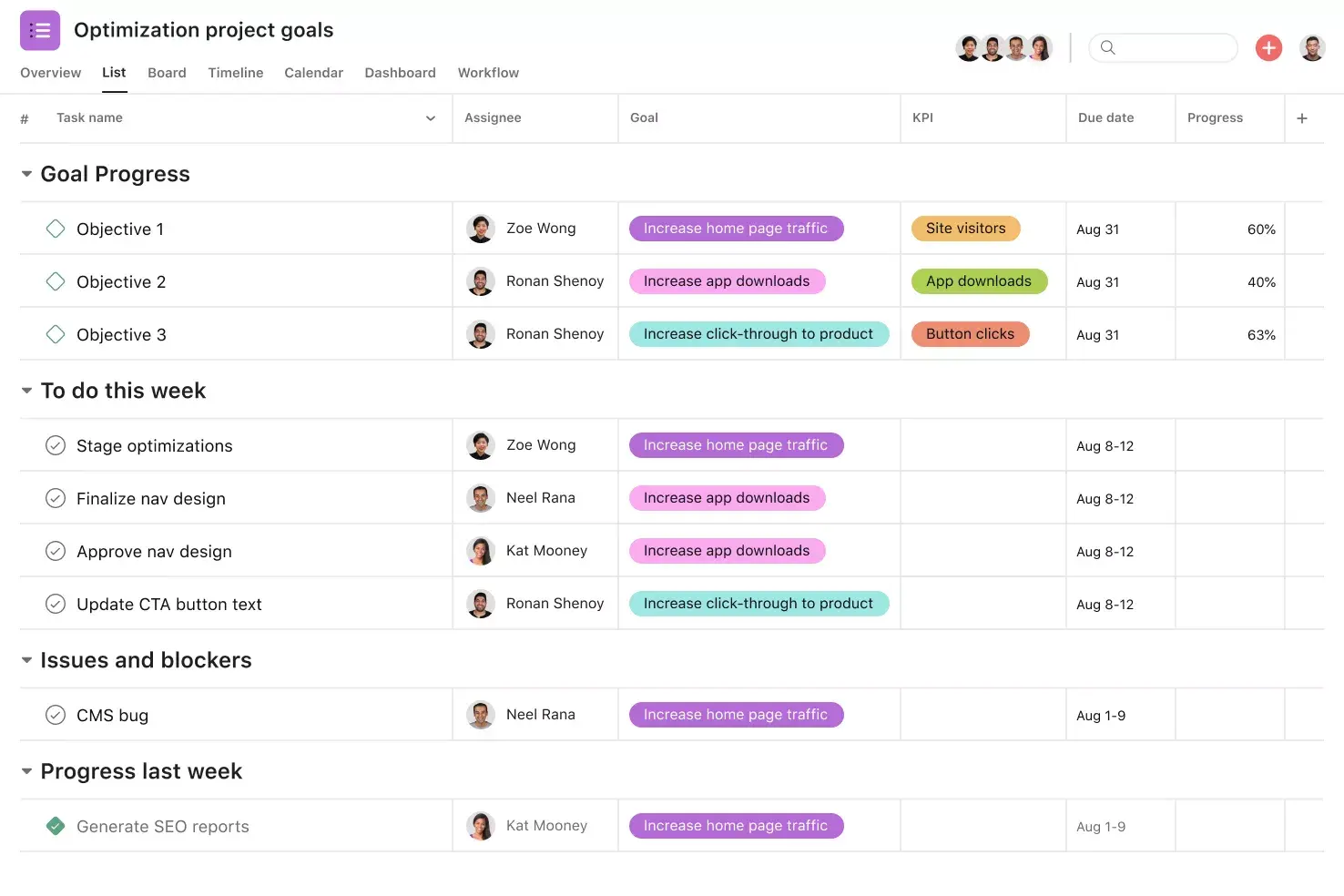
![[Old product ui] HR project plan in Asana, spreadsheet-style project view (List)](https://assets.asana.biz/transform/adda6ca5-349e-463f-8646-4e9109e8f46b/HR-team-proj-plan-m-premium?io=transform:fill,width:2560&format=webp)
What is an HR project plan?
An HR project plan is a document that outlines the scope, timeline, tasks, and responsibilities for a specific human resources initiative. It serves as a roadmap that guides your team from the initial idea to a successful outcome.
Whether you're onboarding a new cohort of employees, launching a performance review cycle, or migrating to a new HR information system, a project plan keeps every step organized and visible.
A typical HR project plan includes:
Project scope and goals. A definition of what the project will accomplish and how success will be measured.
Task breakdown. A list of every task and subtask required to complete the project.
Roles and responsibilities. Who owns each task, and who needs to be consulted or informed along the way?
Timeline and milestones. Key dates, deadlines, and checkpoints to keep the project moving forward.
Resources and budget. The people, tools, and funds needed to get the work done.
Communication plan. How and when you'll share updates with stakeholders.
Using a template to build your HR project plan saves time and ensures you don't miss critical steps. Instead of starting from scratch, you can customize a proven structure to fit the specific needs of each initiative.
Why use an HR project plan template?
HR projects often involve multiple teams, tight deadlines, and sensitive information. Without a plan, it's easy to lose track of who's doing what or miss important deadlines. Here's why a well-built HR project plan makes a difference:
Clarity for your team. When every task has an owner and a due date, there's no confusion about what needs to happen next. Your team spends less time asking questions and more time doing meaningful work.
Better resource allocation. A project plan helps you see where your team's time and budget are going, so you can make smarter decisions about how to allocate resources across competing priorities.
Stronger accountability. Defined roles and responsibilities make it easy to see who's on track and where support is needed, without micromanaging.
Consistent processes. When you use a template, you build repeatable workflows that improve with each project cycle. This is especially valuable for recurring HR work, such as quarterly reviews or annual enrollment.
Visible progress. Stakeholders and leadership can see project status at a glance, which reduces the need for status meetings and email check-ins.
Key phases of an HR project plan template
Most HR projects follow a series of phases that help you move from idea to completion. Understanding these phases makes it easier to plan your work, anticipate risks, and stay on schedule.
Initiation: Define the project’s purpose and secure stakeholder buy-in.
Planning: Break work into tasks, assign owners, and set deadlines.
Execution: Complete the work and keep tasks on schedule.
Monitoring and control: Track progress and adjust the plan as needed.
Closing: Review outcomes and document lessons learned.
Initiation
This is where you define the project's purpose and secure stakeholder buy-in. Identify the problem you're solving, outline expected outcomes, and confirm that the project aligns with your organization's broader goals.
Planning
During the planning phase, you break the project down into tasks, assign owners, set deadlines, and determine your budget. This is also when you identify task dependencies and build milestones to track progress.
Execution
With your plan in place, your team begins the work. During execution, focus on keeping tasks moving, removing blockers, and communicating updates to stakeholders.
Monitoring and control
Throughout the project, track progress against your original plan. Use status updates and reporting tools to catch issues early and adjust course as needed.
Closing
Once the project is complete, take time to review what went well and what could improve. Document lessons learned so your team can apply those insights to future HR projects and support continuous improvement.
Types of HR projects you can manage with this template
HR teams handle a wide variety of projects throughout the year. Here are some common examples that are well-suited for a project plan:
Employee onboarding. Coordinate everything from IT setup and training schedules to welcome materials and first-week check-ins.
Performance review cycles. Plan and track each step of the review process, including self-assessments, manager evaluations, calibration sessions, and feedback delivery.
Training and development programs. Organize course creation, facilitator scheduling, participant enrollment, and post-training assessments.
HR software implementation. Manage vendor selection, data migration, user testing, and rollout communication for new HR systems.
Recruiting campaigns. Track job postings, candidate pipelines, interview schedules, and offer approvals in one place.
Policy updates and compliance initiatives. Coordinate drafting, legal review, employee communication, and training for new or updated policies.
Employee engagement surveys. Plan survey design, distribution, data analysis, and action planning in a single project.
Each of these projects benefits from having a plan with defined tasks, owners, and timelines. With Asana's HR project plan template, you can adapt its structure to any initiative your team takes on.
How to plan and manage HR projects with our template
Today's HR teams manage far more than payroll and onboarding, juggling a wide range of projects and processes to support every employee. Without a central system, it's easy to lose track of priorities. A work management tool like Asana helps your team track progress, scale processes, and stay aligned. Try our HR project plan template, and the following tips, to get started:
Streamline recurring work. Establish repeatable processes for common HR workflows, such as quarterly planning or review cycles, so you can spend less time planning work and more time getting it done.
Set team priorities. Make sure everyone knows which tasks are mission-critical and which are nice-to-haves by defining and prioritizing goals across your team.
Communicate progress. Track and share updates in one place (like Asana) to keep everyone on the same page without the endless email threads.
HR project plan example
To see how an HR project plan comes together in practice, here's a simplified example for an HR software implementation project:
Initiation
Define project goals and success criteria
Owner: HR Director
Due date: Week 1
Status: Complete
Initiation
Get leadership approval and budget sign-off
Owner: HR Director
Due date: Week 1
Status: Complete
Planning
Research and shortlist vendors
Owner: HR Manager
Due date: Week 2–3
Status: Complete
Planning
Define data migration requirements
Owner: HRIS Specialist
Due date: Week 3
Status: In progress
Execution
Configure the new system and migrate data
Owner: HRIS Specialist
Due date: Week 4–6
Status: Not started
Execution
Develop employee training materials
Owner: L&D Lead
Due date: Week 5
Status: Not started
Monitoring
Run user acceptance testing
Owner: HR Manager
Due date: Week 7
Status: Not started
Closing
Launch system and communicate rollout
Owner: HR Director
Due date: Week 8
Status: Not started
Closing
Conduct post-launch review
Owner: HR Manager
Due date: Week 9
Status: Not started
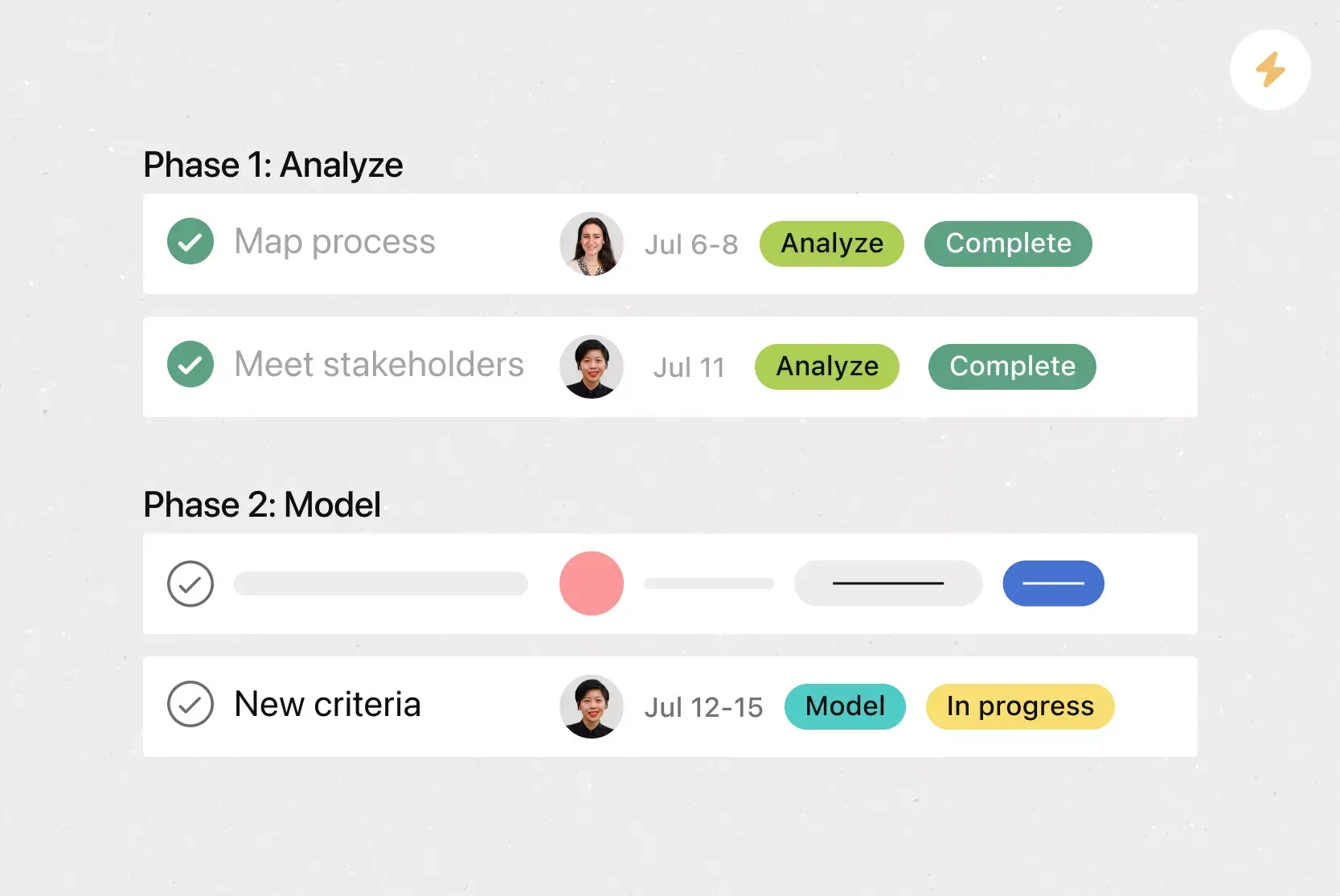
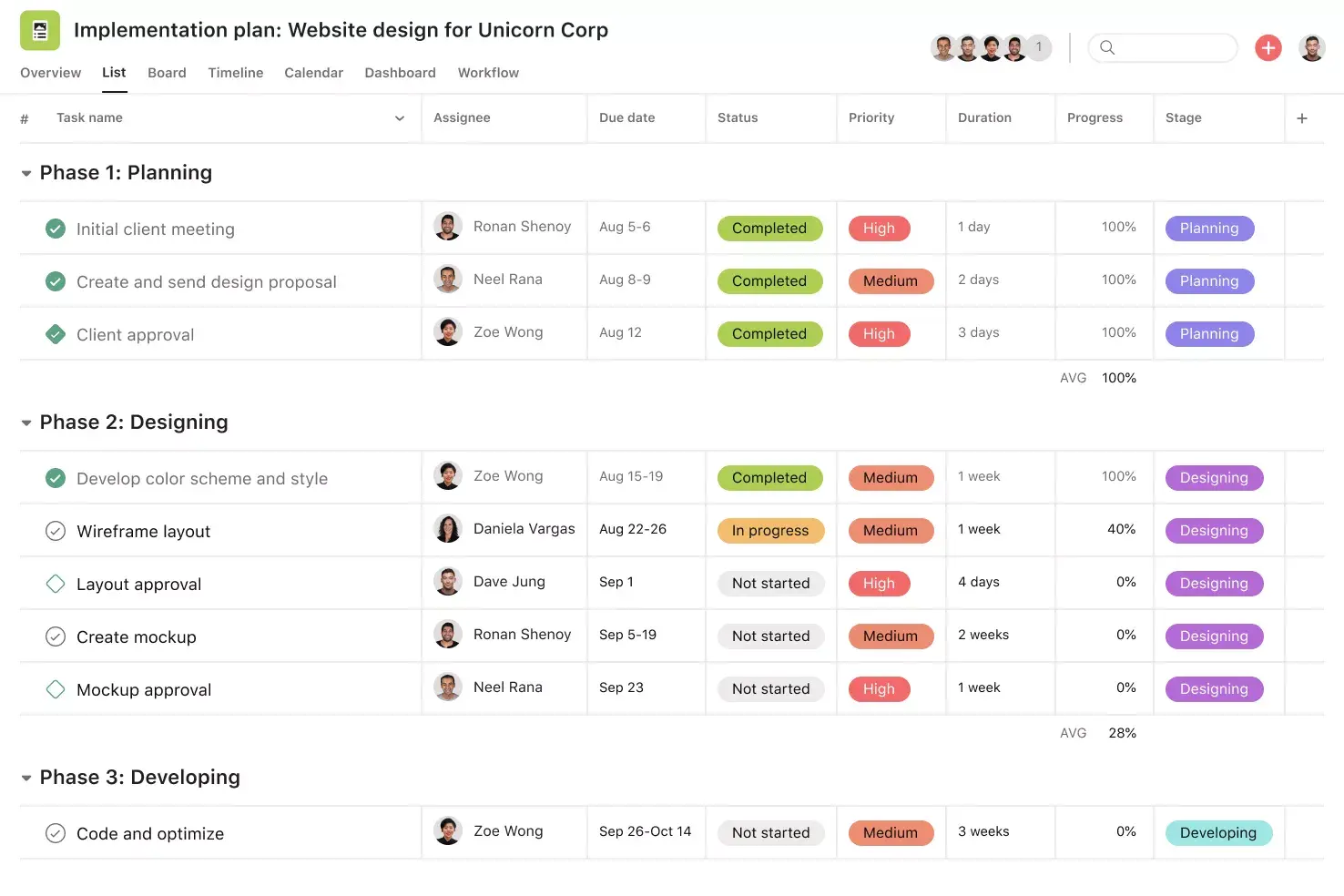
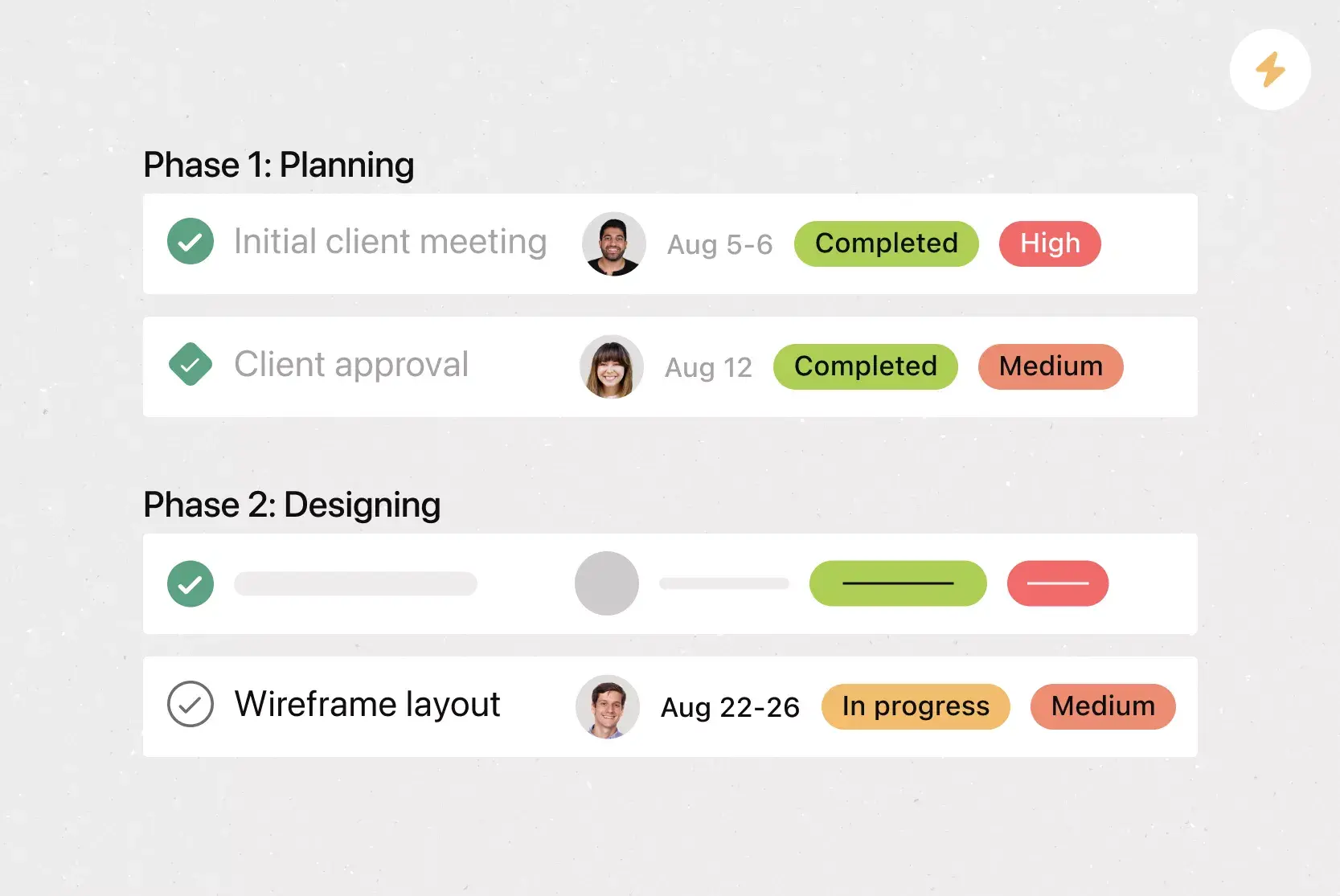
This example shows how breaking a project into phases and tasks creates visibility into what needs to happen, who's responsible, and when each piece is due. In Asana, you can build this same structure using the HR project plan template, then switch between list, board, timeline, and calendar views to see your project the way that works best for your team.
Get started with your HR project plan template
Managing HR projects doesn't have to feel overwhelming. Asana's free HR project plan template gives you a ready-made structure to plan, track, and manage any initiative, so your team can stay organized, hit deadlines, and focus on work that matters.
Ready to bring more clarity to your HR projects? Get started with Asana today and see how easy it is to turn your next HR initiative into a well-organized plan your whole team can follow.
CTA HR project plan templateFAQs about HR project plans
What are some examples of HR projects?
What should an HR project plan include?
How do I customize an HR project plan template for my team?
What's the difference between an HR project plan and an HR strategic plan?
Related templates

![[Templates] Waterfall project management (card image)](https://assets.asana.biz/transform/d87fc21c-53f0-4bc9-9094-9789b963be9b/article-project-management-waterfall-project-management-methodology-2x?io=transform:fill,width:2560&format=webp)
![[Templates] Marketing Project Plan (Card) image](https://assets.asana.biz/transform/af70ac54-97b9-4639-b639-be3a3d951e3e/TG23-web-thumbnail-016-stakeholderregister-static-2x?io=transform:fill,width:2560&format=webp)
![[Templates] Status report (card image)](https://assets.asana.biz/transform/9c82d399-782b-40d3-9eb1-fd7544bef794/article-project-management-project-management-maturity-model-2x?io=transform:fill,width:2560&format=webp)
![[Templates] Event Marketing Plan (Card image)](https://assets.asana.biz/transform/6c7b9329-b612-4732-910a-7917fa079f0b/TG23-web-thumbnail-014-project-chart-static-2x?io=transform:fill,width:2560&format=webp)
![[Templates] Communication plan (card image)](https://assets.asana.biz/transform/3dc9eadf-9d2d-40a2-a05d-63adb32a1de7/article-collaboration-synchronous-vs-asynchronous-communication-2x?io=transform:fill,width:2560&format=webp)
![[Template] IT project plan (Card image)](https://assets.asana.biz/transform/8aa523a9-4dcb-4053-8e69-7bdf900b48b9/web-product-template-thumbnail-IT-EN-US?io=transform:fill,width:2560&format=webp)
![[Templates] Design Project Plan (Card image)](https://assets.asana.biz/transform/c768a28c-822f-420f-93f9-f2eea4c93780/TG23-web-thumbnail-032-bill-of-materials-static-2x?io=transform:fill,width:2560&format=webp)
![[Templates] RFP Process (Card image)](https://assets.asana.biz/transform/14aa111b-ab22-483f-bfd1-3090acb7d2a5/RFP-process-premium-m?io=transform:fill,width:2560&format=webp)
Stay on top of every HR project
Access our HR project plan template directly in Asana.