


Employee Onboarding Template
Use a repeatable onboarding template to welcome new hires, track every step from pre-boarding to day 90, and help each employee feel supported from day one.
Sign up to use this template.
Employee Onboarding Template
Template created by Asana


Use a repeatable onboarding template to welcome new hires, track every step from pre-boarding to day 90, and help each employee feel supported from day one.
Use templateSign up to use this template.
INTEGRATED FEATURES
Recommended apps

Summary
Every new hire goes through onboarding, but the employee onboarding process is so much more than a list of tasks. It's your chance to make a first impression, prepare employees for their new job, set metrics for success, and help new team members feel like they belong at your company.
An effective onboarding experience has never been more important. With burnout and imposter syndrome on the rise, companies are looking for ways to help new employees feel welcome.
In this article, you'll learn:
What an employee onboarding template is and why it matters
How to structure your onboarding using the 5 C's
What to include in your checklist from pre-boarding through the first 90 days
How to set up the template so HR, IT, and managers share one plan
How Asana can help you manage the entire process
What is an employee onboarding template?
An employee onboarding template is a reusable, structured checklist that standardizes how your organization welcomes, sets up, and integrates new hires. It outlines every task, resource, and milestone a new team member needs to complete, from signing paperwork before their start date to reaching key goals during their first 90 days.
A template helps HR, hiring managers, and IT see what needs to be done and when, rather than relying on scattered emails or word of mouth. This creates a consistent and positive experience for every new employee, no matter their role or location.
Why use an employee onboarding template?
An employee onboarding plan template helps you standardize the process for every new hire. With a well-documented program, you can ensure team members get the information they need to succeed from day one.
Streamline the process
An effective onboarding checklist compiles all the tasks, documents, and resources your new hire needs in one place, so they don't have to track them down. When you create it in a project management tool, you can also save time by automating repetitive steps in the workflow.
Give team members the information they need to succeed
It's important to give new hires the tools they need to do their job. By explaining your expectations for their first week, month, and year, you help them understand what they need to do to succeed.
This doesn't just benefit the new hire; it also increases long-term employee satisfaction. When employees know what's expected of them, they're less likely to experience negative workplace emotions like burnout and imposter syndrome.
According to our research, burnout and imposter syndrome, which disproportionately affect younger workers, lead to:
Low morale and lack of engagement
Miscommunication and more mistakes
Higher attrition rates
Make virtual team members feel welcome
Having a clear employee onboarding template is especially important for remote onboarding. Your remote employees won't have as much face time with you or their virtual team. Clarifying what they need to do, where to communicate, and how to start making an impact right away will empower them, no matter where they live.
This matters even more for employees in different time zones. If you are not online when they are, give new hires a clear list of tasks so they can get started on their own.

Onboarding is a pivotal moment for making employees feel included from day one. It sets the tone for a person’s tenure at your company, laying the foundation for their knowledge of and experience working for your company. This is why building an inclusive onboarding experience is so important to creating an inclusive company culture.”
The 5 C's of effective onboarding
One helpful way to review your onboarding template is to use the 5 C's. The framework builds on the 4 C's model (compliance, clarification, culture, and connection) that Dr. Talya Bauer developed for the SHRM Foundation, and adds confidence as a fifth step. These five steps help you go beyond paperwork and give real support to new hires.
Compliance: Cover the essentials, such as company policies, legal documentation, and security protocols. Automate what you can, such as tax forms and handbook acknowledgments, so this step doesn't consume your new hire's entire first day.
Clarification: Help new hires understand their role, responsibilities, and performance expectations. Include clear descriptions of what success looks like during the first 30, 60, and 90 days.
Confidence: Design the onboarding experience to build your new hire's confidence. Provide role-specific training, pair them with a mentor, and create early opportunities for small wins that reinforce their decision to join your team.
Connection: Foster relationships early. Schedule introductions with teammates, cross-functional partners, and leadership. New employees who feel connected to their colleagues are more engaged and more likely to stay.
Culture: Go beyond listing company values in a slide deck. At Asana, one of our values is "Start with Heart," which means we approach every interaction with empathy, respect, and a genuine desire to understand. Weaving your culture into the onboarding experience helps new hires see how they fit in.
By building your onboarding template around these five steps, you create a better experience that covers both the practical and personal sides of starting a new job.
What to include in your onboarding checklist
To help new hires do well, you need an effective onboarding template and a clear plan for using it. To make your template helpful for everyone, be sure to:
Set expectations and timelines for when and how work should be completed.
Specify due dates for each action item.
Transform the template into a living document that the new hire can update in real time with questions, learnings, and next steps.
Outline the entire onboarding plan for the new hire from start to finish.
Below is a closer look at each phase you should cover in your checklist.
Pre-boarding tasks before day one
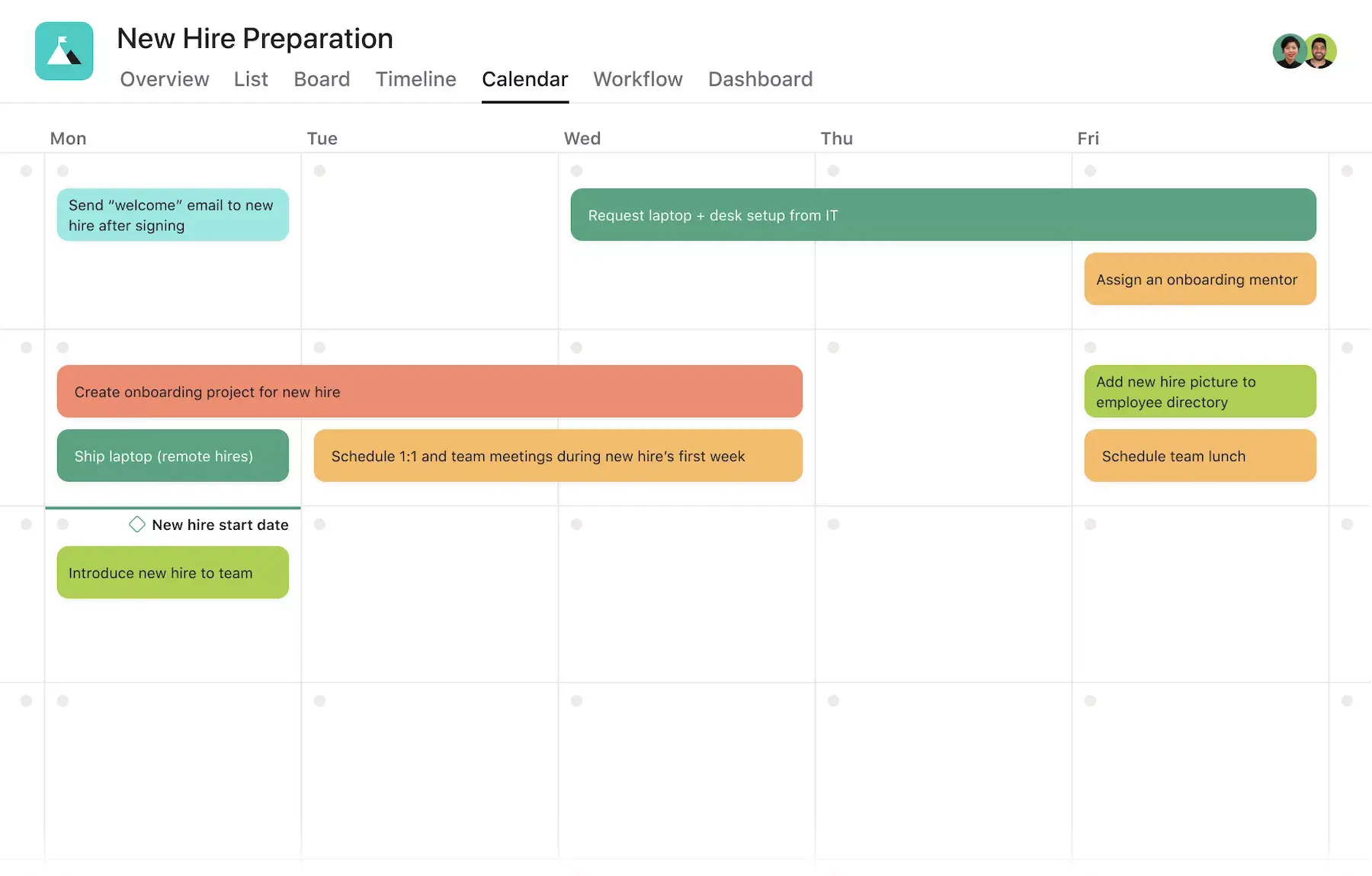
Start onboarding before your new hire arrives or logs in for the first time. Use the time between accepting the offer and their start date to handle details, so the first day can focus on building connections instead of paperwork.
Sending a welcome email with first-day details, dress code, and what to bring.
Sharing access to tools like email, your project management platform, and communication apps.
Completing new-hire paperwork digitally, including employment eligibility verification forms, tax withholding forms (such as IRS Form W-4), direct deposit details, and policy acknowledgments.
Preparing their workspace or shipping equipment for remote employees.
Introducing them to their onboarding buddy or mentor.
First day and first week essentials
The first day shapes how your new hire feels about your company. Make sure they feel welcome and comfortable, not overwhelmed.
A team introduction and welcome meeting.
An overview of the company's mission, values, and culture.
A walkthrough of key tools, platforms, and communication channels.
Initial one-on-one meetings with their manager to clarify role expectations.
Access to important documents like the employee handbook, organizational chart, and team goals.
Using the 30-60-90 day plan
A 30-60-90 day plan gives your new hire a clear roadmap for their first three months. It breaks onboarding into manageable phases, so both the employee and their manager can track progress along the way.
Days 1–30 (Learn)
Focus on absorbing new information
Complete required training
Learn team processes and tools
Build relationships across the organization
Days 31–60 (Contribute)
Focus on taking ownership
Contribute to team projects
Hold regular check-ins with your manager
Identify areas where you need support
Days 61–90 (Lead)
Focus on working independently
Key activities:
Propose ideas
Take on more responsibility
Complete a performance and goals review
How to use the employee onboarding template
The template gives you a ready-made structure. Here's how to set it up so HR, IT, facilities, and the hiring manager can work from one plan.
1. Create a project for each new hire
Use the template to create a new project for every new hire, and name it with their name and start date. Everyone follows the same core steps, so no one has to remember what comes next.
2. Assign every task to an owner
Give each task a single owner and a due date based on the start date. For example, IT owns laptop and account setup, HR owns paperwork and benefits, facilities owns workspace or equipment shipping, and the hiring manager owns introductions and the first one-on-one.
3. Tailor the checklist to the role
Add role-specific tasks, training, and resources to the company-wide steps. Use custom fields to track details like department, location, and start date so you can sort and filter onboarding work across all new hires.
4. Connect the work across teams
Use multihoming to add tasks to each team's project and the new hire's project, so IT and facilities see their onboarding work alongside everything else in their queue. Set up Automations in Asana to route tasks to the right owner as soon as you add a new hire. If your HR and IT teams handle onboarding as requests, Asana Service Management gives service teams one place to take in and route them.
5. Track progress through day 90
Use List view to see who's doing what by when, and check in at the 30-, 60-, and 90-day marks to review goals and adjust the plan.
Asana employee onboarding template
When we invest in onboarding, we give new hires the best start in their new roles. Part of this is making sure each new hire knows what to expect from the onboarding process.
Our employee onboarding template is different. It includes the main steps we use at Asana to help employees feel welcome from day one. Each new hire receives a manager-tailored checklist detailing meetings, check-ins, projects, and tasks for their role.
Other teams see the same benefit. After moving onboarding into Asana, Onfido's People Team estimates it cut preparation time for each onboarding week from 16 hours to just over 10.
Having one main place for all onboarding information helps employees know what to do from the start. It makes pre-boarding and onboarding easier by keeping everything together, including:
Job descriptions and role expectations
New hire paperwork and company policies
Employee handbook and key company documents
Key features for your onboarding template
The right tools make your onboarding template easier to use and more helpful for everyone. Here are some features and integrations that work well for onboarding in Asana.
Integrated features
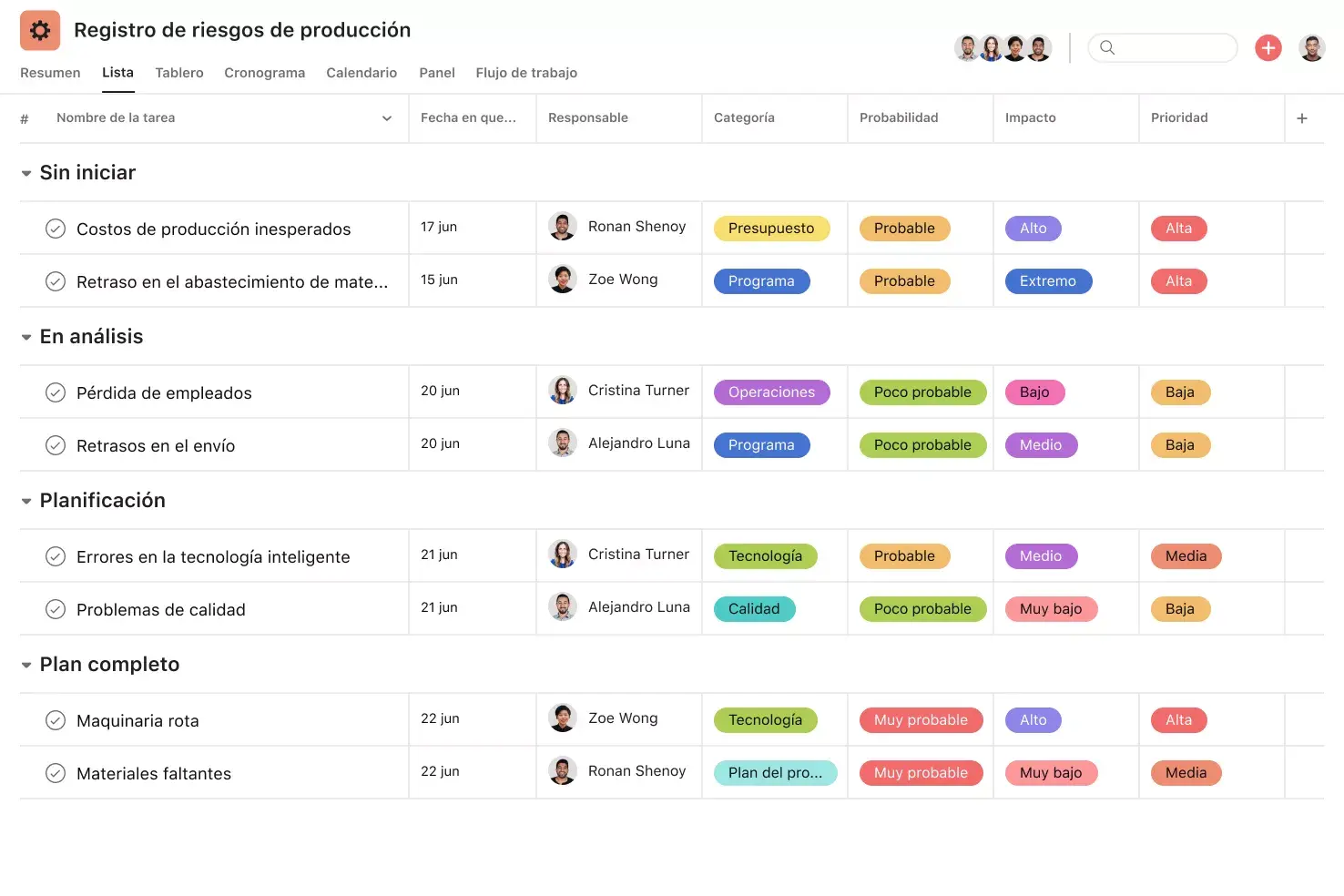
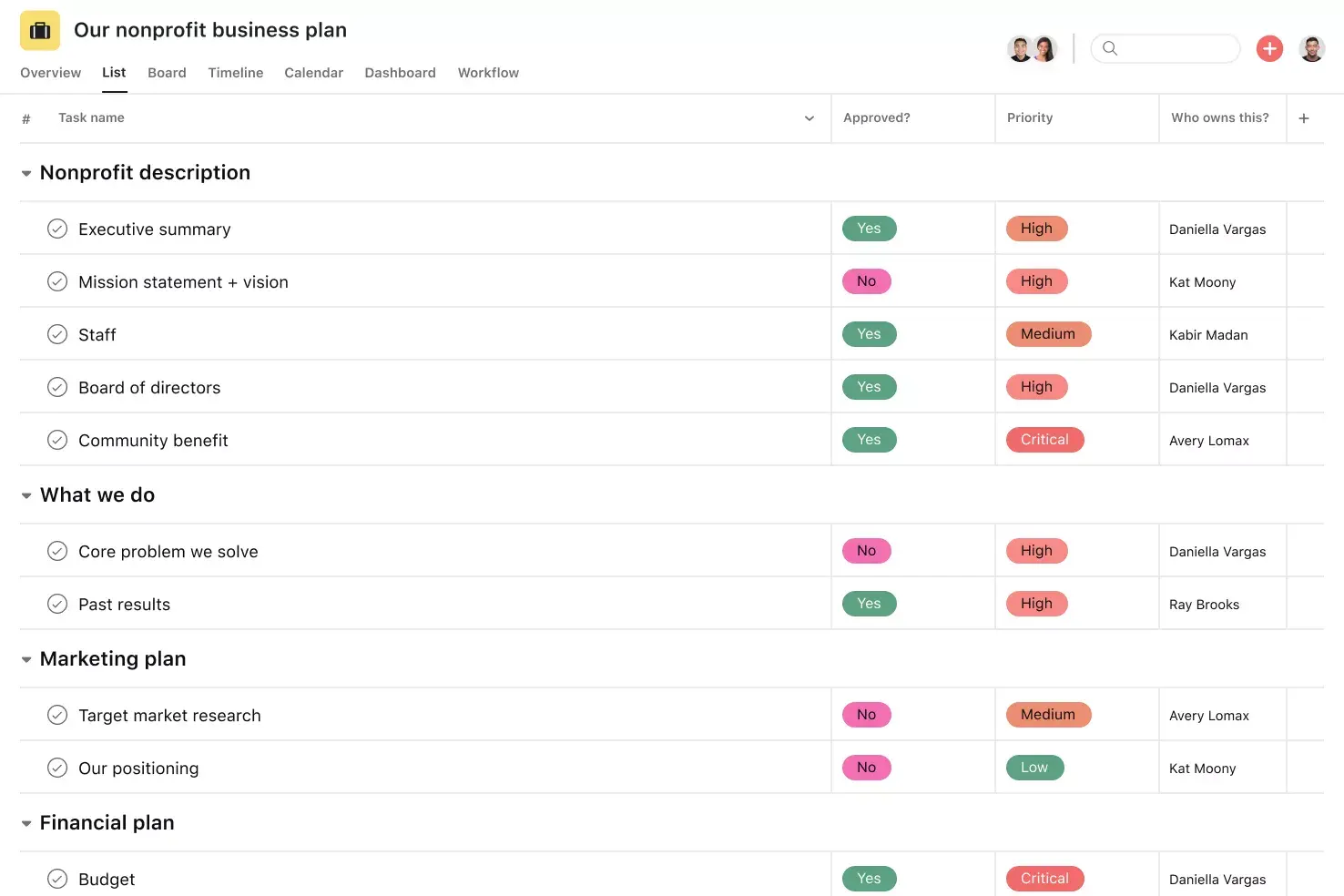
List View. A grid-style view that shows all your project's tasks, due dates, and custom fields at a glance, so your entire team can see who's doing what and by when.
Subtasks. Break large to-dos into smaller components while keeping them connected to the parent task. Subtasks help you distribute work across contributors and track multi-step processes.
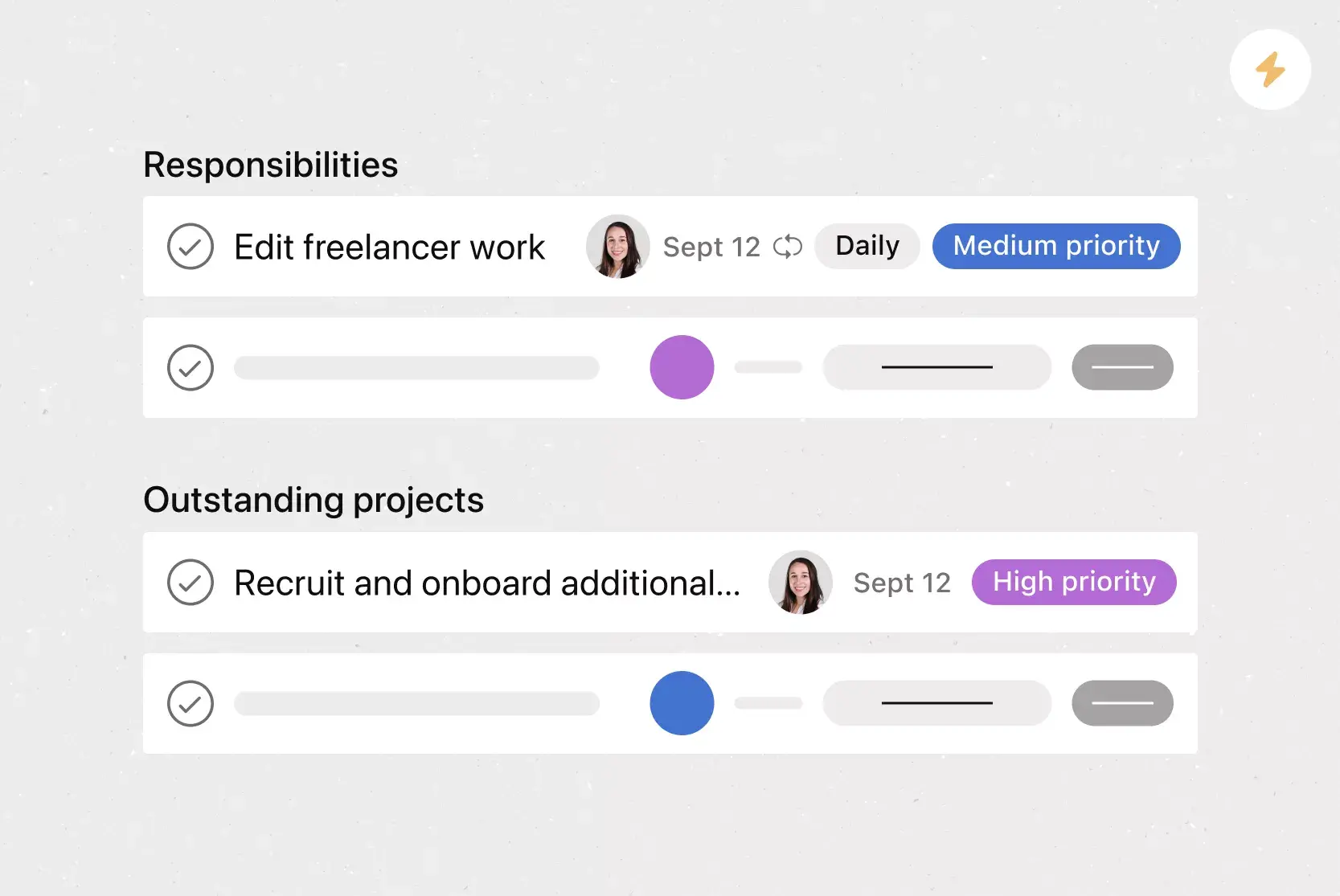
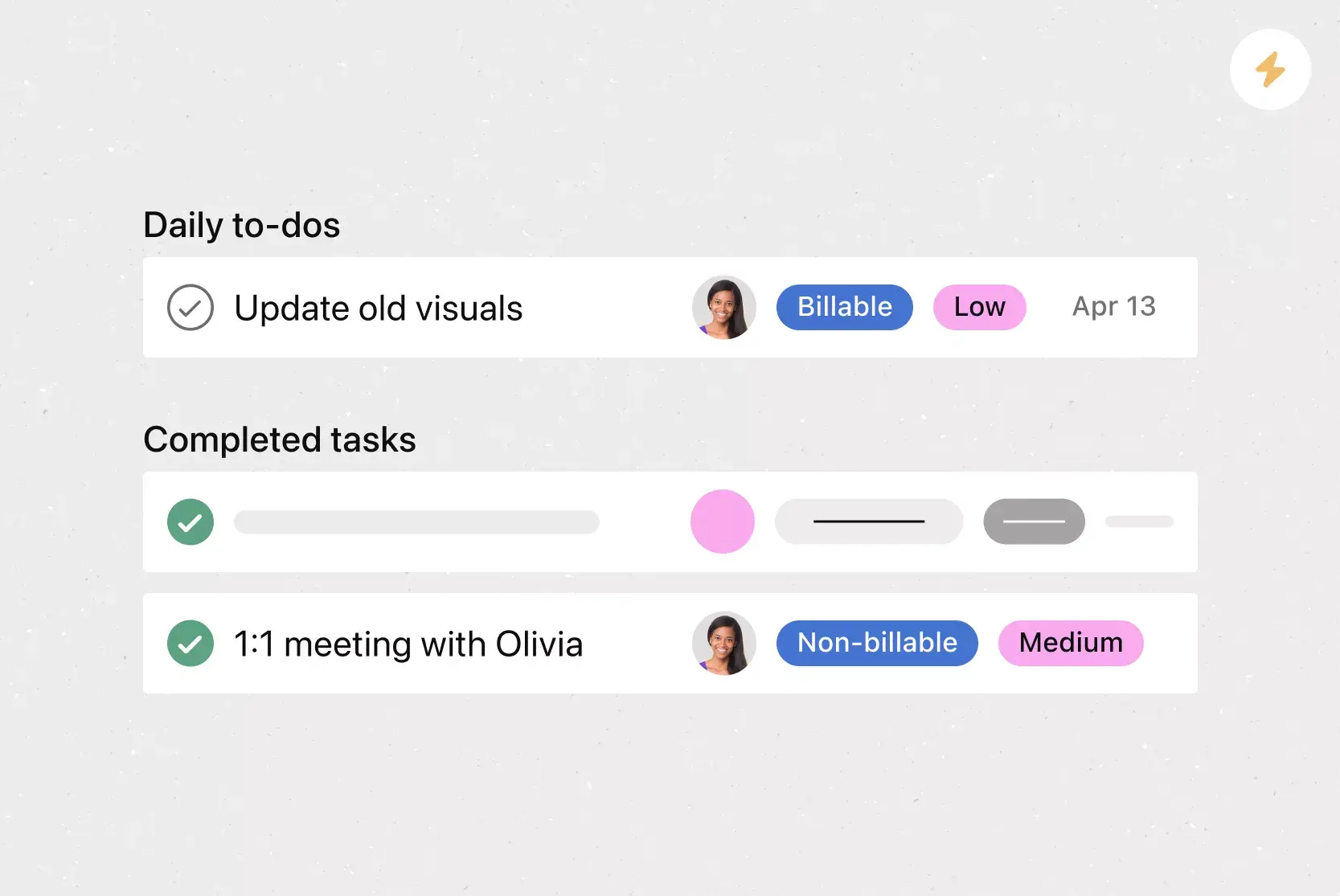
Custom fields. Tag, sort, and filter work by any criteria you need, from priority and status to email or phone number. Share custom fields across projects for consistency.
Multihoming. Add tasks to multiple projects to reduce duplicative work and increase cross-team visibility. Keep work in context even when it spans departments.
Recommended apps
Zoom. Prepare for meetings, create tasks during calls, and automatically pull transcripts and recordings back into Asana.
Gmail. Create Asana tasks directly from your inbox, with full email context attached, so nothing falls through the cracks.
Microsoft Teams. Search, share, and create Asana tasks without leaving Teams, even during a live meeting.
Slack. Turn Slack messages into trackable Asana tasks with assignees and due dates so work requests don't get lost.
Set your new hires up for success
A good onboarding experience helps employees succeed and stay engaged. With a clear template for pre-boarding, the first week, and the first 90 days, you can make sure every new hire feels informed, supported, and ready to contribute.
Asana makes it easy to build and manage your onboarding process in one place, with templates, automation, and integrations that keep everyone aligned. Get started and create a consistent onboarding experience your team will appreciate.
Use an employee onboarding templateFAQs about employee onboarding templates
Include first-day actions, 30-60-90 day tasks, orientation materials, compliance paperwork, and any role-specific training or resources your new hire needs to get started.
The HR team typically owns the master onboarding template, while hiring managers customize it with role-specific tasks and team details for each new hire.
Plan for at least 90 days of structured onboarding, then continue supporting new hires afterward. U.S. professional services workers surveyed by Insight Global said it takes 6 to 7 months to feel settled in a role, so regular manager check-ins after day 90 help new hires keep building confidence.
The four stages are pre-boarding (from offer to day one), orientation (the first day and week), training (role-specific skills and tools), and integration (ongoing development through the first 90 days).
Send a welcome letter before their start date with first-day details, assign them an onboarding buddy, and make sure their manager is available to answer questions throughout the first week.
Yes. In Insight Global's 2025 Employee Sentiment Report, 4 in 5 U.S. professional services workers said they would stay longer in a role with better onboarding. Among workers who left within 90 days, 60% cited disorganized or missing training. A structured checklist helps close those gaps.
Not necessarily. At Asana, each new hire gets two onboarding projects: one for company-wide essentials and one for role-specific tasks and information.
An onboarding checklist lists the specific tasks a new hire and their team need to complete, such as paperwork, equipment setup, and introductions. An onboarding plan, like a 30-60-90 day plan, sets the goals and milestones the new hire works toward over time. Using both works well: the plan sets direction, and the checklist tracks the work.
Keep every team's onboarding tasks in one shared project instead of separate lists. Assign each task to its owner in HR, IT, facilities, or the hiring team, and use multihoming so those tasks also appear in each team's own project. That way, everyone works from the same plan and sees progress in real time.
Related templates

Set new employees up for success
See why millions of people use Asana to get better work done.