Project management is an ever-evolving field that requires a number of approaches to be successful. Learning the most popular project management methodologies can help you become an industry expert.
A project management methodology is a system of principles, techniques, and procedures used by those who work in a discipline. Not only do the top methodologies differ in how they're structurally organized, but they also require different deliverables, workflows, and even project management software development.
In order to be the best possible project manager, learn about each of these 12 frameworks to find the one that best fits your team's needs.
The journey of AI adoption is no longer uncharted territory. Supported by research from our Work Innovation Lab in partnership with frontier AI safety and research company, Anthropic, this guide offers a how-to for navigating the journey of AI adoption.
A project management methodology is a structured system of principles, practices, and processes that guides how you plan, execute, and complete projects. It serves as a roadmap that defines your team's workflow, tools, and success metrics.
Without a clear methodology, teams often struggle with miscommunication, missed deadlines, and scope creep. The right framework helps your team:
Establish clear roles and responsibilities
Create predictable workflows and timelines
Improve communication across stakeholders
Adapt to changes without derailing progress
Deliver consistent, high-quality work
Before diving into specific methodologies, it helps to understand the three main categories they fall into. Most approaches can be grouped into predictive, adaptive, or hybrid categories, based on their level of structure or flexibility.
Type | Approach | Best for | Examples |
Predictive | Linear, sequential | Fixed requirements, clear scope | Waterfall, PRINCE2 |
Adaptive | Iterative, flexible | Evolving requirements, frequent feedback | Scrum, Kanban, XP |
Hybrid | Combined elements | Balance of structure and flexibility | Scrumban |
Predictive methodologies follow a linear, sequential approach where you plan the entire project upfront. These work best when requirements are clear and unlikely to change. Waterfall and PRINCE2 are common examples.
Adaptive methodologies embrace change and use iterative cycles to deliver work incrementally. They're ideal for projects where requirements evolve or when you need frequent feedback. Scrum, Kanban, and Extreme Programming fall into this category.
Hybrid methodologies combine elements of both predictive and adaptive approaches. They offer flexibility while maintaining some structure, making them useful for teams that need the best of both worlds. ScrumBan is a popular hybrid option.
What it is: The Agile project management methodology is one of the most common project management processes. But the reality is that Agile isn't technically a methodology. Instead, it's best defined as a project management principle.
The basis of an Agile approach is:
Collaborative
Fast and effective
Iterative, emphasizing data-driven decision making
Values individuals over processes
Teams often pair Agile principles with specific methodologies to create a tangible plan for delivering work. Common Agile frameworks include:
Scrum
Kanban
Extreme programming
Crystal
Connecting Agile methodology with a detailed framework produces a well-rounded project management philosophy.
Who should use it: The Agile framework works for just about any team. This is because the principle behind it is rather universal. The real trick is deciding which methodology to use with it.
What it is: The waterfall model is also a very popular framework. But unlike Agile, waterfall is an actual methodology that is rather straightforward. The waterfall methodology, also known as the software development life cycle (SDLC), is a linear process in which work cascades down (similar to a waterfall) and is organized in sequential order.
To achieve this approach, each work task is connected to the next by a dependency. This means each task must be completed before the next task can be started. Not only does this ensure that work stays on track, but it also fosters clear communication throughout the process.
While some modern organizations view it as a traditional approach, this method is effective for creating a predictable, well-planned project plan.
Who should use it: Since the waterfall project management methodology is highly detailed, it's ideal for large projects with multiple stakeholders. This is because there are clear steps throughout the project and dependencies that help track the work needed to reach goals.
What it is: The Scrum methodology involves short "sprints" that form a project cycle. These cycles last one to two weeks and are organized into teams of 10 or fewer. This is different from the waterfall approach, where individual tasks are broken down into dependencies.
Scrum is unique for its use of a Scrum master, a project manager who leads daily meetings, demos, sprints, and retrospectives. These ceremonies connect stakeholders and keep tasks on track.
While Scrum is technically a project management methodology in its own right, it's most commonly associated with an Agile framework. This is because they share similar principles, such as collaboration and valuing individuals over processes.
Who should use it: Teams that use an Agile approach should use, or at least try, the Scrum methodology as well. Since sprints are divided into small teams, this approach can work for both small and large teams.
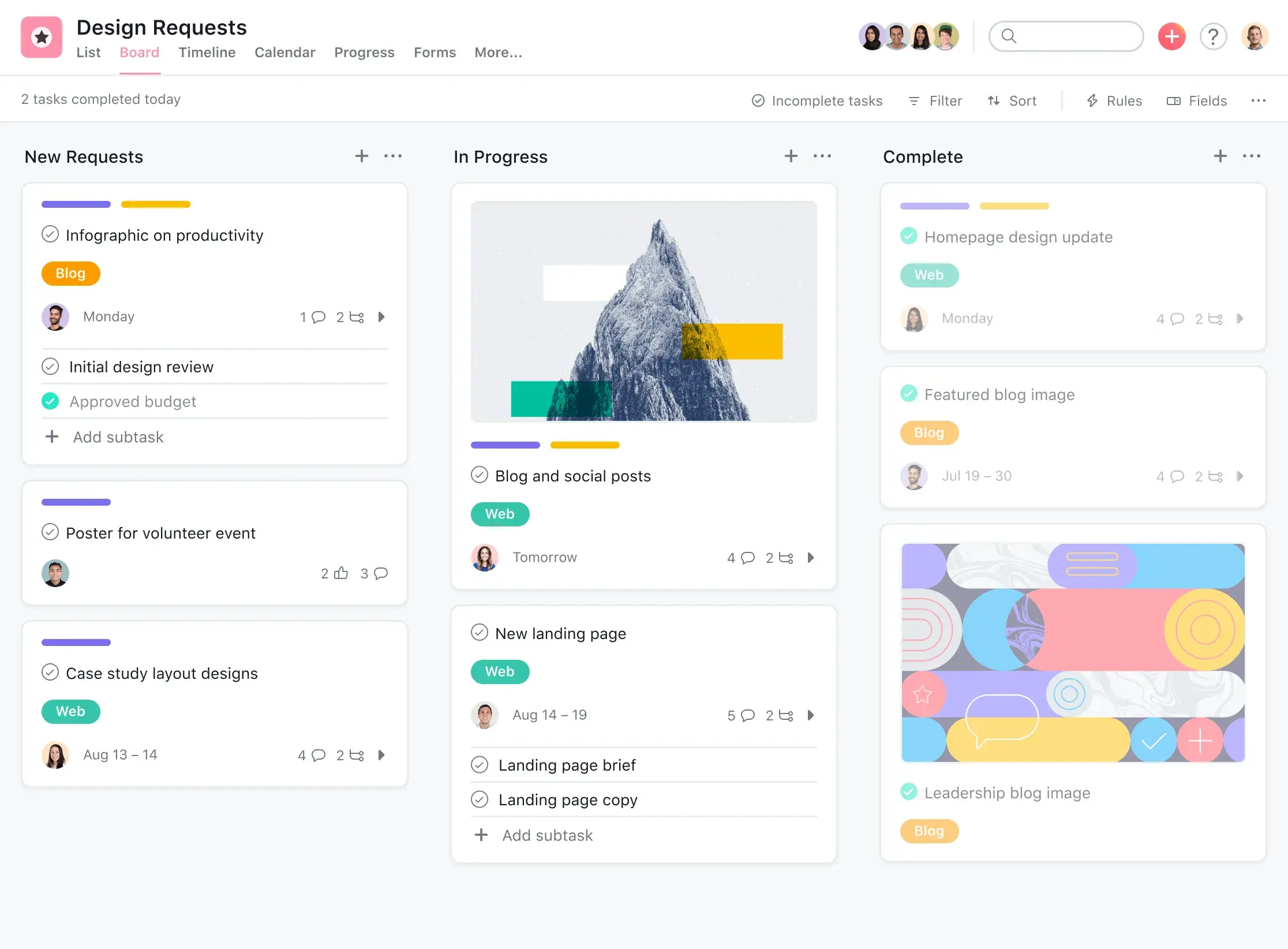
Read: Waterfall vs. Agile vs. Kanban vs. Scrum: What's the difference?What it is: The Kanban methodology uses visual boards to represent project backlogs. Agile teams use it to visualize workflows, track progress, and reduce bottlenecks. Most teams implement Kanban through software tools that let you drag and organize tasks seamlessly.
Since this method doesn't have a defined process like others, many teams use it differently. The main concept to keep in mind is that Kanban focuses on the most important project tasks, keeping the overall framework simple.
Who should use it: Kanban boards are great for teams of all sizes, especially remote-first teams. This is because the visual capabilities of Kanban boards help team members stay on track no matter where they are.
Manage projects with one toolWhat it is: As you may have guessed, ScrumBan is a methodology that draws inspiration from both Scrum and Kanban frameworks. Some consider this a hybrid approach that combines the best of both.
ScrumBan uses a similar sprint cycle to Scrum but allows individual tasks to be pulled into the plan, like in Kanban. This allows the most important work to be completed and keeps project plans simple. ScrumBan also uses Scrum meetings to enhance collaboration and keep goals top of mind.
Who should use it: If you like the idea of breaking down a project into smaller tasks, but likewise want to keep it visually simple, Scrumban might be for you. It's the perfect intersection of simplicity and clarity.
What it is: PRINCE2 (PRojects IN Controlled Environments) uses waterfall methodology to define project stages. Originally created by the UK government for IT projects, it's best suited for large IT initiatives.
The seven main principles of PRINCE2 include:
Starting a project
Directing a project
Initiating a project
Controlling a project
Managing product delivery
Managing a stage boundary
Closing a project
These principles create a thorough process for enterprise projects. PRINCE2 clearly defines roles and streamlines tasks like controlling stages, managing delivery, and closing projects.
Who should use it: Due to the particular nature of the PRINCE2 project management methodology, it's best suited for large enterprise projects with many project stakeholders. Using it for small projects may create a longer and more complicated process than necessary.
What it is: Unlike the other PM methodologies, Six Sigma is used for quality management and is frequently described as a philosophy rather than a traditional methodology. It is often paired with either a lean methodology or Agile framework, otherwise known as lean Six Sigma and Agile Six Sigma.
The main purpose of Six Sigma is to continuously improve processes and eliminate defects.
This is achieved through continuous improvements by field experts to sustain, define, and control processes.
To take this method one step further, you can use a Six Sigma DMAIC process, which creates a phased approach. These phases include:
Define: Create a project scope, business case, and initial stand-up meeting.
Measure: Collect data that helps inform improvement needs.
Analyze: Identify the root causes of problems.
Improve: Solve the root causes found.
Control: Work to sustain the solutions for future projects.
Who should use it: Six Sigma is best for large organizations, typically those with 200 or more employees. This is when the need to eliminate project waste starts to have a larger impact on your organization.
What it is: The critical path method identifies and schedules critical tasks within a project. This includes creating task dependencies, tracking project goals and progress, prioritizing deliverables, and managing due dates, all of which are similar to a work breakdown structure.
The objective of this methodology is to properly manage successful projects at scale so that milestones and deliverables are mapped correctly.
Who should use it: The critical path method is best for small and mid-size projects and teams. This is because large projects require many deliverables and involve multiple stakeholders, and the CPM isn't designed to manage complex projects.
What it is: The critical chain project management framework is closely related to the critical path methodology but is even more detailed, making it one of the most comprehensive options.
Along with implementing a work breakdown structure like CPM, CCPM includes specific time requirements for each task. This helps take task tracking one step further, making it clear when tasks exceed their allotted time. It also uses resource leveling, which aims to resolve large workloads by distributing work across available resources.
Not only do these help productivity and efficiency, but they also connect the work needed to be completed to project goals. Many project management tools even include visual elements to better illustrate these goals, creating an organized roadmap for team members.
Who should use it: CCPM is a great method for both small and large teams, but it mostly helps solve project efficiency problems. It can also be a great way to report work in progress to leadership.
What it is: The lean project management methodology aims to cut waste and create a simple way to address project needs. This ultimately means doing more with less to drive operational efficiency and teamwork.
While reducing waste originally referred to a physical product (which dates back to the method used by Henry Ford and later by Toyota and Motorola), it now refers to wasteful practices. There are three Ms that represent this:
Muda (wastefulness): Practices that consume resources but don't add value
Mura (unevenness): Occurs through overproduction and leaves behind waste
Muri (overburden): Occurs when there is too much strain on resources
As a project manager, your job is to prevent the three Ms from disrupting processes and to maximize value. This focus on eliminating waste makes Lean particularly effective for teams looking to do more with less.
Who should use it: Since lean is all about reducing waste, it's best suited for teams struggling with efficiency issues. While this will have a greater impact on large organizations, it can be helpful for project teams of all sizes.
What it is: While the PMI's Project Management Body of Knowledge is associated with a project management methodology, it's more closely related to a set of best practices that take into account various development processes.
This approach focuses on implementing the five project management phases, which help manage a project from start to finish in a structured, phased approach. The five phases include:
Project initiation
Project planning
Project executing
Project performance
Project closure
While this is a good foundation to keep in mind, the PMBOK® Guide isn't necessarily as specific as other approaches. This means you'll need to decide which tasks to complete in each phase.
Who should use it: The PMBOK® Guide can be used on its own for small teams on standard projects, though it's a good idea to pair it with a more detailed methodology (like CPM) for large teams handling complex projects.
What it is: As the name suggests, extreme programming is used for fast-paced projects with tight deadlines. The approach works by creating short development cycles with many releases. This makes for quick turnaround times and increased productivity.
Extreme programming has a few core values, which include simplicity, communication, feedback, respect, and courage. It also includes a specific set of XP rules covering all phases from planning to testing.
Who should use it: Extreme programming is most commonly used for individual projects with tight deadlines, typically with small to midsize teams. Since XP is a fast-paced method, it should be used sparingly to prevent burnout.
There is no one-size-fits-all approach to project management methodologies. Each offers unique principles for taking a development project from an initial plan to final execution.
The main aspects to keep in mind are your team's size and how it prefers to work. Here are some additional tips to consider:
Your industry: Consider if you're in an industry that changes frequently. For example, a technology company would be an industry that is ever-evolving. This will affect project consistency and should be paired with either a flexible or stagnant methodology.
Your project focus: Consider the objectives of your projects. Do you value people over efficiency? This will help you pair with a methodology that aligns with a similar objective.
The complexity of projects: Are your projects on the more complex side, or are they usually straightforward? Some methods are better than others at organizing complex tasks, such as CCPM.
The specialization of roles: Consider how niche the roles within your team are. Can multiple team members alternate the same type of work, or do you need a method that focuses on specialization?
Your organization's size: The size of your organization and team should be a key factor in deciding on a methodology. Methods like Kanban are universal for team size, while options like CPM are better suited for small teams.
Whether your team members prefer a visual process like Kanban or a more traditional project management approach like the waterfall method, there's an option for every type of team. To take a project management methodology one step further, consider a work management tool to better track and complete development projects.
The right tools turn your chosen methodology from theory into practice. Modern project management software supports multiple frameworks and helps you track progress, collaborate, and stay on schedule.
When evaluating tools, look for features that align with your methodology:
For Agile and Scrum: Sprint planning, backlog management, and burndown charts
For Kanban: Visual boards, work-in-progress limits, and workflow automation
For Waterfall: Gantt charts, dependency tracking, and milestone management
For any methodology: Real-time collaboration, reporting dashboards, and integrations with your existing tools
AI is transforming how teams manage projects. Key AI-powered capabilities include:
Automation: Handle routine tasks like status updates and assignments
Bottleneck detection: Identify potential delays before they affect timelines
Smart insights: Surface data-driven recommendations for better decisions
Predictive adjustments: Automatically suggest timeline changes based on progress
With the right project management methodology in place, you'll be able to take your projects to new levels of efficiency and implement processes that are right for your team, your organization, and yourself.
The best methodology is one that fits how your team actually works. Start by understanding your project requirements, team preferences, and organizational goals. Then pair your chosen approach with a work management platform that brings everything together in one place.
Ready to put your methodology into action? Get started with Asana to organize your projects, connect your team, and deliver work that matters.
Manage projects with one tool