Product manager vs project manager: Who does what from idea to launch?


85% of Fortune 100 companies choose Asana¹






Summary
Asana’s State of Work Innovation research found that only 12% of workers felt new ideas moved seamlessly between departments. For product teams, an idea needs both a clear rationale and a plan to make it happen. Understanding product and project management roles helps bridge these essential elements.
This guide outlines the differences between a project manager and a product manager, when you need each, and how they collaborate from idea to launch. It also demonstrates how Asana and its customers manage these processes, including a template to clarify decisions, owners, and next steps.
Launch high impact campaigns, faster
Get insights from marketing experts at Calendly and Asana on how to launch winning campaigns, coordinate across teams and execute faster to deliver on results, leverage AI to boost productivity, and more.
Product manager vs. project manager
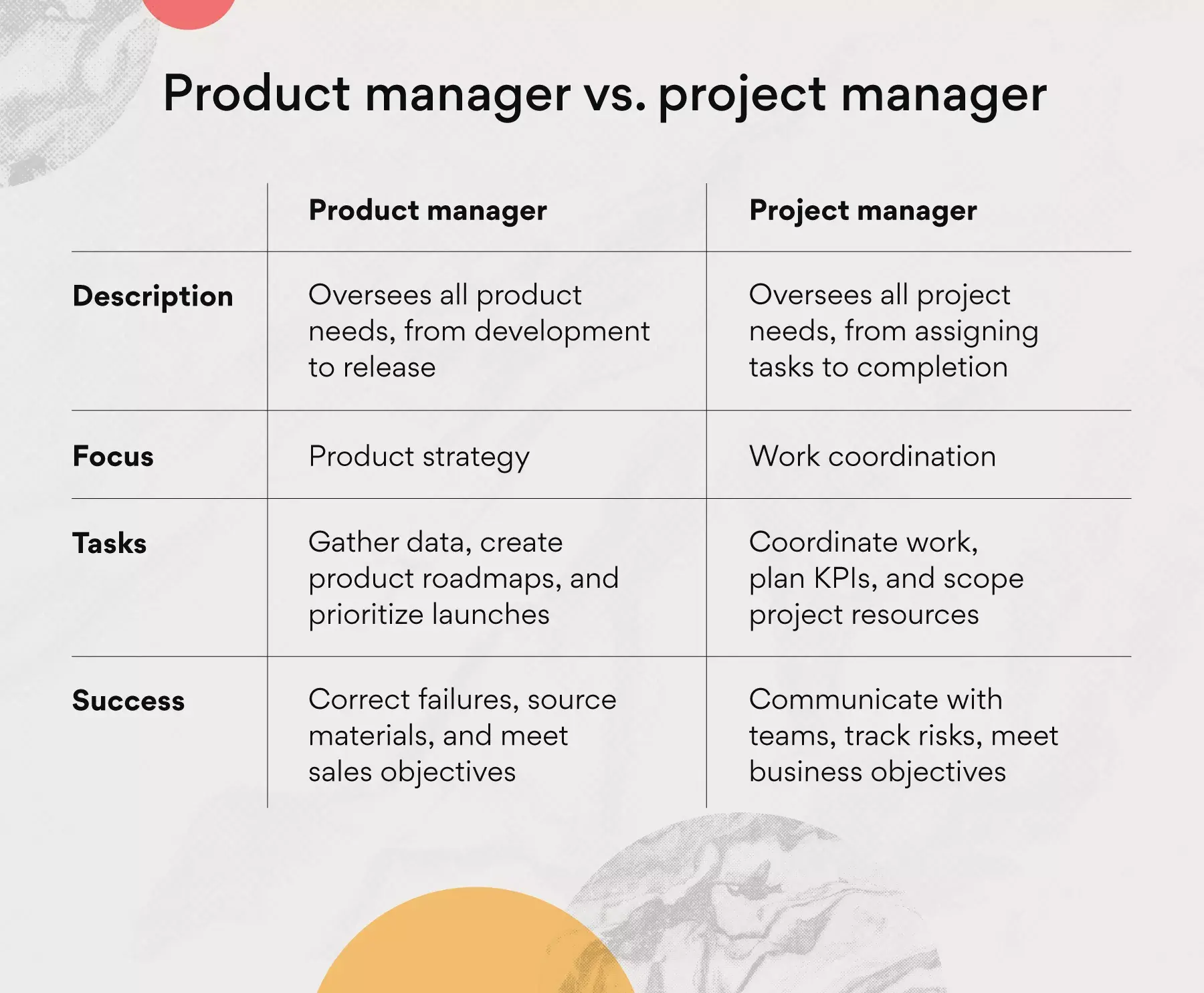
The difference between product manager and project manager roles lies in the work each leads. A product manager determines which customer problems to address and defines success. A project manager plans and coordinates the work required to deliver the agreed result.
Both roles rely on the expertise of those doing the work. Engineers and designers determine technical and design approaches, while managers align these decisions with product priorities, available resources, and delivery commitments.
Comparison | Product manager | Project manager |
Purpose | Improve the product’s value for customers and the business. | Deliver an agreed result within the project’s constraints. |
Key decisions | Which problems, features, and improvements to prioritize. | How to organize tasks, dependencies, resources, and delivery risks with the team. |
Typical outputs | Product goals, a roadmap, and prioritized requirements. | A project plan, schedule, risk register, and progress updates. |
Time horizon | The product’s life, including improvements after release. | A defined project, from planning through completion. |
Success measures | Customer adoption, satisfaction, and relevant business outcomes. | Delivery against agreed scope, quality, timing, and budget. |
Adam Higa’s roadmapping approach at Asana shows how product priorities evolve. As a Growth PM, Higa connects experiments to goals and reviews past results before planning each quarter. He defines about half of his quarterly experiments in advance, allowing flexibility for customer interviews, discovery, and new findings.
See how requests, launch briefs, delivery tasks, and reporting are connected in Asana’s five-minute product launch demonstration.
What's the difference between a product and a project?
A product meets a customer’s need, such as software, jewelry, or a consulting service. It can continue to evolve after its initial release as the team learns what customers need and improves the offering.
A project is a set of tasks undertaken to achieve a specific result within a defined scope and timeframe. Examples include a website redesign, new feature launch, or internal process update. One product can involve many projects throughout its life.
What is product management?
Product management involves understanding customer needs, setting product direction, prioritizing opportunities, and measuring results throughout the product development process and beyond. The work continues after release as the team reviews customer feedback and decides what to improve next.
What is project management?
Project management is the planning, coordinating, and tracking of tasks to achieve a specific result. It brings together scope, people, timelines, resources, and risks so the team can agree on a plan and adapt when circumstances change.
The difference between product management and project management is scope: product management guides a product's ongoing direction, while project management organizes the work required to complete a specific initiative.
What is a product manager?
A product manager guides a product’s direction by understanding customers, assessing the market, and setting priorities with the team. They define what the product should achieve and how to measure its success. Depending on the organization, a product manager’s responsibilities may also include pricing and launch planning.
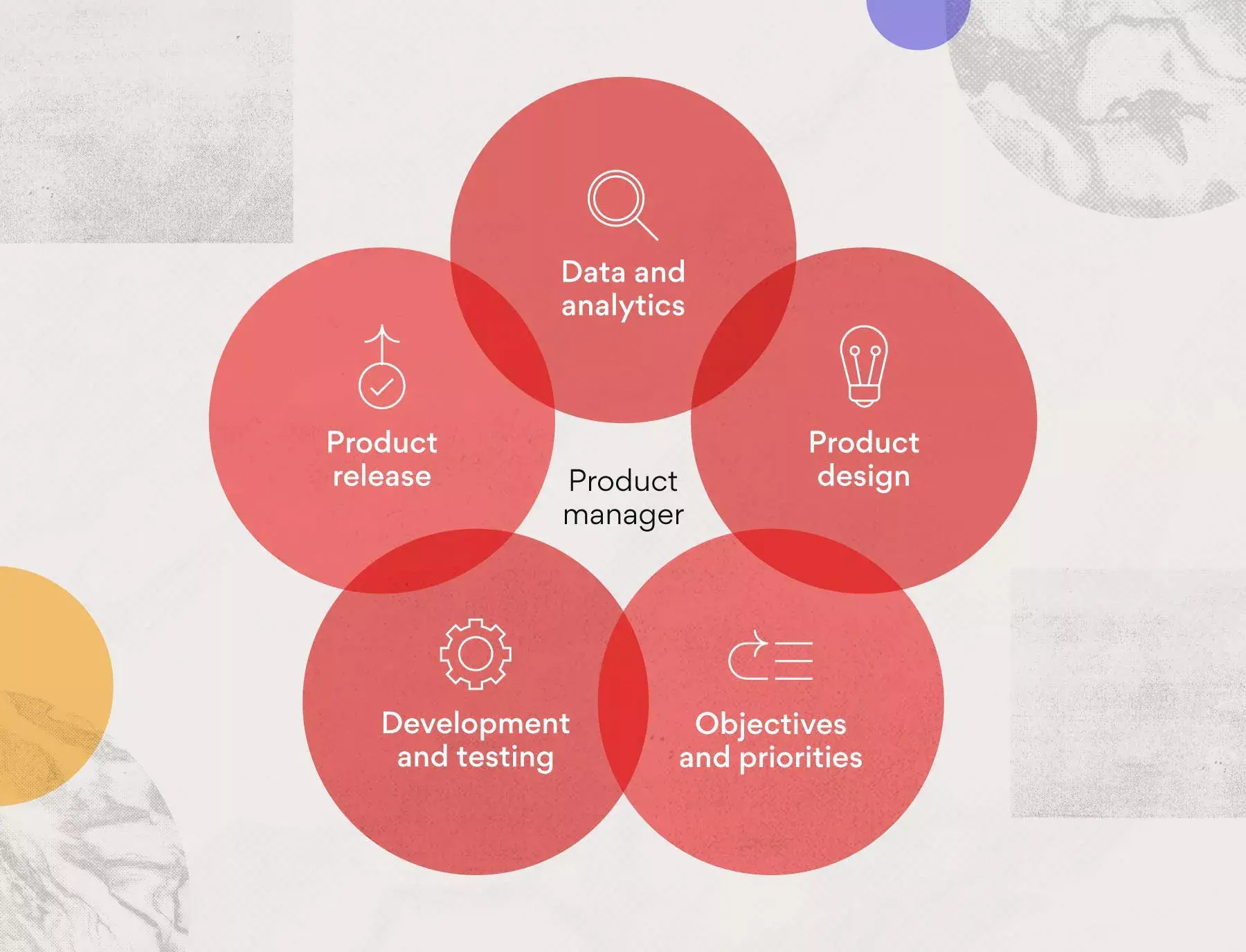
A product manager differs from a Scrum product owner, who focuses on maximizing product value and managing the Scrum team's backlog. One person may hold both roles, but the team should agree on how to handle broader strategy and daily backlog management.
Try Asana for product managersWhat does a product manager do?
A product manager integrates customer needs, business goals, and team capabilities into product decisions. Their responsibilities commonly include:
Understanding customers: Use interviews, feedback, surveys, and product usage data to identify problems worth solving.
Analyzing the market: Review competitors, alternatives, and changes in demand to assess opportunities.
Setting priorities: Decide which improvements deserve attention based on customer value, business goals, evidence, and effort.
Maintaining the roadmap: Explain the product’s direction and update priorities as the team learns. Coordinate product launches with the people responsible for delivery and promotion.
Managing product requirements: Work with design, engineering, and other specialists to define needs and maintain a useful product backlog.
Reviewing results: Check whether released work improves adoption, customer satisfaction, or the business outcome the team intended.
Asana’s own research team shows how AI can help make customer evidence available sooner. In its AI Studio research workflow, initial interview analysis fell from nearly 30 minutes to five minutes per interview. AI prepares a summary, then a researcher reviews and refines it before sharing. Product teams can use those findings when weighing priorities, with people responsible for interpreting the evidence and making decisions.
Use a product roadmap template to organize priorities and show how planned work connects to the product’s goals. The exact responsibilities will depend on your organization and product team.
Challenges of being a product manager
Product managers often need to make decisions before every question has an answer. Common challenges include:
Competing customer needs: Compare requests with the product’s goals and explain why some work takes priority.
Incomplete evidence: Identify what the team still needs to learn before committing to a feature or changing direction.
Changing business requirements: Reassess priorities when customer expectations, market conditions, or company goals change.
Limited capacity: Work with the delivery team to understand trade-offs between scope, timing, and available resources.
Responsibilities such as sourcing materials or managing vendors vary by product and company. Agree on who owns that work instead of assuming it always belongs to the product manager.
What is a project manager?
A project manager is responsible for breaking down project tasks and strategic goals into actionable initiatives. This role involves coordinating, collaborating, communicating, and managing complex project dependencies and team resources.
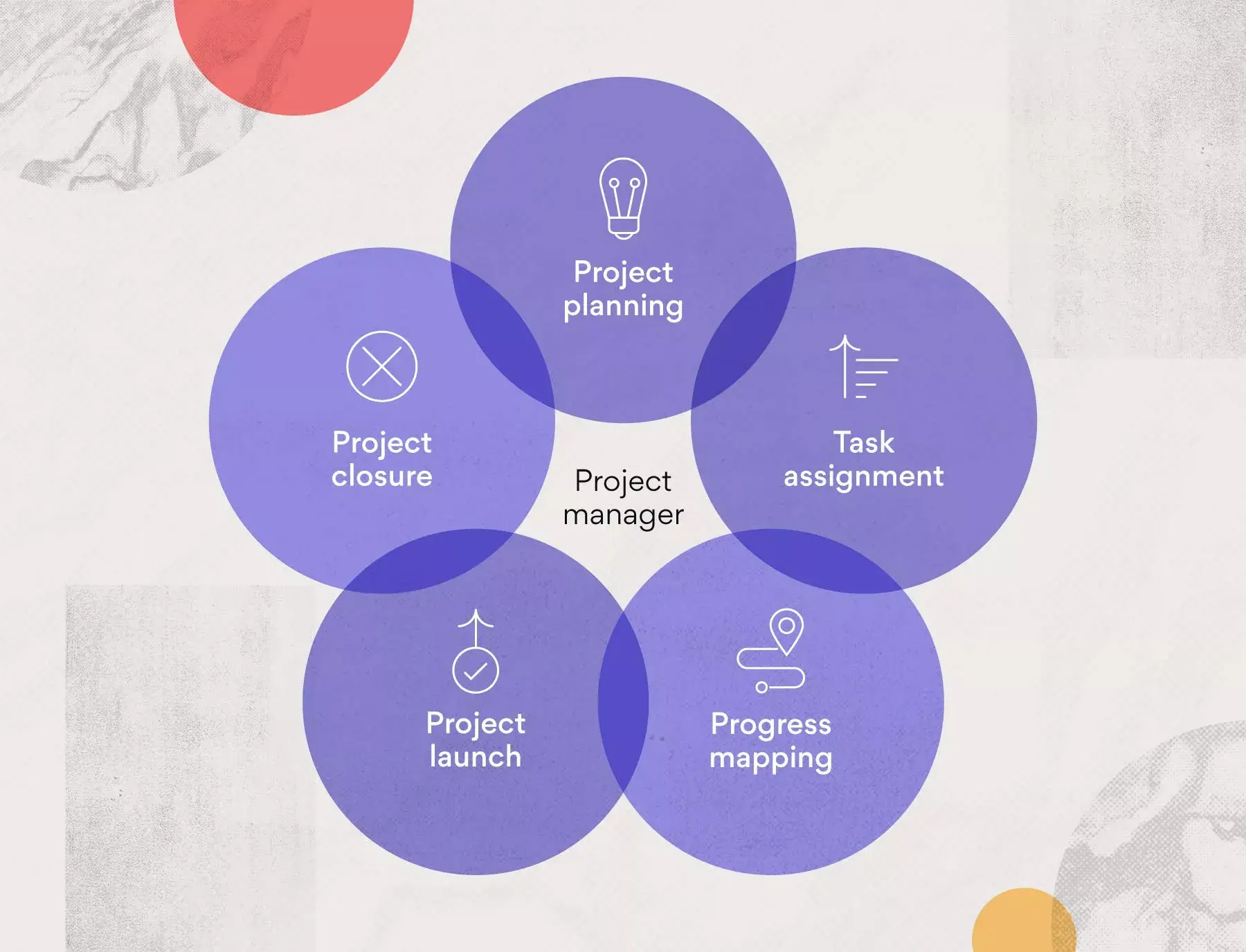
Working with specialists, a project manager develops a feasible plan and helps the team manage changes as work progresses. They coordinate scope, capacity, and stakeholder needs, and use project status reports to show progress, risks, and decisions that need attention.
Try Asana for project managementWhat does a project manager do?
A project manager supports the team through all project management phases, from planning through completion. Their responsibilities commonly include:
Agreeing on scope: Define the intended result, deliverables, and boundaries with the people involved.
Planning tasks and dependencies: Work with specialists to estimate effort, sequence activities, and build a realistic schedule. A critical path analysis can identify work that determines the completion date.
Coordinating resources: Check the team’s capacity, budget, and availability before committing to dates.
Tracking risks and progress: Monitor milestones and performance measures, identify obstacles, and agree on actions to address them.
Managing changes: Use a change control process to assess requests and record approved changes to scope, timing, or budget.
Keeping people informed: Share updates and decisions in the team’s project management tools. Use kickoff meetings and discussions when the team needs to agree on the work or solve a problem.
Asana’s product marketing team applies these practices when planning launches. They break work into tasks and milestones, link them to goals, and use portfolios to review progress. Owners, deadlines, and asynchronous updates keep work moving. After each launch, the team reviews results and documents lessons learned for future projects.
For more on reporting and coordination, explore Asana’s PMO reporting playbook or the Coupa PMO webinar.
Read: 25 essential project management skills you need to succeedProject manager challenges
Project managers help teams respond when the delivery plan is at risk. Common challenges include:
Dependencies: Identify which tasks are dependent on others, ask the people responsible for revised estimates, and update the schedule.
Changing scope: Assess the effect of a new request before the team commits to it. Record the decision and communicate any changes to dates or deliverables.
Limited capacity: Review workloads and resource allocation with team leads, then agree on what can realistically be delivered.
Unresolved risks: Maintain a risk register with an owner and response for each significant risk. Escalate issues when the team needs a decision or additional support.
The project manager brings the right people together to resolve these issues and keeps the plan current as decisions are made.
Try Asana for project managementKey skills for product managers and project managers
Both roles share core competencies but require distinct expertise. Here's how their skills compare:
Skill type | Product manager | Project manager |
Communication | Articulates product vision to stakeholders and customers | Coordinates updates across teams and leadership |
Strategic thinking | Defines product vision aligned with business goals | Plans project scope and milestones |
Research and analysis | Conducts market research and analyzes customer data | Assesses risks and tracks performance metrics |
Resource management | Prioritizes features and roadmap items | Allocates team capacity and budget |
Problem-solving | Addresses product-market fit challenges | Resolves delivery blockers and timeline issues |
Product manager vs. project manager salary
Compensation for product and project managers depends on location, industry, company size, seniority, and specific responsibilities. Job titles alone do not determine which role pays more. When comparing roles, review positions at similar levels in the same market, considering base pay, bonuses, equity, and the work you would be expected to lead.
How product managers and project managers collaborate
Product and project managers work together by agreeing on priorities, responsibilities, and how to share updates. In Asana’s 2023 research on high-value collaboration, 29% of leaders said collaboration expectations prevented employees from completing their work. Agreeing on when to discuss a problem and when to post an update can help teams protect time for delivery.
The project manager and product manager should discuss jointly when a new customer need changes priorities, a delivery issue threatens a commitment, or the team must choose between scope and timing. The product manager explains customer and business value, while the project manager works with specialists to assess the impact on the plan. Together, they present options to the person authorized to approve the change.
For routine coordination, record owners, due dates, decisions, and progress where everyone involved can access them. Use shared tasks and status updates to prepare for discussions, so meeting time focuses on resolving questions and making decisions.
Example: Launching a customer reporting feature

Consider a software team developing recurring reports. Maya, the product manager, wants customers to spend less time preparing the same report each week. Jordan, the project manager, coordinates the launch with engineering, design, support, and marketing.
Situation | How Maya and Jordan work together |
Choose the first release | Maya uses customer interviews to prioritize saved reports and scheduled email delivery. Jordan works with the team to map tasks and dependencies into a six-week delivery plan. |
Consider a late request | In week three, Sales requests PDF export. Maya assesses the customer need and business value. Jordan asks engineering and design to estimate the impact; they expect it to add two weeks. |
Agree on the change | Maya and Jordan present the options to the agreed launch approver. The approver keeps the six-week release and defers PDF export. They record the reason and schedule a review four weeks after launch. |
Review after launch | Jordan checks completed work and any unresolved delivery issues. Maya reviews use of recurring reports and customer feedback four weeks after release. The team uses that evidence to decide what to improve next. |
Use this template to agree on responsibilities
Copy this table into your own document and replace the prompts with your team’s details. You can also keep the information in an Asana project, using task descriptions and fields that suit your setup. Agree on who can approve changes; a job title alone does not determine that authority.
Field | Your team’s answer |
Decision or deliverable | [Name the feature, release, or proposed change.] |
Customer evidence and desired result | [Record the customer need, supporting evidence, and how you will measure the result.] |
Product lead | [Name the person recommending product priorities.] |
Delivery lead | [Name the person coordinating tasks, dates, dependencies, and risks.] |
People to consult | [List the specialists and teams needed to assess the decision.] |
Approver | [Name who can approve changes to scope, dates, or budget.] |
Impact on work and timing | [Record estimates, assumptions, dependencies, and options.] |
Decision and next action | [Record the decision, reason, next action, owner, and due date.] |
Review date and results | [Set a review date, then record what happened.] |
How product and project managers use Asana

Product teams begin project management before a launch date is set. Customer feedback must reach those who decide what to build and coordinate delivery.
Asana’s Voice of the Customer program connects those activities. Forms send requests into an Asana project, where teams can review the type and frequency of feedback and assign follow-up work. When a request enters the roadmap, the product team informs the relevant customer-facing team, so the people who raised the need know what happens next.
Figma: Turn product specifications into a launch plan
Figma needed to connect product and engineering backlogs with the teams bringing new features to market. Once the team agreed on a product specification, they turned it into an Asana project using a reusable template with steps and milestones for product, design, and engineering.
With tasks and progress visible in Asana, product and engineering teams reported a 50% reduction in stand-up meeting time. Meetings could then concentrate on problems that needed discussion.
“Asana is our execution engine: do this, build this, test this, update these docs.” —Badrul Farooqi, then a product manager at Figma
devCAT: Keep work moving across production teams
Kyungha Kim and her project management team at game developer devCAT coordinated approximately 200 employees across 30 teams. Scattered spreadsheets and tools made it difficult to identify unfinished work.
Teams organized production work in Asana projects, connected relevant tasks to quarterly goals, and used Timeline to review progress across teams. Rules moved finished tasks into a completed section, making outstanding work easier to track.
“All our tasks are now categorized in Asana. As a result, the number of forgotten, incomplete tasks has decreased significantly.” —Kyungha Kim, Head Project Manager at devCAT
Acerbis: Check readiness before production moves forward
Manufacturer Acerbis needed a shared way to manage projects spanning 400–1,100 tasks. Working with AD Consulting, the company mapped its process from the initial request for quotation through production into Asana, with criteria for completing each stage.
Teams could check whether those requirements had been met before moving work forward, while a portfolio showed the status of manufacturing projects. This approach allows delivery coordinators to review readiness across complex work, including contributions from engineering and production.
Which role is right for your team?
To decide whether you need a product or project manager, assess the work your team is struggling to complete. Uncertain product priorities and missed delivery commitments require different types of support.
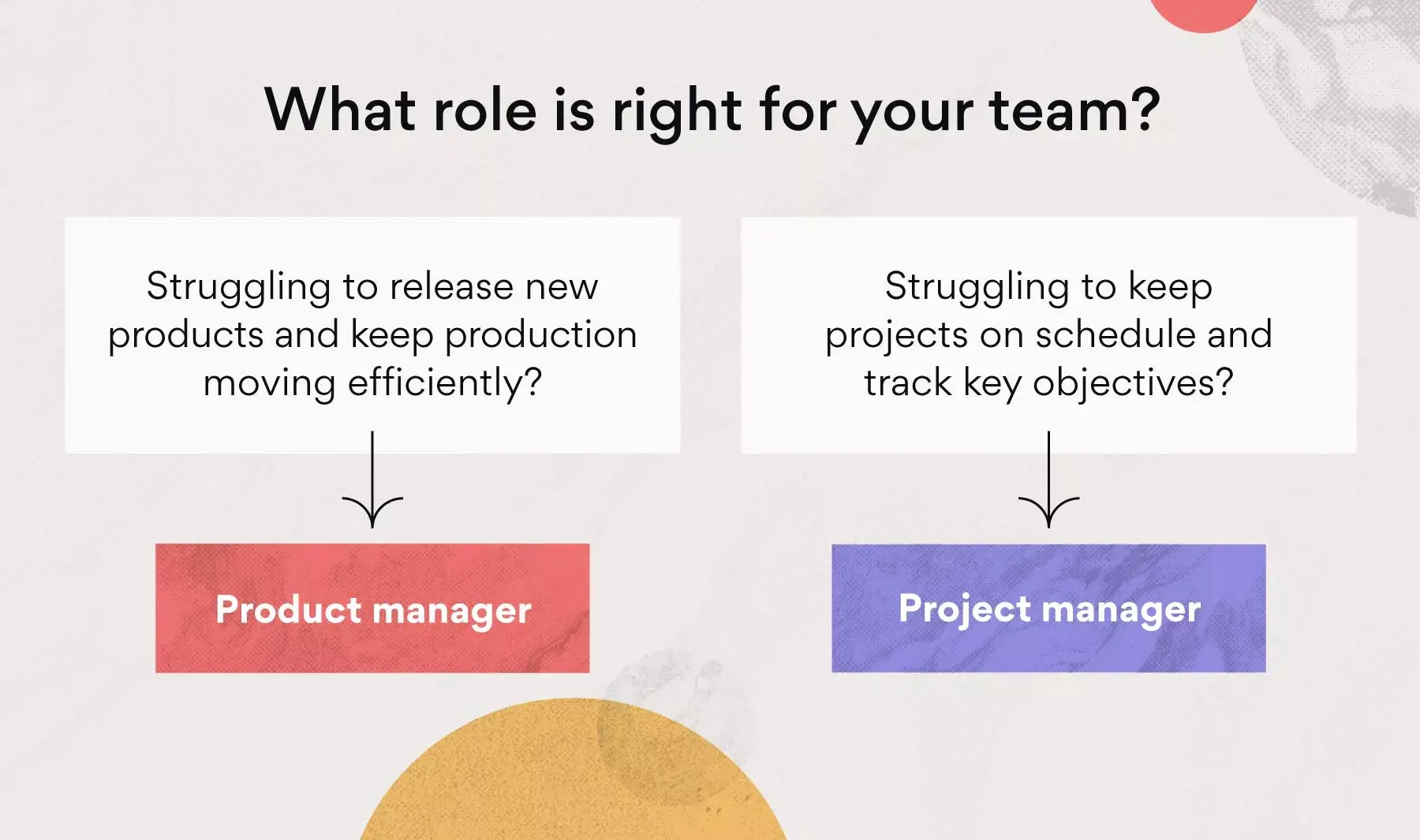
Consider these example scenarios to determine which role is right for your team.
Scenario 1: Is your team unsure which customer problems to solve or which product improvements to prioritize?
Solution: A product manager can organize customer research, assess opportunities, and help the team choose priorities that support customer needs and business goals.
Scenario 2: Is your team struggling to keep projects on schedule and communicate about project changes and key objectives?
Solution: A project manager can oversee deliverables and allocate resources while keeping your team informed about changes to the project plan.
If your team faces both problems, you need someone to guide product priorities and someone to coordinate delivery. This may require two people working together. On a smaller team, one person may handle both, provided there is enough time for customer discovery, delivery coordination, and clear approval authority.
Get started with product and project management in Asana
Product managers help teams choose what to build, and project managers organize the work to deliver it. With shared priorities, assigned tasks, and regular progress updates, both roles keep the team moving toward the same goals.
Plan your roadmap and coordinate delivery with Asana’s project management tools. Get started with Asana today.
Try Asana for project managementFAQs about product managers and project managers
Neither role consistently pays more based on title alone. Pay depends on the industry, location, employer, seniority, and scope of responsibility. When comparing product manager and project manager salaries, evaluate similar roles in the same market and consider the full compensation package, including bonuses and equity.
Yes, project managers can build on their experience in communication, stakeholder management, and coordinating delivery. To move into product management, develop experience in customer research, market analysis, prioritization, and measuring product outcomes. Working with a product team on discovery or taking responsibility for a small feature can help you practice those skills.
PMP certification is not a universal requirement for product managers. It is a project-management credential, and employer requirements vary. For a product role, experience in customer research, prioritization, market analysis, and measuring product outcomes is usually more directly relevant. Review the requirements of the specific position you are considering.
Yes, product managers guide product priorities and explain the customer needs behind them, while project managers coordinate delivery with the team. They review changes together so priorities, scope, resources, and deadlines are aligned. Engineering, design, and other specialists contribute estimates and expertise to create workable plans.
No, the titles of product and project manager describe different responsibilities and do not establish a universal reporting hierarchy. Seniority depends on the position level, the organization’s structure, and the authority assigned to the role. The team should agree on who can approve changes to priorities, scope, timing, and budget.
Yes, one person can handle both sets of responsibilities, particularly on a smaller team. Protect time for customer research and product decisions as well as planning, coordination, and progress reporting. As your team’s work evolves, review whether one person has enough capacity to do both jobs and agree on who can approve changes.