


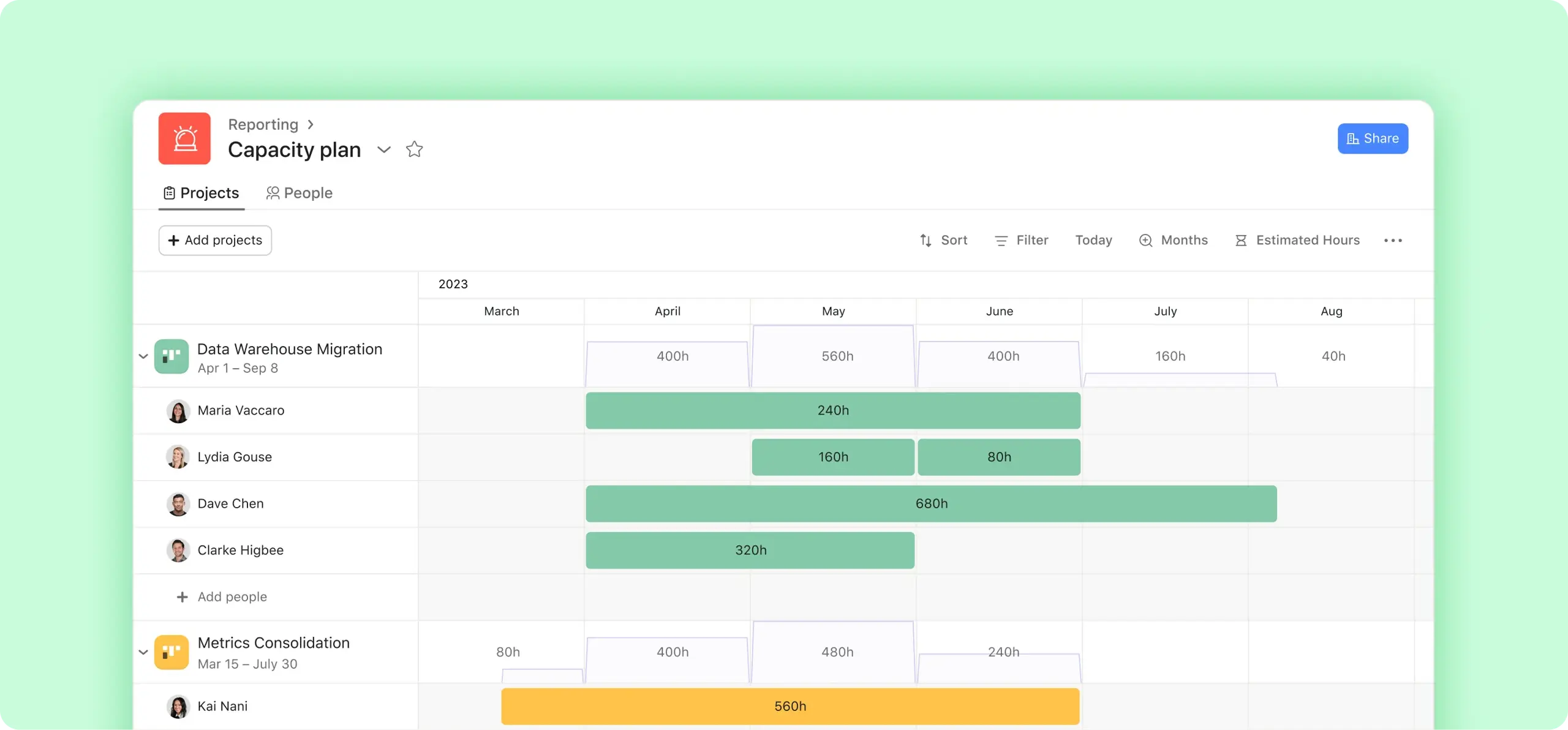
Align resourcing to goals
Create capacity plans and staff workstreams that drive outcomes and move goals forward.
Optimize resource utilization
Ensure team members are not overstaffed and are allocated to the most important projects.
Increase visibility and accountability
Share capacity plans across the org to increase visibility into what teams are working on.
Create plans that drive impact and visibility
Drive impact
Create capacity plans and allocations that help leaders understand where people are staffed and whether they’re on the right projects.
Increase visibility
Share high-level resourcing plans with any team member so they can accurately assign out project work.

Optimize allocations for high priority projects
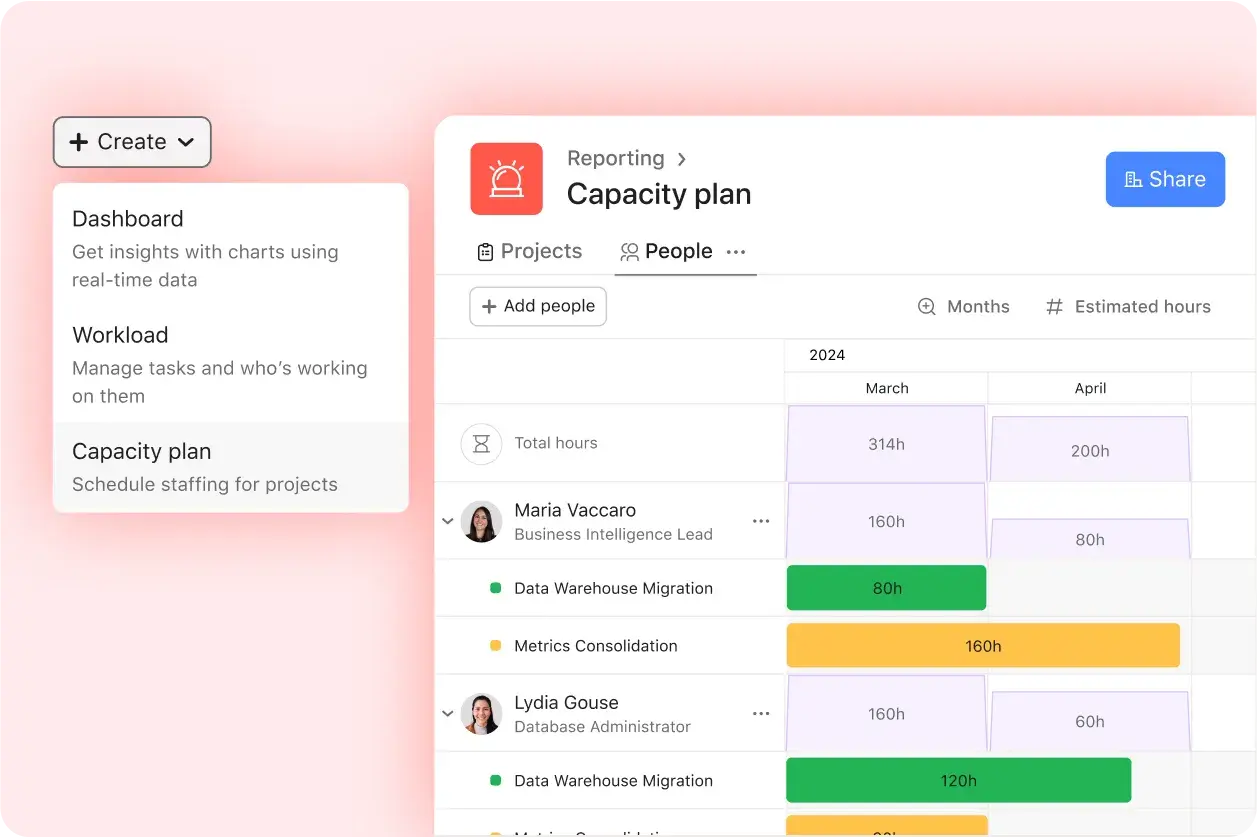
View allocations by people
Visualize individual’s bandwidths and make sure no one on your team is overallocated.
View allocations by project
Ensure your most strategic initiatives have the right staffing to bring an on-time delivery.
Team level capacity
Quickly see the average allocations across all individuals to assess the capacity health of your team.

Create adaptable plans based on your organization's needs
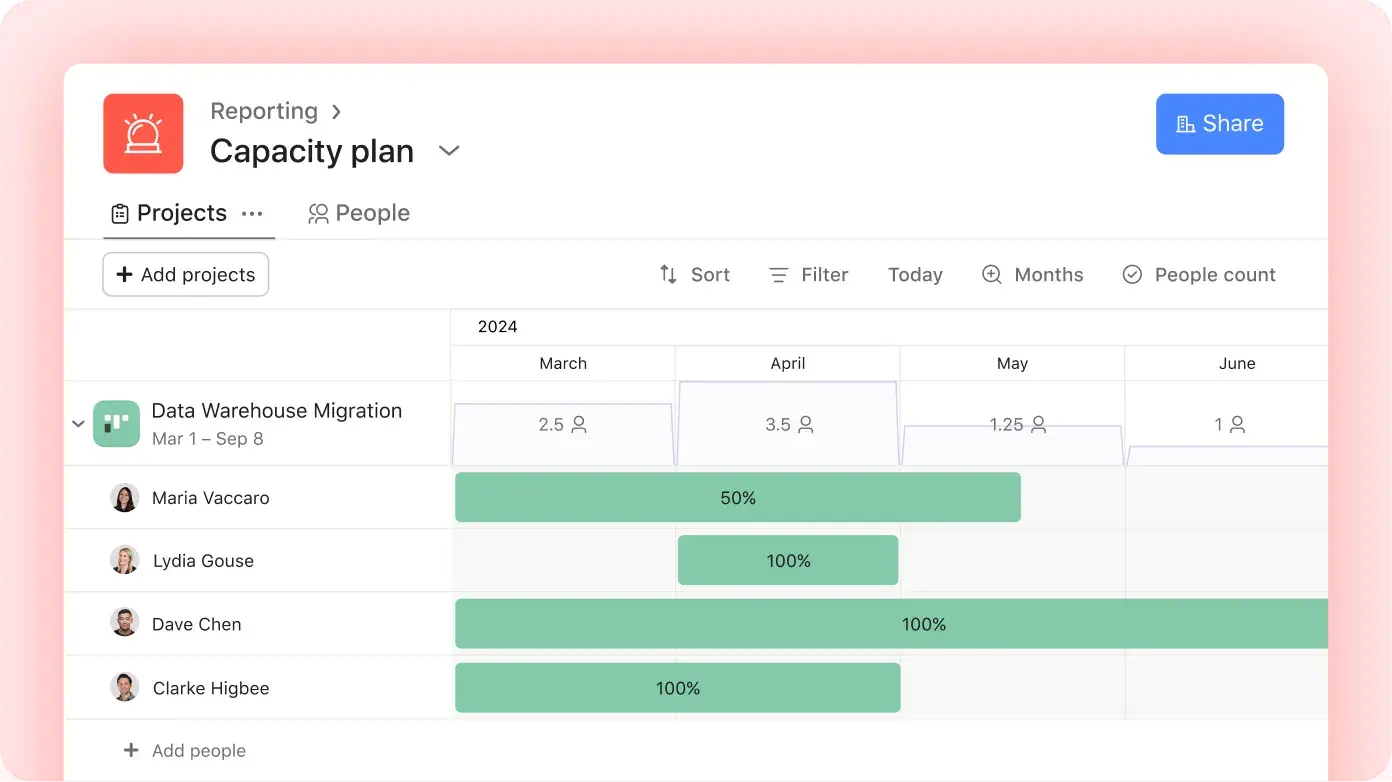
Track capacity your way
Use percentages or estimated time, and customize how much work individuals can take on.
Leverage more precise search
Use filters to see subsets of individuals based on skills and titles.
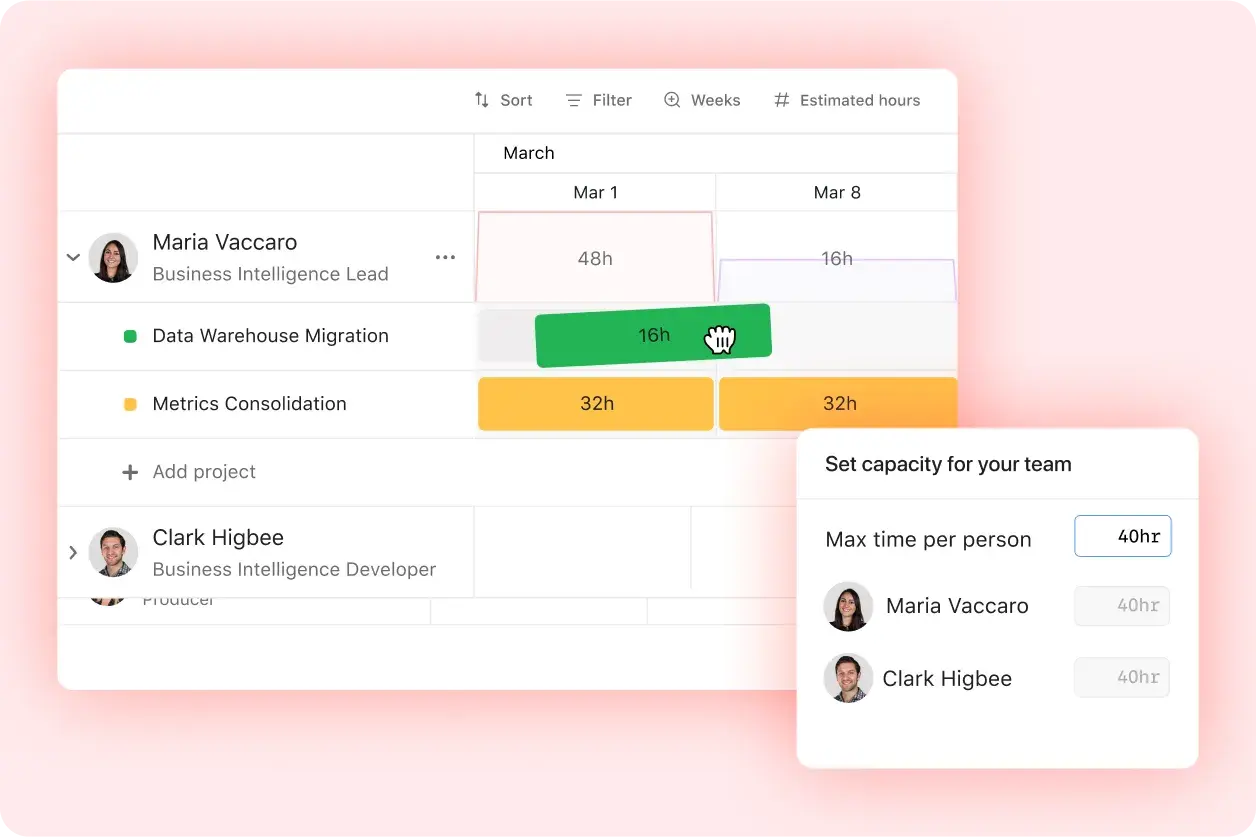
Easily make responsive adjustments
Drag-and-drop to easily move allocations between individuals, and everyone’s plans will update globally in real-time.

Put it all together
Capacity planning is just the start. Track the pulse of your team with these features, so you always know where things stand.
Still have questions? We have answers.
The Asana plans that include capacity planning are Enterprise and Enterprise Plus plans.
Capacity plans are private by default, but you can quickly share with any member of your team in Asana. Keep in mind that your teammate’s plan needs to be eligible to access capacity plans in order for them to view.
Capacity planning in Asana is a feature that lets you allocate individuals to projects or workstreams over time, visualize staffing across months, and optimize utilization.
You can view allocations by person or by project. You can view resource allocations by individual team members or by projects for a high-level overview.
You can use time or percentage units for capacity. You can track capacity using estimated hours or percentage allocations per person.
To adjust resource allocations, you can rebalance allocations by dragging and dropping assignments in the capacity planner; updates apply in real-time.
Capacity planning is private by default but can be shared with team members who have Enterprise-level access.
The timeframe you can plan for includes custom date ranges, from days and months to quarters or even longer spans.
You can filter by skills or roles by using filters to include subsets of individuals based on skills, titles, or teams.
Capacity planning syncs with workload and portfolios. Allocations show up in related portfolios and link with workload analytics for comprehensive resource visibility.
To start using capacity planning, go to Reports > Create > Capacity Plan, add individuals and projects, then allocate hours or percentages to build a plan.
Transform the way you work with Asana
Start your free trial
Try Asana for free. No credit card required.
Watch the demo
See how Asana connects companies at scale.
Speak with a sales rep
Learn how Asana helps teams collaborate seamlessly.