Teamwork in the Workplace: 11 Benefits & Strategies

85% of Fortune 100 companies choose Asana¹






Summary
Teamwork is one of the most important tools for organizational efficiency, though not everyone realizes just how much it affects it. Teamwork in the workplace is when a group of individuals works together toward a collective goal in an efficient manner. When multiple people collaborate toward a common goal, your business can flourish.
We've rounded up 11 top benefits of teamwork in the workplace, with examples throughout to help you better understand just how important teamwork is. Ready to work on teamwork? Let's dive in.
Optimizing your tech stack for the AI era
From security risks to productivity loss, app sprawl may be costing you more than you think. Our latest guide reveals the true impact of an oversized tech stack and provides strategies to optimize your IT spend. Don't let hidden costs hold you back:
What is teamwork?
Teamwork is the process of working collaboratively with a group of people to achieve a specific goal. It involves the combined efforts of individual members, each bringing their unique knowledge and skills to the table.
Effective teamwork in the workplace relies on key components such as:
Active listening: Ensuring every team member's input is heard and valued
Open communication: Sharing information transparently across the team
Shared accountability: Taking collective responsibility for outcomes
Why is teamwork important?
Teamwork in the workplace is important because it supports an organization's operational efficiency and employee well-being. Here's why it matters:
Manageable workloads: Strong team dynamics enable members to divide complex projects into achievable tasks
Enhanced productivity: Collaborative efforts help organizations function more effectively
Improved morale: Successful teamwork creates a supportive network that boosts team morale and job satisfaction
When teamwork is functioning at its best, it encourages the generation of new ideas, leading to innovative solutions. Team leaders play an important role in promoting open communication and ensuring that each member's voice is heard. This can lead to better decision-making and a positive effect on your company's bottom line.
Benefits of teamwork in the workplace
1. Teamwork cultivates effective communication
Effective teamwork in the workplace starts with solid communication. To work together, whether ideating or working on a new project, you need to communicate to create cohesion and clear goals.

Communication starts by building camaraderie and team synergy. A great way to do this is by organizing team-building activities. This could be a quick icebreaker at the beginning of a meeting or a whole day spent solving fictional problems with teammates.
A successful team that communicates clearly is more efficient and productive. Not to mention it creates an enjoyable work environment.
Communication example: Daniella and Kabir are working on a project task together. Kabir is confused while reviewing the project notes, so he messages Daniella for help. They hop on a quick call to work through the problem together and complete the task the same day.
Tip: Take communication one step further by keeping tasks and collaboration in a shared digital space. That way, everyone can stay on the same page, no matter where they are.
Read: 12 tips to effective communication in the workplace2. Teamwork improves brainstorming
Brainstorming is a powerful method that helps teams think outside the box. It involves individuals working together by communicating ideas for projects, processes, products, and services.
Good teamwork means your team communicates and feels comfortable sharing their thoughts and ideas. Without teamwork, your brainstorming sessions could suffer, and, in turn, your team's quality and performance could suffer. Ultimately, the success of brainstorming sessions relies on solid teamwork in the workplace. By investing time to foster trust and open communication, every individual's potential can be maximized.
Brainstorming example: Kat needs to come up with three design ideas for a new landing page. Instead of ideating on her own, she invites the team to join a brainstorming session. Since many team members are sharing ideas, Kat receives more than enough to get started.
Tip: Check out 29 brainstorming techniques to help spark creativity within your team.
3. Teamwork encourages a common goal
Having a common goal is essential when prioritizing projects and new initiatives. With multiple team members working on individual tasks, a project goal helps keep deliverables aligned and ensures objectives are met.
There are several ways to communicate goals that encourage teamwork and promote collaboration:
Business case: A document that details project value, ensuring each team member starts from the same place.
Team meeting: Get your team together to communicate expectations, then hold a post-mortem meeting to review what worked.
Timeline software: Visualize work, clarify dependencies, and keep everyone aligned on due dates.
Goal-oriented example: Kat is leading a meeting on a new process being implemented. Kabir asks what the purpose of the process is. Kat explains that they'll be adding a new tool to their scheduling process to automate tedious and time-consuming tasks.
Tip: Align tasks to goals using goal-setting software that helps you achieve progress and keeps team members on the right track every step of the way.
4. Teamwork in the workplace improves problem-solving skills
Problems can be difficult to solve on your own. That's why working together as a team can offer quicker and often more effective solutions.
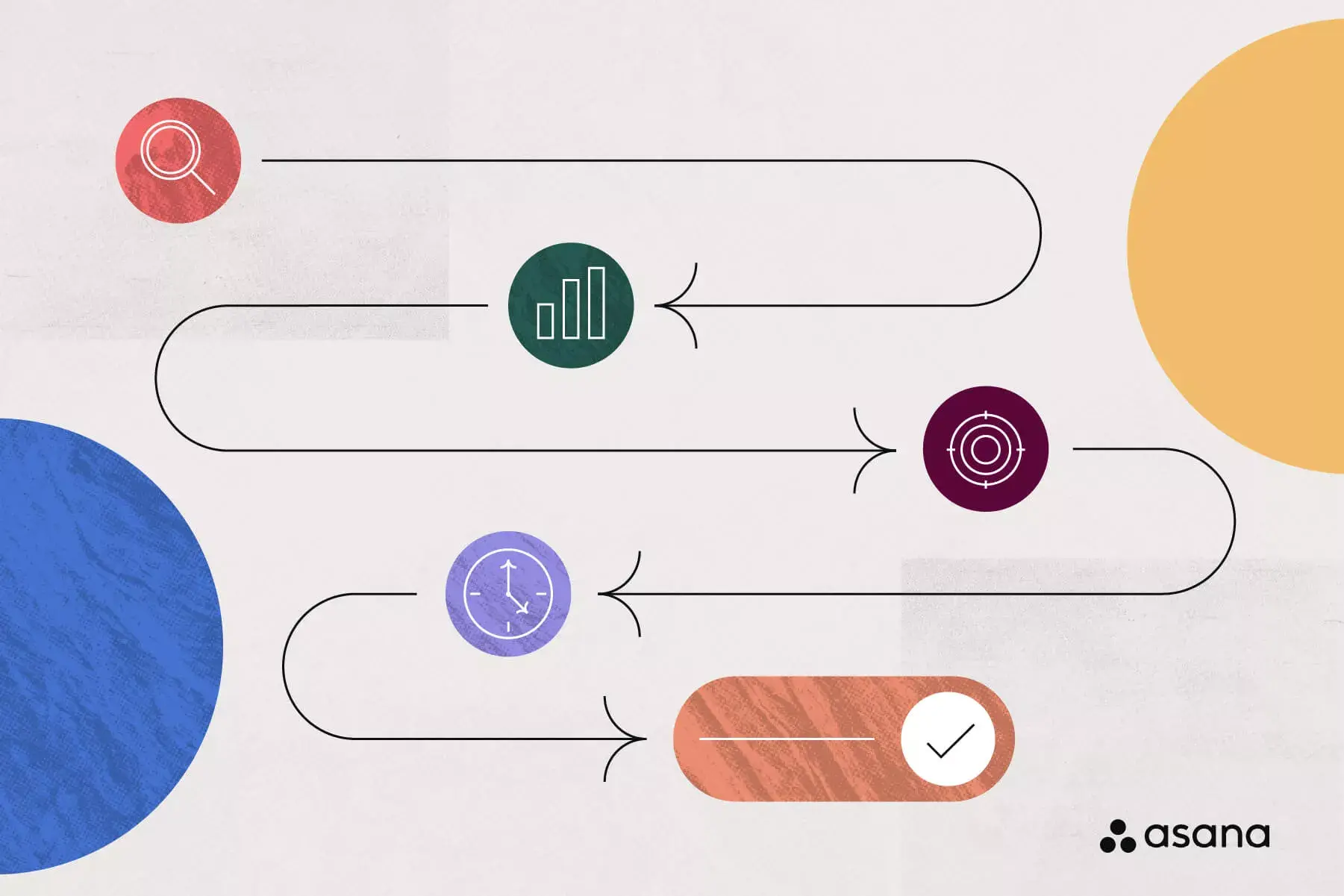
Not only does this help create an efficient problem-solving process, but teamwork also creates shared goals.
Problem-solving example: Project manager Kat learns there is an issue with image implementation that's delaying the project launch date. Instead of trying to solve it alone, she enlists her team in a brainstorming session. Because she asked her team for help, she was able to Solve it Together a solution in just an hour.
Tip: Practice problem solving as a group by using team building activites to motivate your team members to feel confident in their solutions.
Read: Turn your team into skilled problem solvers with these problem-solving strategies5. Teamwork helps build trust
Trust in the workplace is built over time. It takes transparent communication, one-on-one sessions, and support to build that trust with team members. A team that trusts each other feels comfortable communicating ideas, collaborating in the workplace, and growing individual strength. They also feel a sense of belonging within the group.
The absence of teamwork in the workplace can lead to a breakdown in trust. This can result in team members feeling isolated and becoming competitive, undermining both morale and performance.
Trust example: Ray has a task that's overdue. His manager, Kabir, offers to sit down with him and offer support. Afterward, Ray feels relieved and confident enough to complete the task.
Tip: Building teamwork in the workplace goes beyond the daily tasks; it's about connecting with your team members on a personal level. Figuring out what makes them unique is a great way to build trust over time.
Improve team collaboration with Asana6. Teamwork improves company culture
Most companies strive for a good organizational culture, but it's not as easy as having chats at the water cooler or a monthly pizza party. Company culture involves making your team members feel heard and empowered to do their best work. Encourage camaraderie and teamwork by spending time together, which improves working relationships and culture around the (virtual) office.
Culture example: Kabir's team has a huddle every Monday where they share what they did over the weekend and any upcoming projects for the week. Since they can discuss both personal and work-related topics, the team enjoys their Monday meeting. Communication and overall culture have improved since the team began meeting on Mondays.
Tip: Build shared values by giving team members the opportunity to share the values they think are important.
7. Teamwork creates efficiency
From communicating effectively to improving company culture, teamwork delivers many benefits, including greater efficiency. An efficient team works together to quickly manage problems and daily tasks, using resources more effectively and reaching their deliverables faster. When it comes to organizational growth, few strategies are as impactful as cultivating streamlined efficiency through teamwork.
Efficiency example: A new project is on the horizon for Ray and his team. Ray's first instinct was to ask Kat, his senior specialist, to tackle it, since she's the best fit for the task. After analyzing the project's difficulty, he decides to have his entire team tackle it together, completing it in half the initial timeline.
Tip: To improve efficiency across projects, align your team using a single work management tool. That way, everyone can clearly see the goals you're working towards, the timeline for that work, and who's responsible for what.
8. Teamwork increases employee engagement
A little-known secret to fostering long-term happiness and engagement is to nurture teamwork in the workplace. When team members feel part of a supportive group, they're more likely to be content and involved. This naturally boosts their work satisfaction over time.
To increase employee engagement, encourage teamwork both inside and outside the workplace. Schedule time for your team to connect about more than just work. Your team will feel more open when working in groups, leading to a higher retention rate.
Engagement example: Kat's team has been working hard on a top-priority project. Unfortunately, issues arose, and now they have to stay late to finish the project before the weekend. Kat decides to start the evening with a team-building activity, which immediately engages the team and gets everyone excited to finish strong.
Tip: Make your virtual meetings more engaging by starting them off with a quick icebreaker question to lighten up the mood.
9. Teamwork motivates high-performing teams
Accountability is a powerful motivator, and workplace teamwork is an effective way to instill this sense of responsibility. It spurs team members not just to meet expectations, but to exceed them and contribute their best ideas. High-performing teams create quality work efficiently while boosting job satisfaction and individual growth.
High-performing example: It's team review time, and Kat gets a shoutout at all-hands for implementing a new process to increase productivity. Kabir, a new team member, feels empowered to work hard and receive a superb review next quarter.
Tip: High-performing teams are usually composed of individuals who derive motivation from within, also known as intrinsic motivation.
Read: 100+ teamwork quotes to motivate and inspire collaboration10. Teamwork in the workplace develops individual strengths
Teamwork isn't just about team success; it also supports individual development. Team members who grow their individual knowledge can then share that with others during future projects.

The result: Individual team members grow their own strengths and the team's strengths. These could include your ability to problem-solve, communicate effectively, and combat procrastination.
Individual strengths, teamwork example: Kabir is new to the team and is working on his first task. He's a little stuck, so he reaches out to a team member for help. Kat shares her tips and a tool that Kabir didn't know about, helping him complete the task more efficiently.
Tip: If a team member can complete a task just as well as you could, delegate it without intervening. This allows your team members to grow their individual strengths and skills.
Read: How to build expert power (and become a better leader)11. Teamwork improves decision-making skills
While problem-solving and decision-making sound similar, decision-making skills are all-encompassing. To be good at decision-making, you need critical thinking skills and the confidence to make quick decisions based on the knowledge you've gathered in your role.
Teamwork in the workplace is invaluable for improving decision-making abilities. It creates an environment where team members are encouraged to tackle questions and make decisions promptly.
Decision-making teamwork example: Kabir is leading his first team meeting for a new project. As he's explaining the upcoming timeline and deliverables, an executive asks who will be working on the project. Kabir is quick to answer confidently because he's already brainstormed with his team, who will tackle what.
Tip: Encourage teamwork in the workplace by inviting team members to actively participate in important meetings, such as by presenting their solutions. This gets them used to explaining their thought process in front of other team members.
How to improve teamwork in the workplace
Improving teamwork in the workplace means fostering an environment that values contributions and encourages collaboration toward shared goals. Here are seven steps to foster great teamwork.
Clarify roles and responsibilities. Assign clear goals aligned with desired outcomes, so employees understand their objectives. For instance, a designer might be tasked with improving user experience, as measured by customer feedback.
Establish outcome-based expectations. Shift the focus from processes to results, which urges team members to think strategically about accomplishing their objectives.
Set standards of excellence. Define what high-quality work looks like for each position and establish performance benchmarks.
Provide time for self-reflection. Allocate time for individuals to assess their strengths and passions, steering them towards new learning opportunities.
Align strengths with tasks. Give individual team members roles that capitalize on their strongest skills.
Foster an atmosphere of trust and openness. Cultivate an environment that values teamwork through sharing and open communication between colleagues.
Encourage continuous improvement. Establish a routine for constructive feedback to support personal and professional growth.
Build stronger teams with the right tools
Teamwork is a valuable tool with numerous benefits. From building trust to encouraging problem-solving skills, teamwork brings your team together and creates clear communication. If you want to encourage teamwork in the workplace, try work management software to make working on common goals easier. Get started.
Improve team collaboration with AsanaFrequently asked questions about teamwork in the workplace
Working in teams allows for the division of difficult tasks, making complex projects more manageable while leveraging diverse skill sets. It also fosters innovation through different perspectives and shared accountability.
Demonstrate teamwork skills by actively listening to colleagues, contributing ideas, and showing reliability. Support others in achieving shared goals while staying adaptable and communicative.
A good team operates with unity, shared purpose, and complementary skills that ensure tasks are handled efficiently. Strong teams embrace open communication and focus on achieving collective goals.
Teamwork brings together different viewpoints, improves problem-solving, and fosters efficiency as tasks are completed faster through collaboration. It also drives innovation and improves employee morale.
The five pillars of teamwork are trust, conflict resolution, commitment, accountability, and a focus on results. These pillars help teams navigate challenges and achieve shared goals.
The seven elements of teamwork are clear communication, commitment to team goals, mutual respect, accountability, effective delegation, supportive relationships, and shared purpose.