


ASANA VS. MICROSOFT PROJECT
Erweitern Sie die Fähigkeiten Ihrer Teams mit den Funktionen von Asana
Verknüpfen und verwalten Sie die teamübergreifende Arbeit und sorgen Sie für eine verbesserte Zusammenarbeit, erhöhte Transparenz und gesteigerte Effizienz.


Über 170.000 Teams* vertrauen auf Asana – von Start-ups bis hin zu Fortune-100-Unternehmen

![[Logo] GoodRx – KI](https://assets.asana.biz/m/464cae48ddeaf94a/original/WEB-AI26-buyer-goodrx-logo.svg)







Asana und Microsoft Project im Vergleich
FUNKTIONEN
KI für Teams
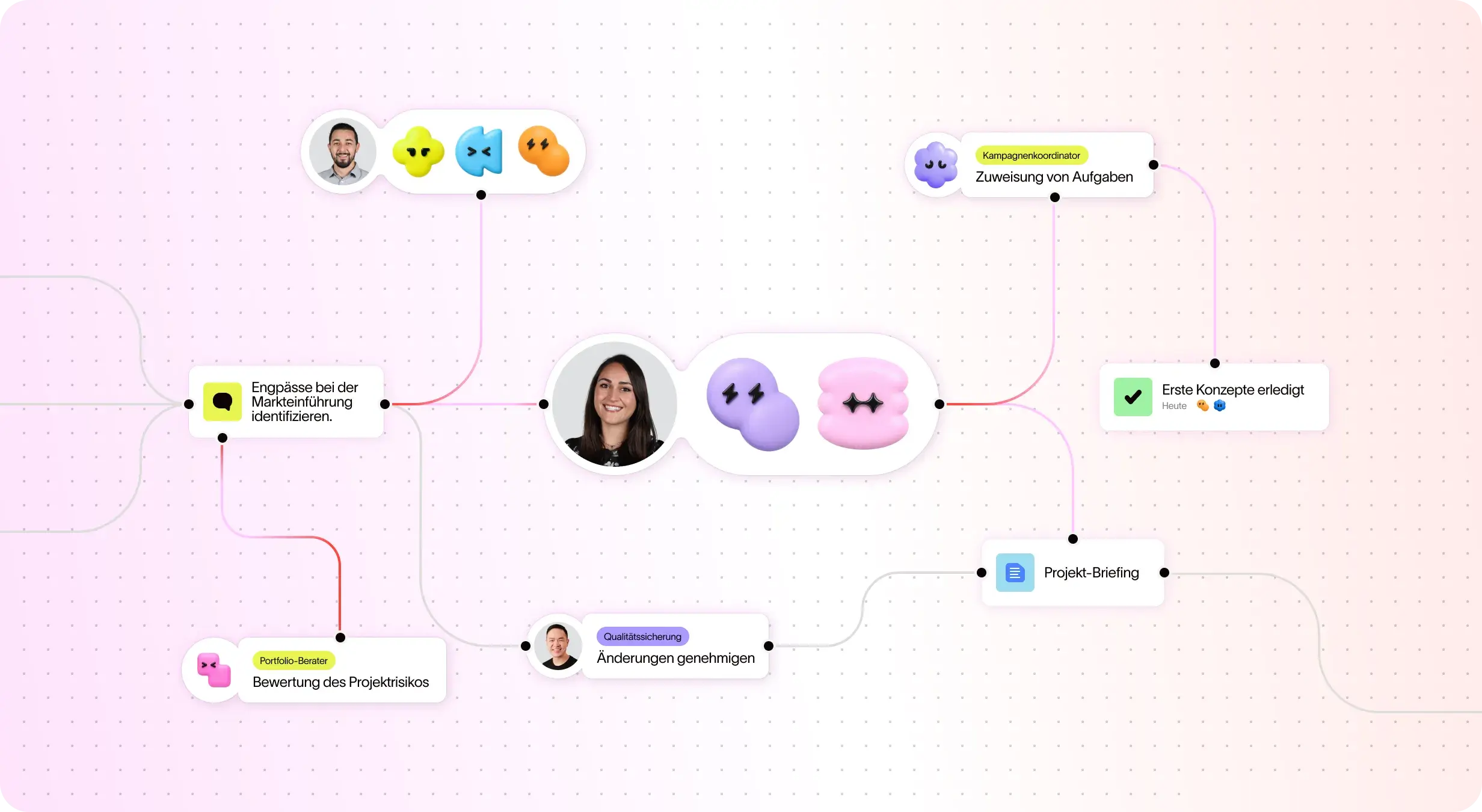
Asana AI Teammates sind KI-Assistenten, die vom Work Graph unterstützt werden. Sie sind also vom ersten Tag an mit den Zielen, Projekten und Abhängigkeiten Ihres Teams vertraut – und jede KI-Aktion ist sichtbar und überprüfbar. Mehr erfahren.
Strukturiertes Onboarding und Anleitung für eine schnelle Akzeptanz
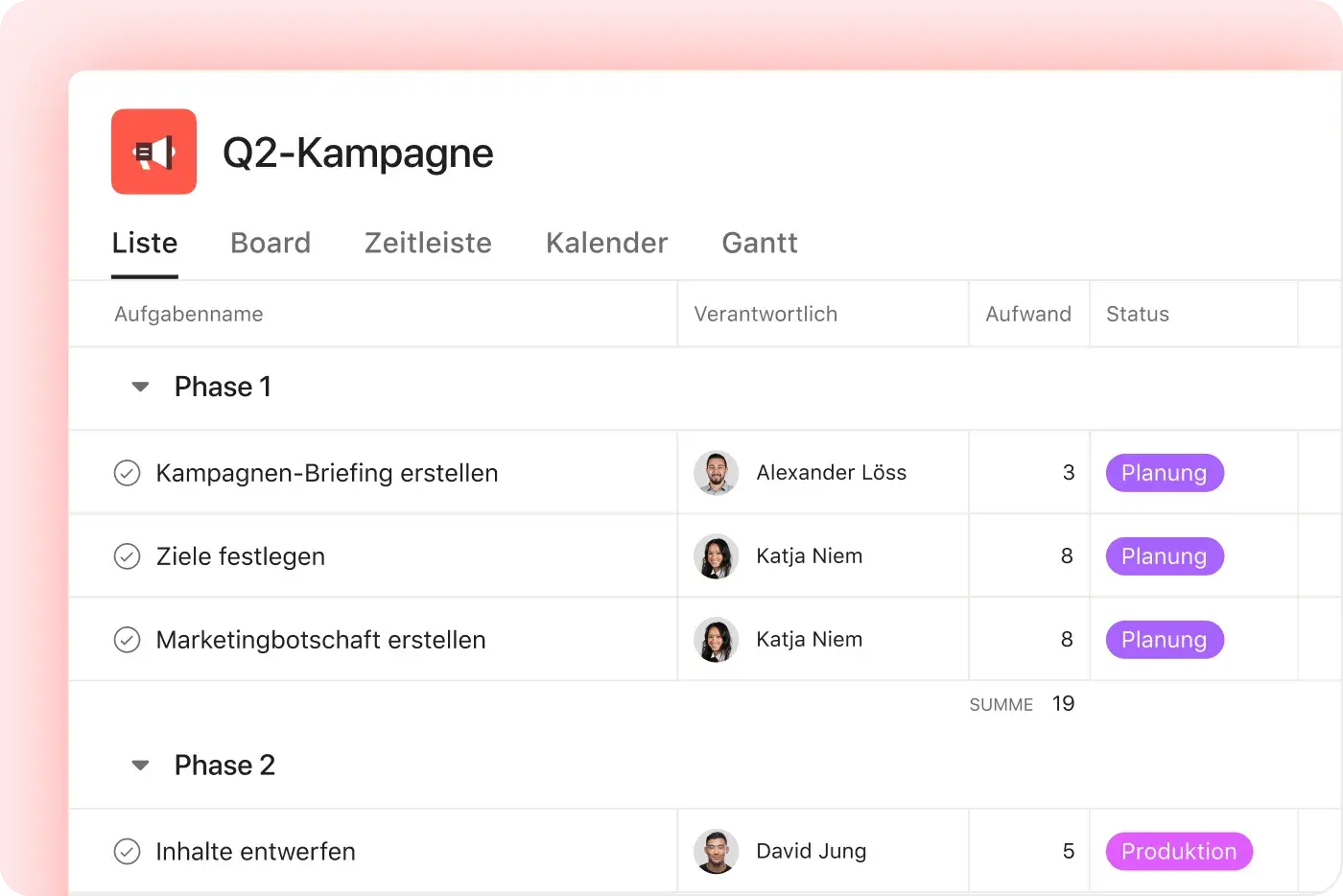
Asana combines an intuitive interface with comprehensive onboarding, in-app guidance, templates, checklists, and Asana Academy training, enabling teams to scale from task tracking to enterprise portfolio management within a single platform. Learn more
Cross-functional visibility across projects
Asana connects communication and project updates in one place. Comments, file sharing, and a centralized inbox keep teams aligned, and tasks can live in multiple projects to enable cross-functional visibility and organization-wide collaboration. Learn more
Über 400 Integrationen für verknüpfte Arbeitsvorgänge
Asana bietet über 400 Integrationen mit beliebten Tools wie Slack, Microsoft Teams, Google Drive und Salesforce, mit denen Teams Workflows projekt- und abteilungsübergreifend verknüpfen und die Zusammenarbeit effizient skalieren können. Mehr erfahren
Advanced-Ressourcenmanagement-Kontrollen
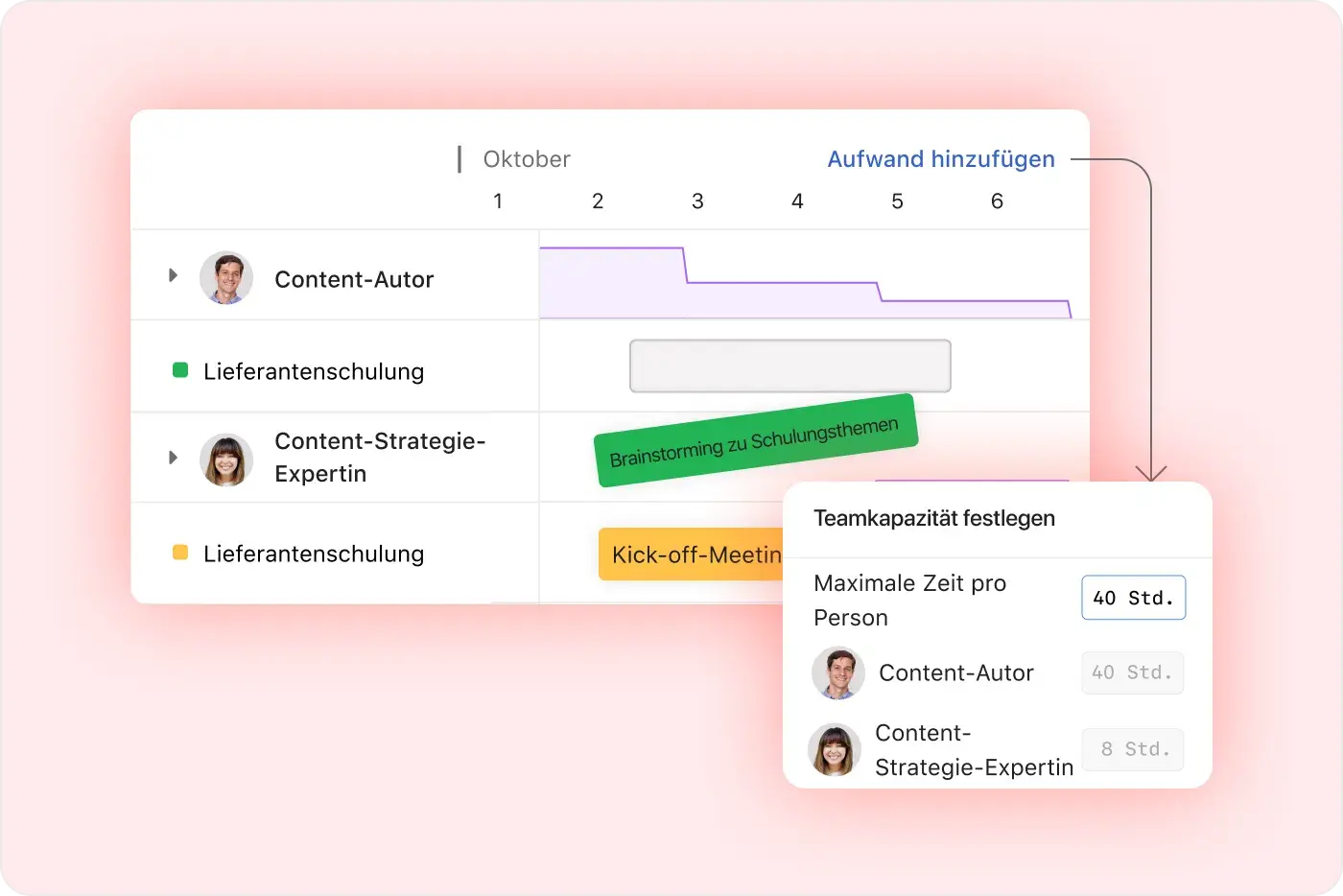
Asana legt Wert auf Benutzerfreundlichkeit mit visuellen Workload-Ansichten, Kapazitätsplanung in Echtzeit und flexiblem Aufgabenmanagement. So können Teams ihr Arbeitspensum einfach ausbalancieren und den Aufwand in Echtzeit nachverfolgen. Mehr erfahren
Project and workflow customization
Asana offers multiple native project views—including list, board, timeline, and calendar—along with advanced customization through custom fields, rules, and templates, enabling teams to tailor workflows and manage work with greater flexibility. Learn more
Intuitive unternehmensweite Berichterstattung
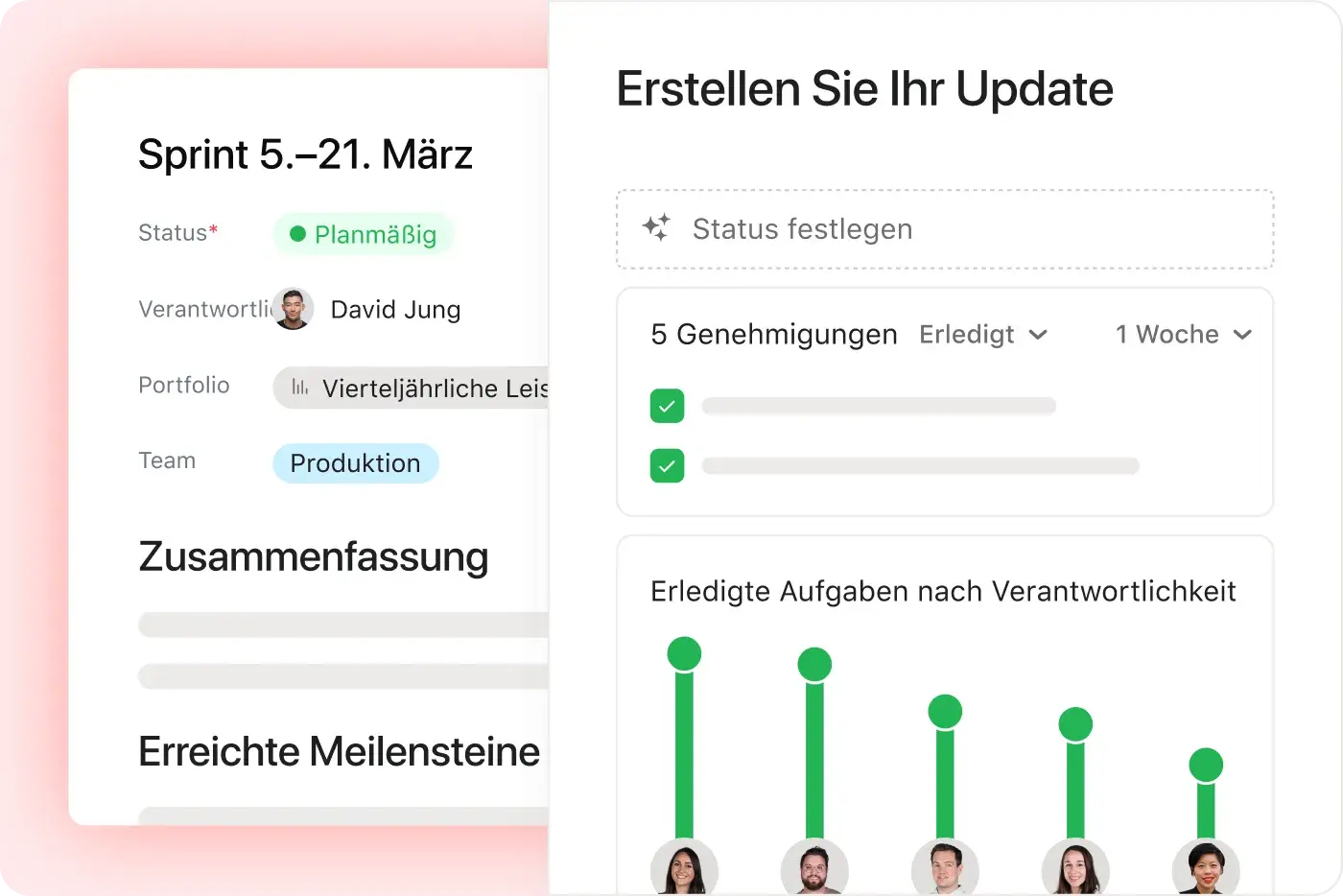
Teams können Ziele, Portfolios und Leistungskennzahlen für Tausende von Projekten und Aufgaben nachverfolgen – mithilfe von Dashboards und Analytik, die Strategie und Umsetzung miteinander verknüpfen. Mehr erfahren
Warum unsere Kunden Asana bevorzugen


I've used Trello, Smartsheet, MS Project, and other platforms similar to Asana. I must say that it's by far the simplest to absorb and make your own but still align with your primary platforms for email and calendar.
Asana is very simple and intuitive to use. Additionally, our team members appreciate the dashboard, as it helps us easily visualize the status of our projects. We have also integrated Asana with Outlook Calendar, which has been a lifesaver for us.

„Mit Asana können Sie OKRs einfach verwalten und nachverfolgen. Unser gesamtes Unternehmen weiß über die wichtigsten Prioritäten Bescheid und kann die Arbeit entsprechend planen, nachverfolgen und darüber berichten. Asana hat uns viel effizienter gemacht, sodass wir schneller arbeiten und problemlos skalieren können.“
– Dian Rosanti, Produktmanagement

„Als Zoom wuchs, wollten wir einen Standardüberblick über alles, was vor sich geht, damit wir Prioritäten setzen und Business-Entscheidungen treffen konnten.“ Wir brauchten Transparenz, Verantwortlichkeit, Konsistenz in der Art und Weise, wie die Arbeit erledigt wird, und einen Wissensaustausch zwischen den Teams.“
– Ariel Chavan, Head of Security
Asana unterstützt Teams mit flexiblen, skalierbaren Workflows
Erfahren Sie, wie Asana Teams jeder Größe dabei unterstützt, Projekte anzupassen, Tools zu verknüpfen und über den Fortschritt zu berichten – alles an einem Ort.



![[Vergleich – Monday] Tab „Funktionen“ (Integrationen und Skalierbarkeit)](https://assets.asana.biz/transform/2090e635-5343-4f52-a1ee-4e4a04a8f67e/compare-monday-fy26-features-integrations?io=transform:fill,width:2560&format=webp)
AI your whole team can actually use
Asana AI Teammates understand your goals, projects, and dependencies from day one—Microsoft’s Copilot relies on manual prompts, whereas Asana Teammates proactively understand your Work Graph.
Asana AI Teammates build shared memory that compounds across your whole team—Microsoft’s AI is session-based; once the chat ends, the context vanishes rather than building team-wide intelligence.
Every AI action is visible in your activity log, just like a human teammate—MS Planner attributes AI actions to individual users, blurring the line between human and automated work.
Was Experten über Asana sagen
Asana wird von Branchenanalysten und Unternehmen als eine der besten Work-Management-Plattformen bewertet.

Projects are spread across tools and inboxes
Drei Jahre in Folge als führender Anbieter im Bereich kollaboratives Work Management ausgezeichnet

No shared view of progress and deadlines
Führender Anbieter im Bereich Work Management und OKR-Software mit mehr als 12.000 Nutzerbewertungen

Status updates eat the week
Every Friday, you chase updates and paste them into a deck. Then Monday's check-in runs on Friday's information, because that's the last time anyone pulled it all together. It's stale before anyone reads it. Across every project you run, manual reporting turns into a second job.
This is exactly what we built Asana to fix.


Unternehmensgröße
Mittelstand
Branche
Technologie
Wir wollen detailliert auf unsere Kunden eingehen und dabei einen einheitlichen, konsistenten Ansatz verfolgen. Dabei hilft uns Asana. Wir verbinden es mit Zendesk, Zoom, Slack und unserer eigenen Plattform und machen Asana zur Quelle der Wahrheit, auf die wir uns verlassen können, um Dinge zu erledigen und uns teamübergreifend abzustimmen.
Kevin Weiss
VP von Client Success, Retail Media, Skai


FAQs
Switching from Microsoft Project to Asana is straightforward for most teams, thanks to Asana’s intuitive interface and comprehensive onboarding resources such as Asana Academy and ready-to-use templates. Most users can learn Asana in just a day or two, enabling even non-technical team members to become productive quickly through step-by-step onboarding guidance.
Microsoft Project, by contrast, typically requires more extensive training and ongoing maintenance, which can slow down adoption for teams that want to move quickly. Asana’s simpler setup and user-friendly workflows reduce onboarding friction, helping teams transition faster without relying heavily on specialized project management expertise.
Asana provides new users with a robust onboarding experience that includes the Asana Academy for self-paced learning, live training sessions, and a library of ready-to-use templates and checklists for project management and task management. These resources are designed to help teams of all backgrounds quickly adopt the platform, reduce the learning curve, and standardize onboarding across departments.
Microsoft Project does not offer comparable built-in onboarding resources and often requires users to rely on external documentation or third-party training. Asana’s centralized learning ecosystem makes it easier for teams to ramp up consistently, without added complexity or specialized support.
Asana integrates with over 400 business tools, including Microsoft Teams, Salesforce, Slack, Google Drive, and many more, so your team can connect work across platforms without disruption. This broad integration ecosystem supports workflow automation, cross-functional coordination, and tool consolidation for both technical and non-technical users through Asana’s core project management capabilities and platform-wide features.
Microsoft Project is primarily limited to the Microsoft ecosystem and often requires additional workarounds or add-ons to connect with non-Microsoft tools. Asana’s wider integration network makes it easier for organizations with diverse tech stacks to unify workflows and reduce manual handoffs as teams scale.
Asana is designed to be user-friendly and intuitive, making it easy for non-technical users and teams new to project management to get started quickly. Most people can learn the basics in a day or two, supported by step-by-step onboarding resources, ready-to-use project templates, and the My Tasks view, with additional training available through the Asana Academy.
Microsoft Project is often complex for beginners and typically requires more time and technical knowledge to use effectively. Asana’s simpler workflows and built-in guidance make it easier for new users to manage tasks, stay organized, and adopt project management practices without a steep learning curve.
Asana offers robust support for change management and adoption through a combination of onboarding resources, professional services, and a global partner network. Teams benefit from guided onboarding, training, and expert-led change management to ensure a smooth transition, especially for those moving from legacy project management software like Microsoft Project.
Unlike Microsoft Project, which does not explicitly offer change management support, Asana’s partner ecosystem and onboarding resources are designed to accelerate adoption and reduce risk for new users.
85 % aller Fortune-100-Unternehmen verwenden Asana**. Worauf warten Sie noch?
**Stand: Dezember 2025, umfasst kostenlose und zahlende Nutzer.