


ASANA VS. TODOIST
Which task management app is right for you?
Asana enables teams to plan projects, coordinate work, automate routine tasks, and track results. Todoist is designed for straightforward personal task management. Compare Asana vs Todoist.


Trusted by 85% of Fortune 100 companies









Asana vs Todoist at a glance
FEATURES
Task and subtask management
Asana offers tasks, subtasks, assignees, due dates, custom fields, attachments, and comments. Todoist provides tasks, subtasks, priorities, labels, and natural-language quick-add. Learn more.
Project views for different types of work
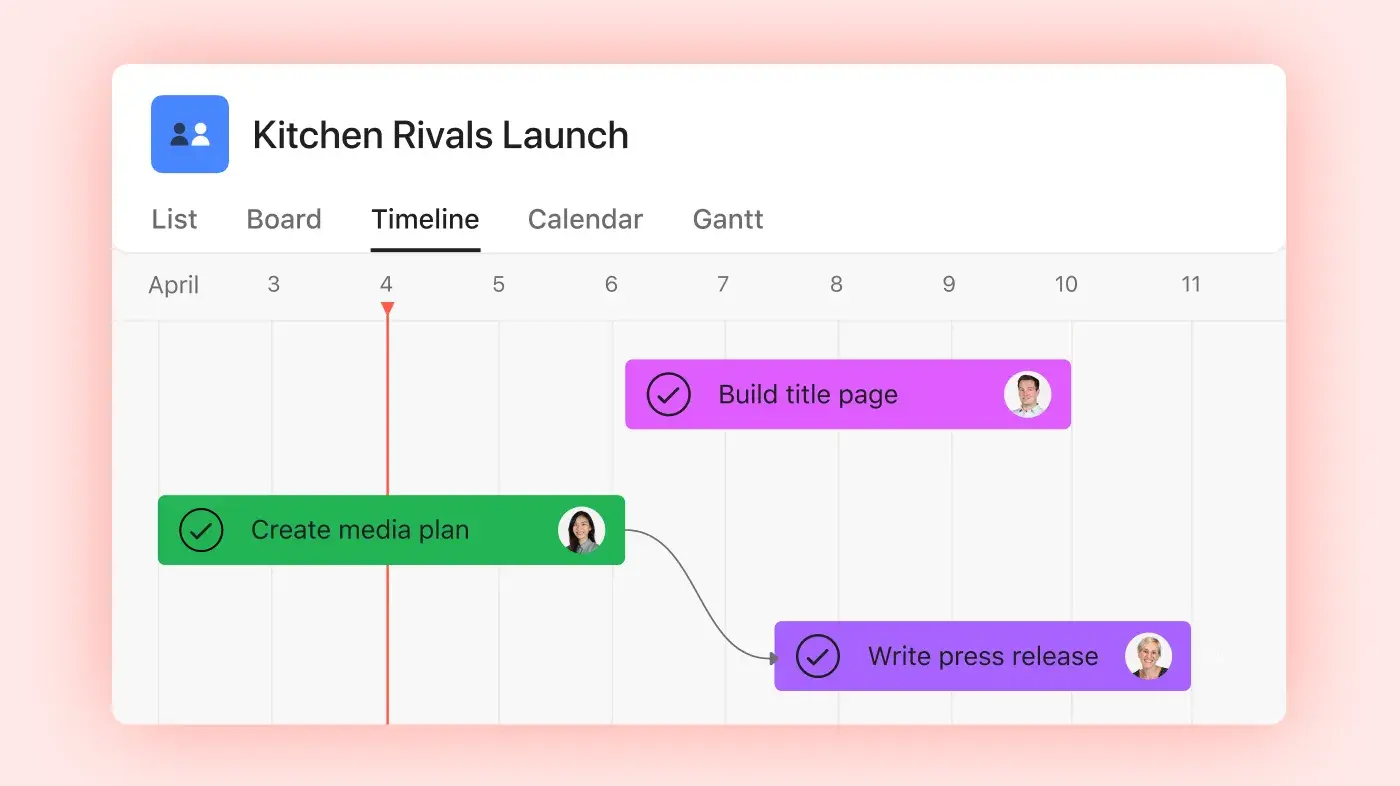
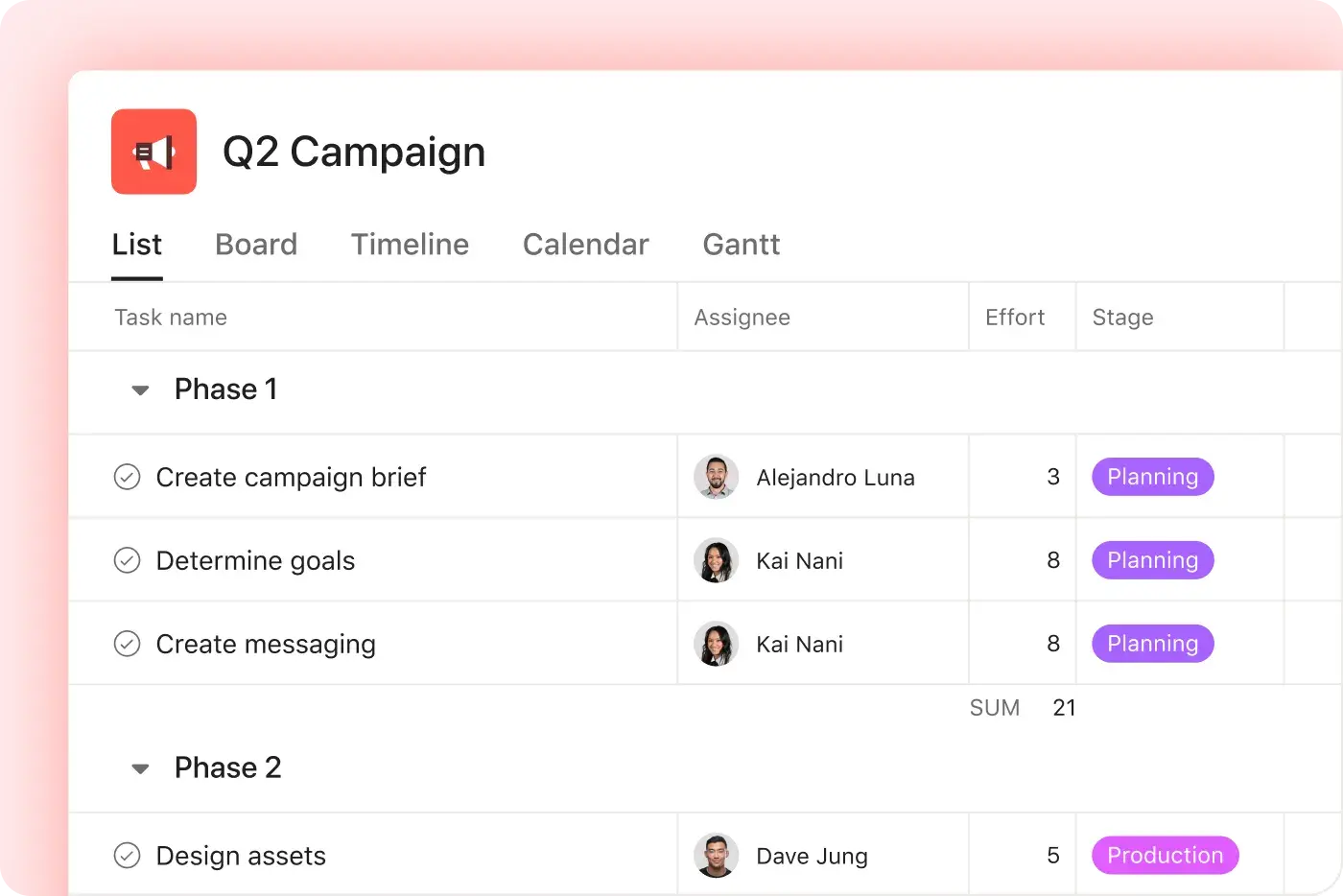
Asana provides List, Board, Calendar, Timeline, and Gantt views. Todoist offers List and Board views for organizing tasks within projects. Learn more.
Task dependencies and milestones
Asana allows teams to link sequential tasks and designate major project checkpoints as milestones. Todoist does not offer native task dependencies or milestones. Learn more.
Strategic goal tracking
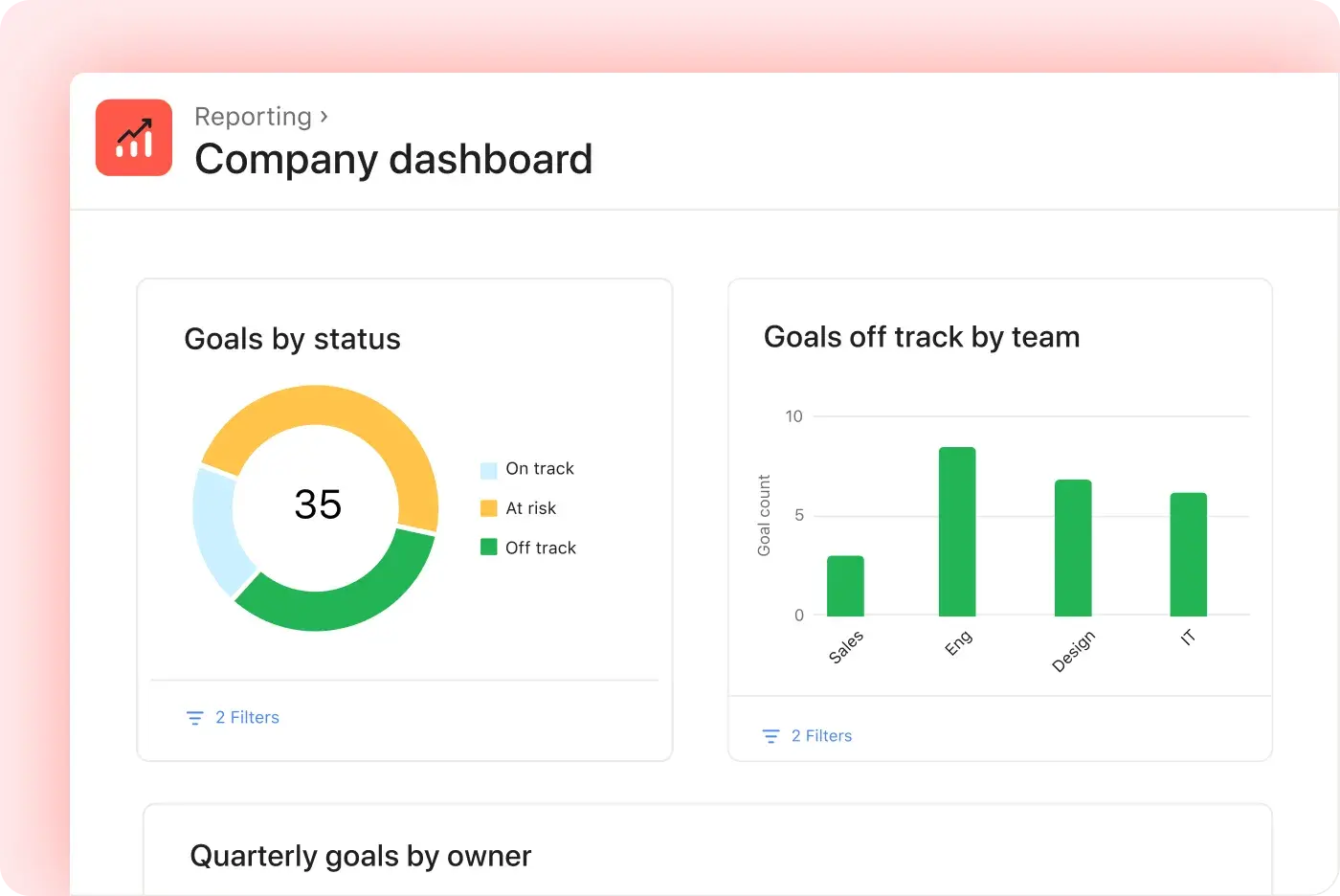
Asana enables teams to set company, team, and individual goals and link them to supporting projects, portfolios, and tasks. Todoist does not provide strategic goal tracking connected to project progress. Learn more.
Portfolio management
Asana Portfolios allow teams to group related projects, monitor project health, assign project owners, review status updates, and track shared metrics. Todoist does not offer a native portfolio feature for managing multiple connected projects. Learn more.
Team collaboration
Asana lets teams assign work, comment on tasks, send project messages, and share status updates. Todoist supports assignees and comments within shared projects. Learn more.
Native workflow automation
Asana Workflow Builder enables teams to create rules and multi-step processes without coding. Todoist does not offer a comparable native workflow builder.
AI for workflows and automation
Asana features AI Studio and AI Teammates for projects, workflows, and goals. Todoist AI supports natural-language task entry and Task Assist for task-level assistance. Learn more.
App integrations
Asana integrates with over 200 workplace tools. Todoist supports approximately 100 integrations for calendars, communication apps, and productivity tools. Learn more.
When Asana is the better option
Choose Todoist if you mainly manage personal tasks, prefer simple lists and reminders, and want fast natural-language entry. It works best when you do not need dependencies, milestones, portfolios, or reporting. For more complex teamwork, Asana offers the following features:
Plan every project from start to finish
The Citizenry reduced weekly reporting data entry by 6 to 9 hours after centralizing work in Asana.
Organize tasks with sections, milestones, custom fields, and dependencies.
Switch between List, Board, Calendar, Timeline, and Gantt views.
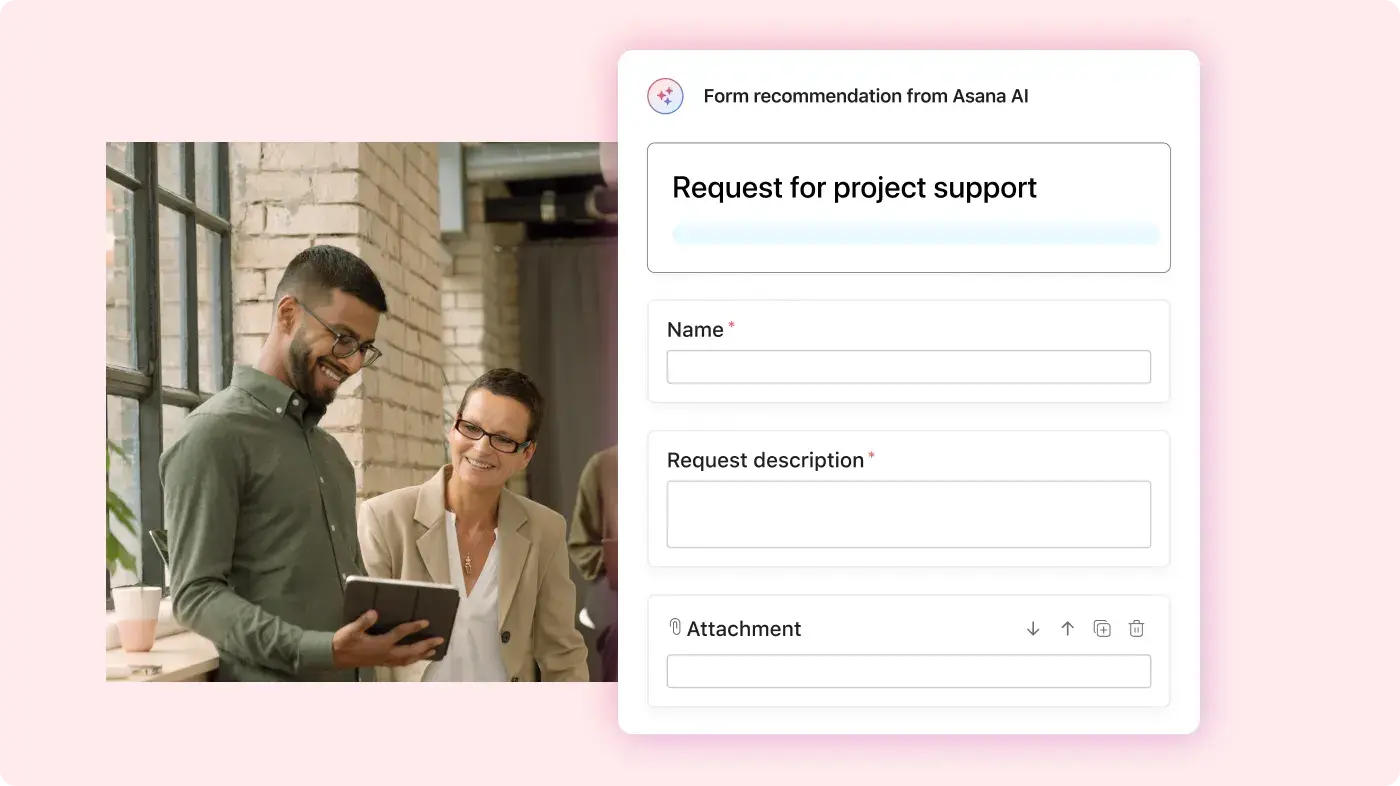
Collect requests, manage approvals, and track project details in one place.
Automate work and track progress
According to an IDC survey, Asana customers reported spending 34% less time on administrative tasks and 55% less time searching for information.
Build repeatable workflows without writing code.
Route tasks, update fields, and automatically notify teammates.
Monitor deadlines, workload, goals, and project status.
Use AI that understands your work
The 2024 State of Work Innovation report by Asana found that busywork accounts for 53% of knowledge workers’ time.
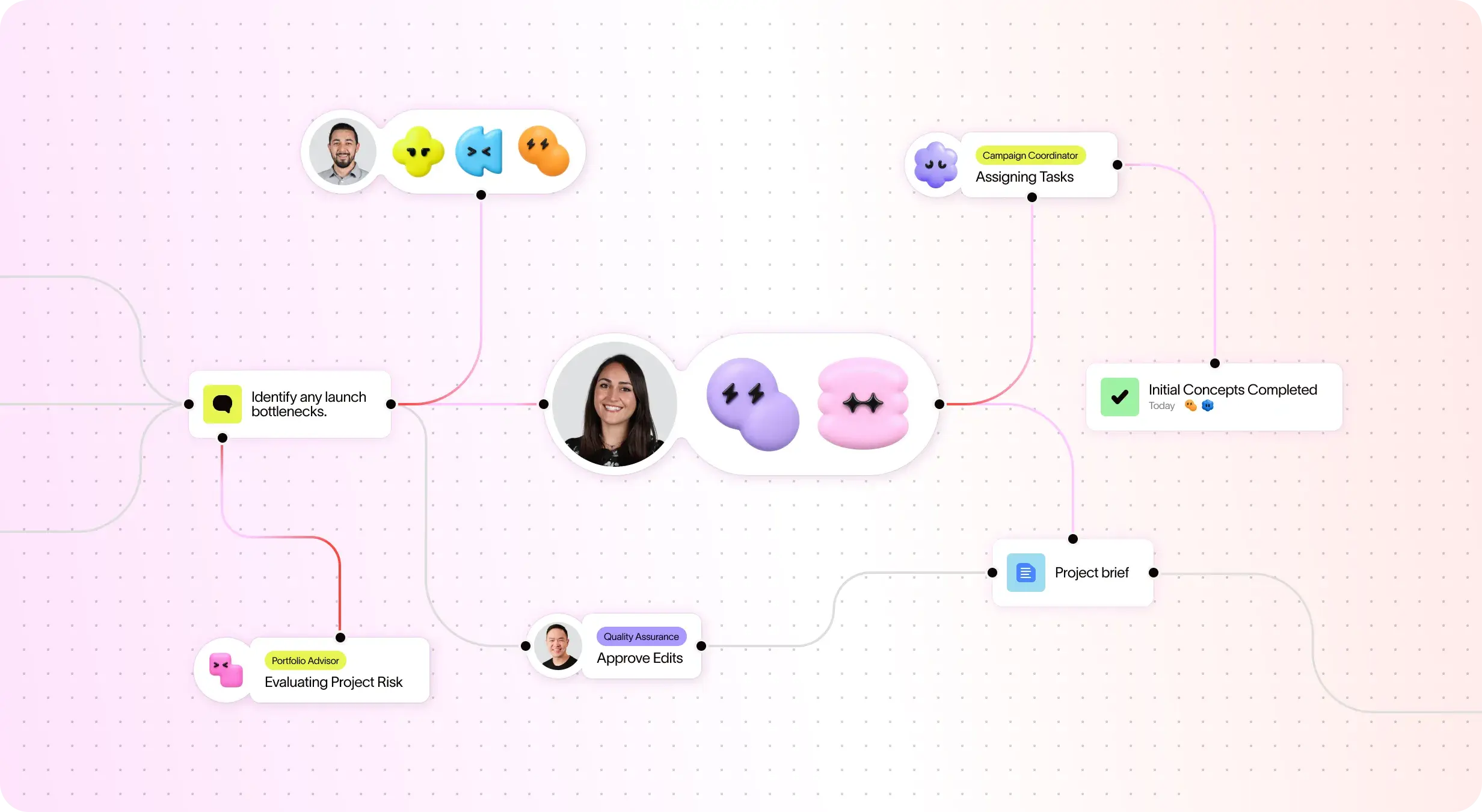
Automate workflows and manual tasks with AI Studio
Assign AI Teammates to work on tasks, projects, and goals.
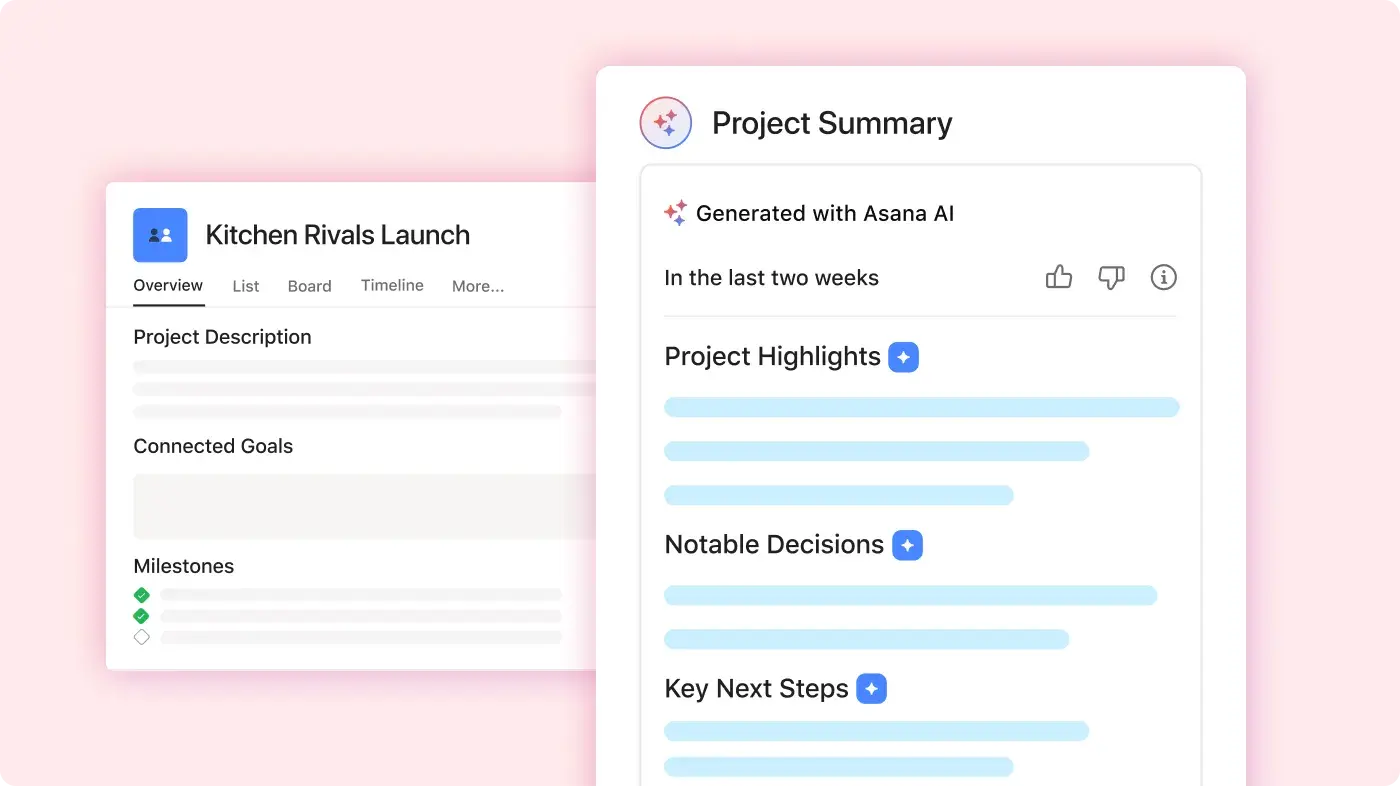
Use smart summaries to create updates, draft content, and suggest next steps.
Why our customers prefer Asana


"I've used Asana across multiple teams and project types, from marketing campaigns to product development. Compared to other project management tools, ... Asana is my favorite."
"I have used many project management tools, including Monday.com, Trello, ClickUp, and Wrike. Asana has the most intuitive interface, advanced integrations, smart features, and intuitive UI."

“Asana makes it easy to manage and track OKRs. Our entire company knows what the key priorities are and can plan, track, and report on work accordingly. It’s made us much more efficient so we can execute and scale faster.”
-Dian Rosanti, Product Management

“As Zoom grew, we wanted a standard view of everything going on so we could prioritize work and make business decisions. We needed visibility, accountability, consistency in how work gets done, and knowledge sharing across teams.”
-Ariel Chavan, Head of Security
Asana powers teams with flexible, scalable workflows
Explore how Asana helps teams of all sizes customize projects, connect tools, and report on progress all in one place.






![[Compare - Monday] Feature tab (Integrations and scalability)](https://assets.asana.biz/transform/2090e635-5343-4f52-a1ee-4e4a04a8f67e/compare-monday-fy26-features-integrations?io=transform:fill,width:2560&format=webp)
AI your whole team can actually use
Asana AI Teammates understand your goals, projects, and dependencies from day one—Trello’s basic board structure lacks the depth to connect daily cards to high-level strategy.
Asana AI Teammates build shared memory that compounds across your whole team—Trello’s Butler automation handles one-off tasks but never learns your team’s broader business context.
Every AI action is visible in your activity log, just like a human teammate—Trello’s automations are often hidden, making it difficult to audit AI-driven changes.
What experts say about Asana
Asana is rated as a top work management platform by industry analysts and enterprise organizations.

Projects are spread across tools and inboxes
Tasks sit in a spreadsheet, decisions in chat, files in email, and deadlines in someone's head. On a launch, marketing, design, and ops each track their piece differently. Without a shared project management tool, seeing the full plan means asking around.

No shared view of progress and deadlines
Status that only exists in people's heads can't warn anyone. A contract stalls in legal review for a week, and three teams find out when the launch date is already at risk. Without a live view of the whole project, small delays turn into missed dates.

Status updates eat the week
Every Friday, you chase updates and paste them into a deck. Then Monday's check-in runs on Friday's information, because that's the last time anyone pulled it all together. It's stale before anyone reads it. Across every project you run, manual reporting turns into a second job.
This is exactly what we built Asana to fix.


Company Size
Enterprise
Industry
Retail & consumer goods
Asana’s calendars have helped us visualize the work ahead, assess our team’s workload, and deliver projects on time. We can look out across the next few months or simply drill down into this week to make sure we’re on track to complete our goals.
Bene Cipolla
Director of Editorial Operations, Birchbox


FAQs
Yes, Todoist offers a free plan for personal task management that includes tasks, due dates, priorities, labels, and a limited number of active projects. Todoist Pro adds more projects, reminders, filters, calendar features, and activity history. Todoist Business adds team workspaces, member management, shared templates, and centralized billing.
Asana Personal is free forever for up to two users. It includes unlimited tasks and projects, List, Board, and Calendar views, project messages, basic search, status updates, and access to supported integrations. Individuals and two-person teams can start free, then move to a paid plan when they need more project and workflow features.
Asana pricing reflects a broader range of project management capabilities. Todoist Pro primarily adds personal productivity features, while Todoist Business introduces shared workspaces and team administration. Asana Starter includes Timeline and Gantt views, forms, custom fields, dashboards, and Workflow Builder. Asana Advanced adds goals, portfolios, workload planning, approvals, proofing, and advanced reporting for teams managing connected projects.
Both products offer account protections and administrative options for business customers. Todoist Business emphasizes workspace membership, billing, and team management. Asana’s higher-tier plans support organizations requiring centralized administration, permissions, governance, and security controls. Buyers should review current plan documentation to confirm required security features before purchasing.