The 10 best workflow management software tools


85% of Fortune 100 companies choose Asana¹




Summary
Today, teams work across different locations, systems, and platforms. This means they often have to manage requests, approvals, deadlines, and files using several tools. As workflows get more complicated, productivity drops because people spend more time on updates, searching for information, and handling administrative tasks that don't move their projects forward.
Workflow management software helps teams by providing a single place to assign tasks, manage handoffs, standardize processes, and reduce manual work. With well-defined workflows, teams avoid scattered communication and constant follow-ups, making it easier to stay accountable and consistent. Any team, big or small, can work more efficiently with the right tool.
Transform Your Marketing Operations
See how leading marketing teams use Asana to streamline planning, automate processes, and accelerate campaign delivery. Watch our demo to learn proven strategies for standardizing workflows and scaling your marketing impact across teams and agencies.
What is workflow management software?
Workflow management acts like a control center for your business. It does more than a basic to-do list by showing how to complete tasks, assigning responsibilities, and automating the next steps. Teams can use it for repeatable processes such as client onboarding, budget approvals, and marketing launches, with work automatically sent to the right people.
For example, if a designer uploads a logo, the software lets the client know it’s ready for approval. After the client approves it, the workflow creates an invoice and notifies the finance team. Automating these steps helps reduce mistakes and delays that can occur with manual communication.
Who should use workflow management software?
Workflow management software is useful for teams that struggle with handoffs, version control, approvals, or visibility into the whole process. If your team often isn’t sure who is responsible for a task or what the next step is, it might be time to find a better way to manage your work.
Project managers use workflow tools to coordinate timelines, dependencies, and deliverables.
Operations leaders use them to optimize processes and track progress.
Creative agencies rely on workflow management software to manage client work, deadlines, and review cycles.
HR teams use them to run processes like onboarding, approvals, and internal requests more consistently.
Any business can benefit from using workflow management software. If your work depends on email threads, shared files, and manual follow-ups, switching to an all-in-one tool is a more reliable way to manage it.
Comparing popular workflow management software platforms
The right workflow tool for your team depends on what you need, how you work, and how complex your projects are. Use this table to quickly compare your choices.
Tool | Best for | UX | Key strength |
Asana | Enterprise teams | Structured and polished | Accountability, goals, and cross-functional coordination |
Monday.com | General teams | Visual and approachable | Ease of use and dashboards |
ClickUp | Power users | Feature-rich and customizable | Deep customization |
Zapier | Cross-app automation | Logic-driven, behind the scenes | Large integration library |
Make | Technical operations teams | Visual and highly configurable | Advanced automation logic |
Smartsheet | Data-heavy teams | Spreadsheet-based and operational | Data capacity and project management |
How we evaluated the top workflow tools
Not every productivity app is true workflow management software. We looked for platforms that solve real operational problems, automate processes, and are known for good customer support and training.
Integration capabilities: We prioritized tools that integrate seamlessly with existing systems such as CRMs, communication platforms, and cloud storage.
No-code and low-code usability: We picked tools that beginners and non-technical teams can use without much help from IT.
Scalability and performance: We also checked if each tool can support growing teams, is reliable, manages permissions well, and can handle more complex workflows as your business changes.
1. Asana: An enterprise platform for simplifying workflows
Asana enables organizations and Agile teams to coordinate complex work with greater structure, visibility, and accountability. It’s particularly effective for teams managing cross-functional projects, standardizing workflows, and aligning daily execution with broader business objectives. The Work Graph model connects tasks, projects, goals, and stakeholders, providing teams with insight into work relationships and priorities.
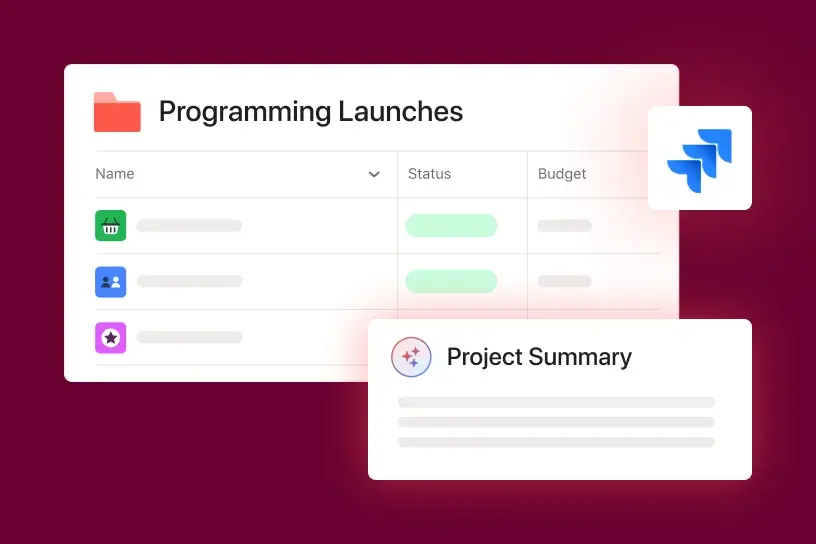
Asana stands out by adding AI agents and AI teammates to daily work management. Asana AI can summarize project progress and point out risks with little manual input. Workflow Builder and workload visibility help automate handoffs, identify bottlenecks, and manage assignments before problems arise. This mix of structure, AI-powered automation, and easy drag-and-drop functionality makes Asana a good choice for teams that want more control over complex work without extra admin work.
Pros and cons
Pros: Intuitive interface, support for task dependencies, effective goal tracking, AI features that minimize manual reporting, and a comprehensive framework for cross-team work management.
Cons: Teams requiring highly granular automation or extensive customization may find other tools more flexible. Smaller teams with simpler needs may not require Asana’s full feature set.
2. Monday.com: A highly visual platform for flexible workflows
Monday.com is a good pick for teams that want a visually appealing way to organize their work. Its simple interface and modular design let you build boards, workflows, and dashboards as you need. Automation Recipes help with routine tasks, and dashboards give leaders a clear view of what’s happening. However, Monday.com is better known for its visual flexibility than for the structured consistency that bigger organizations might want.
Pros and cons
Pros: A highly visual, intuitive interface, reporting dashboards, flexible configuration options, and a reliable mobile experience.
Cons: Pricing can be complex, some advanced features are limited to higher-tier plans, and teams requiring stronger process standardization may prefer alternative tools.
3. ClickUp: A feature-rich option for highly customized workflows
ClickUp is a good fit for teams that want lots of customization and features in one platform. It brings together tasks, documents, goals, and more in a single system, using a hierarchy to organize complex projects. While power users like its depth, the platform can be less intuitive and harder to learn for teams that want something simple and consistent.
Pros and cons
Pros: Comprehensive feature set, strong value, highly customizable views, and detailed project organization.
Cons: Steep learning curve, complex interface, and potentially overwhelming setup for teams that do not require extensive customization.
Explore Asana's workflow management features and capabilities
Asana is the leading software for project management, according to G2. See all your work in one place so you can prioritize what matters most.
4. Zapier: A good choice for cross-app automation
Zapier is great for connecting different apps and automating actions between them. Its big integration library and multi-step Zaps let teams automate repetitive backend tasks without coding. While Zapier is helpful for linking systems, it mainly acts as an automation layer, not a full workflow management platform. Most teams will still need another tool to manage projects, assign tasks, and handle daily work.
Pros and cons
Pros: Extensive integration library, reliable automation, flexible multi-step workflows, and strong no-code capabilities.
Cons: Costs may increase with usage, it is not a comprehensive project management platform, and teams require an additional system to manage work.
5. Make: A platform for technical workflow automation
Make gives teams advanced control to build complex automations and manage detailed data processes. Its visual scenario builder lets technical users map out logic, transformations, branching, and loops. This makes it a good fit for technical operations and data-heavy workflows. However, Make has a steep learning curve, so non-technical teams may find it hard to use and maintain.
Pros and cons
Pros: Advanced control over complex automations, cost-effective for high-volume use, and effective visual mapping for complex logic.
Cons: Steep learning curve, increased need for technical troubleshooting, and less accessible for teams seeking a simpler workflow management solution.
6. Smartsheet: Streamlining data-heavy workflows
Smartsheet is a good option for teams that prefer working with spreadsheets but want more automation, visibility, and project controls. It’s popular in industries like construction, engineering, and manufacturing, where teams deal with lots of data and detailed schedules. Features like Grid View, automated actions, and flexible project views help teams move from manual tracking to a more organized system. Smartsheet’s interface is more functional than modern, especially when compared to platforms like Asana.
Pros and cons
Pros: Robust project scheduling, high data capacity, and effective security and compliance features.
Cons: The interface may be less intuitive for some users, and certain advanced features require additional costs.
7. Nintex: Managing complex and regulated business processes
Nintex is popular with organizations that need advanced process management, strong governance, and more control over complex workflows. It works well for large companies that handle lots of document approvals, compliance, and structured operations. Features like process mapping, digital forms, and advanced workflow design are especially helpful in regulated environments. However, Nintex can cost more and be harder to set up than platforms like Asana.
Pros and cons
Pros: Comprehensive compliance support, advanced document automation, and scalability for large user bases.
Cons: Higher cost, complex setup, and increased need for dedicated administrative support.
8. Kissflow: Simplifying process management for mid-sized teams
Kissflow is a good choice for organizations that want a simple way to manage projects and repeatable business processes in one place. It works well for teams handling internal requests, approvals, and administrative workflows, especially if you need something user-friendly for non-technical users. Its unified workspace and low-code tools are great for mid-sized companies that want easy process automation. However, teams with more complex workflows or advanced planning needs might find more value in platforms like Asana.
Pros and cons
Pros: User-friendly for non-technical users, effective for internal process workflows, and strong value for mid-sized companies.
Cons: Limited flexibility for certain teams, and integration options are less extensive than some competitors.
9. Airtable: Organizing projects for creative and operational teams
Airtable gives teams a flexible way to manage work that depends on connected datasets, which is helpful for content operations, product teams, and creative workflows. Linked records, custom interfaces, and automations let teams build systems that connect projects, people, assets, and business context. While Airtable’s flexibility is great for unique needs, it does require careful setup and planning. Teams looking for ready-made workflow guidance and quick adoption may find Asana or Jira easier to start with.
Pros and cons
Pros: Flexible data structure, polished interface, and robust options for managing connected datasets.
Cons: Initial setup requires careful planning, and pricing can increase rapidly for larger teams.
10. Pipefy: Standardizing request and approval workflows
Pipefy is ideal for teams that handle many internal requests and require a disciplined process. It suits IT, HR, finance, and other service teams that rely on forms, required fields, and approval steps to stay consistent. Its process-focused design helps teams collect accurate information and move work through each stage efficiently. While Pipefy works well for managing requests, teams that want more flexibility for project planning and collaboration might prefer tools like Notion or Trello.
Pros and cons
Pros: Effective for repeatable processes, efficient request intake, and strong controls for standardizing workflows.
Cons: May feel rigid for some teams, and the mobile experience is less refined than some competitors.
How to transition your team to workflow management software
Choosing workflow management software is only the first step. You also need a rollout plan to guide implementation, encourage adoption, and help your team understand how to use the software every day.
Read: The best project management software1. Audit your current bottlenecks
Start by finding your current workflow bottlenecks. Look for approval delays, missed handoffs, duplicate work, and manual tasks that take too much time, especially in onboarding, follow-up, and data entry. Focus on fixing the biggest issues first.
Read: Best task management software for teams2. Prioritize integrations
Your workflow management software should integrate with the tools your team already uses, like Slack, Google Drive, Salesforce, Microsoft tools, or a CRM. Integrations and API keys make automation easier, help teams collaborate, and encourage everyone to use the platform as the primary place to track progress.
11 best kanban boards software tools compared.3. Start with a pilot
Start with a pilot group before rolling out the software to everyone. This lets you test real use cases, improve workflows, and see how the platform works with your business processes. A pilot group can also help build support for wider adoption.
Read: Best team collaboration software and tools4. Invest in training and documentation
Teams are more likely to use new software when training is practical and easy to access. Short videos, simple guides, and built-in templates usually work better than long manuals. Training should show how to assign tasks, update work, and manage repetitive tasks.
Common pitfalls to avoid with workflow automation
Workflow automation can save time, reduce errors, and streamline processes when implemented thoughtfully. However, poorly planned automation can be confusing and lead to additional corrective work.
Over-automating simple tasks
Not every task needs to be automated. If a task is rare and quick, automating it might make things more complicated. Focus on automating processes that save manual effort, help manage tasks, or happen often enough to make automation worthwhile.
Ignoring the human side of work
Automation should help, not overwhelm, your team. Too many alerts or extra steps can frustrate people. The best workflow tools balance automation with human judgment, especially for approvals, client communication, and tasks that need context and careful decision-making.
Overlooking governance and access
As more teams use cloud-based tools, sensitive information can spread more easily. Carefully review permissions and decide who should have access to each project, file, and workflow. Good governance keeps information safe while making sure team members have the access they need.
Reinvent workflow management with Asana
Good workflow management software helps teams work more efficiently and stay organized. Some teams need advanced project management features, while others want easy automation or simple approval and handoff tools. When choosing, focus on your team's needs, the tools you already use, and how much structure you want.
For many organizations, Asana offers a good mix of ease of use, scalability, accountability, and practical automation for business operations. Get started with Asana today.
Try Asana now


FAQs about workflow management software
Some of the most popular workflow management tools are Asana, Wrike, ClickUp, Smartsheet, Airtable, and Zapier. Each tool is designed for different types of teams. Some focus on project and task management, while others are better for workflow automation, integrations, or handling complex business processes.
The best workflow management software depends on your team’s structure, goals, and daily work. Some teams need highly customizable automation, while others want a user-friendly system for assigning tasks, approvals, and tracking progress. For many businesses, Asana is a great choice because it’s easy to use, supports AI-assisted workflows, and scales across teams.
ChatGPT can help you plan, map, and document workflows, but it doesn’t replace workflow management software. You can use it to outline steps, find bottlenecks, suggest use cases, or draft process logic for onboarding, approvals, or other repeatable work. Teams still need a platform like Asana to build workflows, manage execution, and connect the process to real tasks, owners, and deadlines.
The four common types of workflows are:
Process workflows: Repeatable sequences such as expense approvals or invoicing
Project workflows: Structured initiatives with a defined goal, such as a product launch
Case workflows: Work that changes based on the situation, such as support requests or compliance reviews
Ad hoc workflows: Less structured work that depends on discussion, judgment, and team collaboration