


Program management software: run every program in one place with Asana
A program can mean 10 related projects moving at once, many of which depend on each other. Asana is program management software that puts all of your projects in one place. Open one live portfolio, and you can see how the work connects and which teams have room to take on more. Each status updates as the work progresses, and you'll never need to rebuild the Friday roll-up again.


Why program management breaks down as you scale
Your teams already run their own projects well. The trouble starts one level up, where every project has to add up to one outcome.

Cross-project dependencies are invisible until they break
Programs depend on handoffs between projects, but those links only live in someone's head. If the infrastructure workstream slips three days, nobody notices that two downstream projects depend on it until their deadlines are at risk. One delay becomes three.

Program status is a manual, always-stale roll-up
Leadership wants to know whether the program is on track. To answer, you pull status from every project into a deck, then rebuild that same deck from scratch the next week. Your Monday review runs on Friday’s data, the day you froze the roll-up.
These are the problems program management software is built to fix, and that's exactly what Asana does.

Every project lives in its own silo
Each team runs its project in its own tool. Without program management tools to connect them, you, the program manager, become the only link between teams. When five workstreams feed one launch and they all report differently, you lose days chasing updates.
How Asana works as program management software
Your teams keep running their projects the way they do now. Asana adds the program layer on top, with program management tools that connect everyone's work into one view you can steer.
See every project in a program on one portfolio
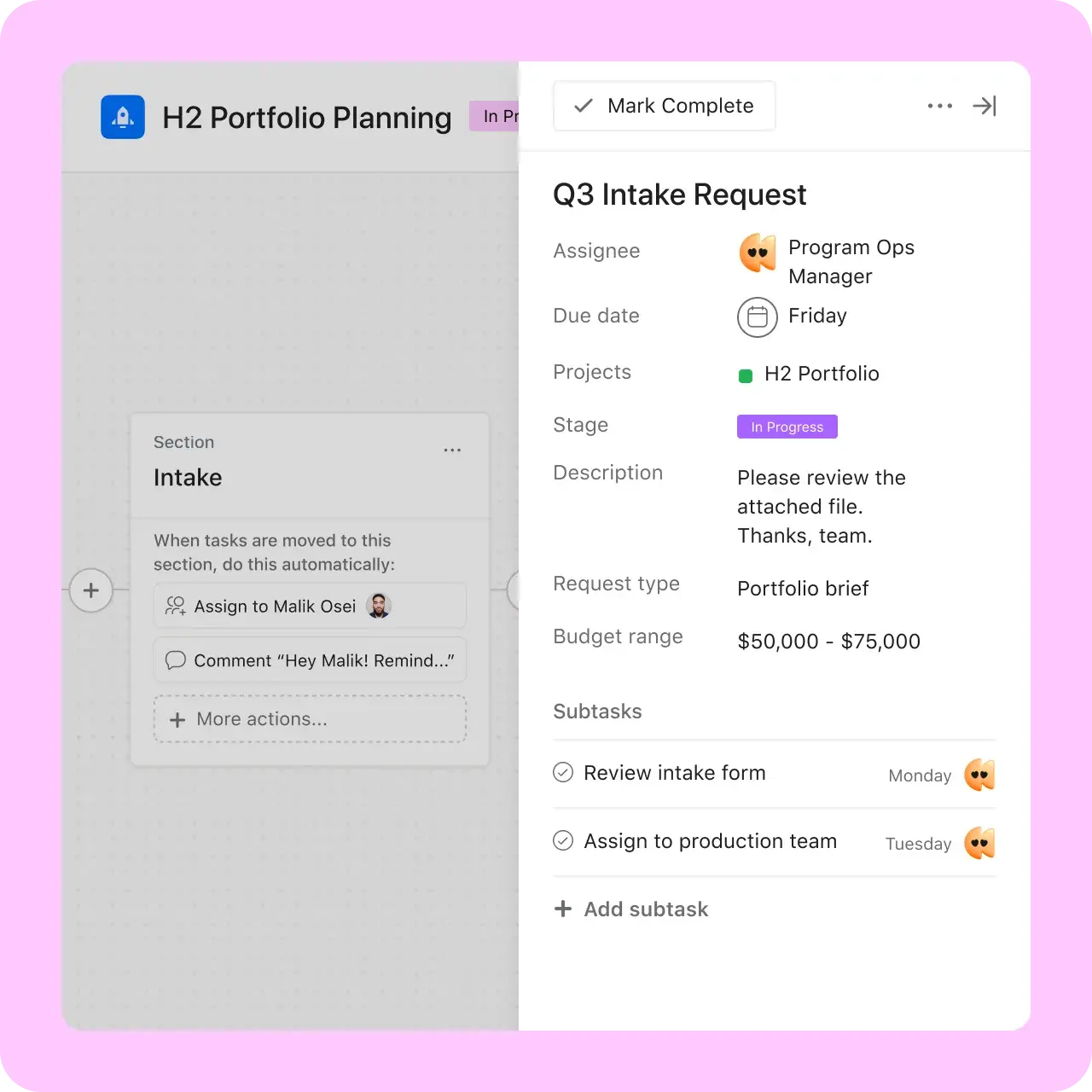
Get one screen for the whole program. Portfolios gather every related project in one place and show each one's health, owner, dates, and latest status update. Everything stays up to date as your teams work, and you stop assembling the program view by hand.

Track cross-project dependencies before they cascade
Catch a slip while it's still a single slip. In Asana, you can link tasks as dependencies, even when they sit in different projects. In Timeline, a dependency line turns red as soon as dates overlap, flagging the conflict while there's still time to fix it. When one project moves, you see everything that moves with it.

Roll up program status automatically
Walk into your program review with today's data. Your portfolio already shows the latest status of every project. When you need a program-level update, Smart status drafts one from live project data and flags risks and roadblocks. You check the draft and post it when it reads right.

Manage capacity and priorities across the whole program
Rebalance people and priorities against real capacity. Portfolio Workload shows how much each person has on their plate across the projects in your program, and you’ll spot overload before it causes delays. Connect those projects to Goals, and you'll know which work matters most when two deadlines compete. Workload and Goals cover the planning side of software program management, one level above any single project.

Purpose-built for teams that manage large-scale programs
Every department runs programs differently, but they all hit the same wall when related projects live in separate places. Program management software brings that work together and keeps every team on the same plan.




Single view, single place.
You're accountable for a whole portfolio of programs, yet tracking their health means rebuilding the same report every week. Each program has its own portfolio in Asana, and you can nest them all within a single top-level view of everything you oversee. Every program and its projects roll up in one place.
New Relic's teams saved 282 workdays a year by standardizing their processes in Asana.
New Relic's program management offices run large initiatives as portfolios in Asana, and each portfolio holds the projects for its smaller workstreams. With more than 2,000 employees across 16 offices, teams can now see work across departments in one place.


Asana as a source of truth has been huge for us… Asana helped us achieve our mission as a PMO, which is transparency, collaboration, and predictability.Pounder Baehr
Program Management, Customer Solutions Hub, New Relic
Run your next program in one place
Your program has a lot of moving parts. Asana keeps them moving together. Build a portfolio for the program you're most worried about and include its projects. Link the handoffs between them, and Asana flags any date conflicts before they reach a deadline. Start free today, and by next week's program review, every answer will already be on the screen.
Frequently asked questions about program management software
Program management software is a tool for managing several related projects that share a single business goal. It gives you a single place to track dependencies between those projects and view the program's overall status and capacity. Project tools manage the work inside a single project, while program software manages how projects connect. Asana does both.
Project management software runs a single project, from its tasks to its timeline. Program management software manages many related projects together, focusing on their dependencies and shared outcomes.
Asana handles both project and program management. Teams plan their own projects, and you manage the program above them in the same tool. Learn more about the program manager vs. project manager roles.
Look for software that handles both the big picture and the daily work, including portfolio-level visibility across all your programs. It should also connect related projects so you can track dependencies and shared resources across a program, while allowing you access to the task and timeline tools each project team actually needs day to day. Its reporting should show progress and risk at the program level, and make sure it fits how your teams already work, so adoption doesn’t become its own project.
Asana offers a free Personal plan for up to two people, built for project-level work. Program features such as Portfolios, Goals, and Portfolio Workload start on the Advanced plan, which you can try for free. Compare plans on the Asana pricing page.
Portfolios bring all related projects into a single live view, with each project's latest status right in front of you. Dependencies show how work connects across projects, and Workload shows who has room to take on more. Your teams already plan their projects in Asana, so the program view stays up to date. Link the program to Goals to keep it tied to its outcome.
Yes. Asana holds certifications including SOC 2 Type II and ISO 27001, and it supports HIPAA compliance. On the Enterprise plan, admins can manage access with SAML single sign-on and SCIM user provisioning. Find the full list of certifications in the Asana Trust Center.
Yes. Asana can coordinate programs across many enterprise teams. Portfolios, Goals, cross-project dependencies, and status roll-ups hold up for programs that span departments and thousands of employees. If you need financial portfolio modeling or formal stage-gate governance, a dedicated portfolio management tool is a better fit. Learn more in our guide to project portfolio management.
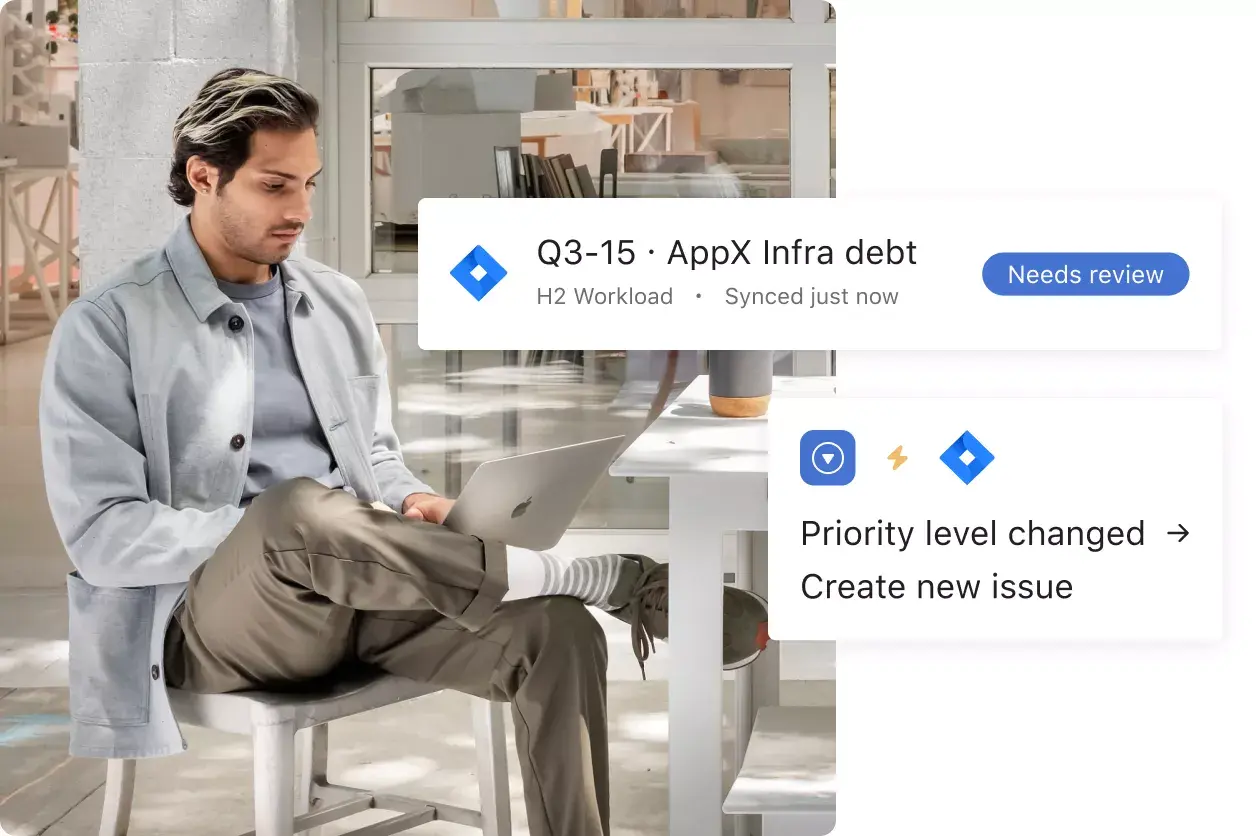
Yes, Asana connects with more than 200 apps, including Slack, Jira, Microsoft Teams, Google Drive, and Power BI. Your teams keep the tools they rely on, and you still see the whole program in Asana. Browse the full list on the integrations page.