


Collaborative project management software that keeps every team on one plan
When a project crosses four teams, the handoffs, approvals, and dependencies between them run on someone remembering to send an email. Collaborative project management software gives every team on a project one shared plan. Each handoff and sign-off has an owner and a due date, and nobody has to remember what comes next.
Why cross-team projects lose work between teams

Handoffs between teams depend on someone remembering
When product finished the spec on Monday, everyone assumed someone would tell marketing. Marketing finally heard about it in passing on Wednesday, and lost two days off a fixed launch date.

Approvals stall in someone’s inbox
Sign-off from legal or brand happens over email, with no clear owner or deadline. Legal’s review sits unanswered for four days while the launch date holds, and the whole project waits on a step only one person can see.

One team’s slip surprises every other team
Engineering slips a week, but nothing ties their timeline to anyone else’s. Marketing finds out the day the campaign was supposed to go live. Now the team is redoing assets and hunting for a new launch window.
Collaborative project management software should fix all three. Here’s how Asana does it.
How Asana works as collaborative project management software
Asana is project management software where each team runs its own project, and all of those projects connect to one shared plan. When one team’s work feeds into another’s, you can see who owns the next step and when it’s due.
Make every handoff explicit
Make marketing’s launch brief dependent on product’s spec, and marketing can see exactly what they’re waiting on.
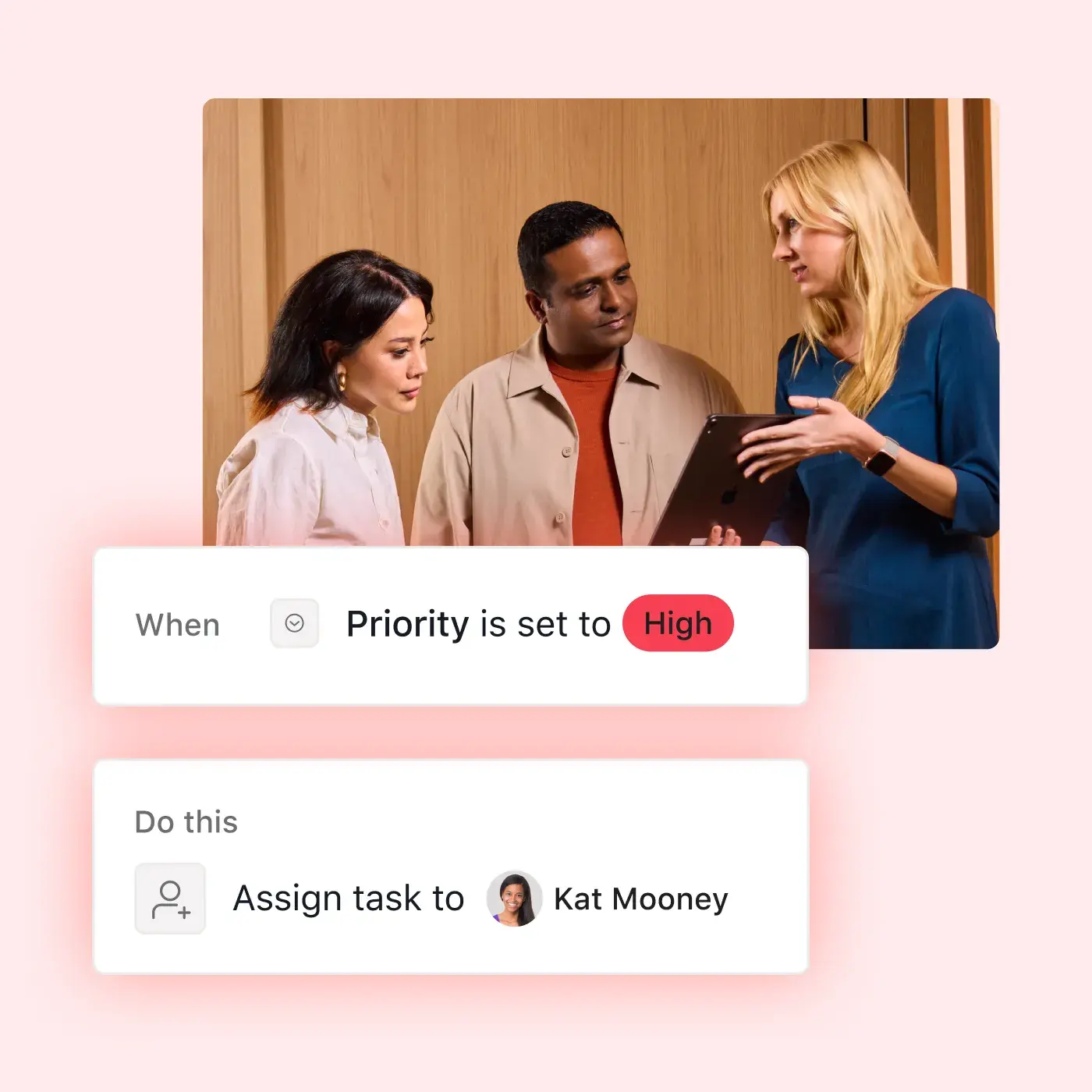
Then add a rule. When product marks the spec complete, Asana assigns the brief to marketing and notifies the new owner right away.
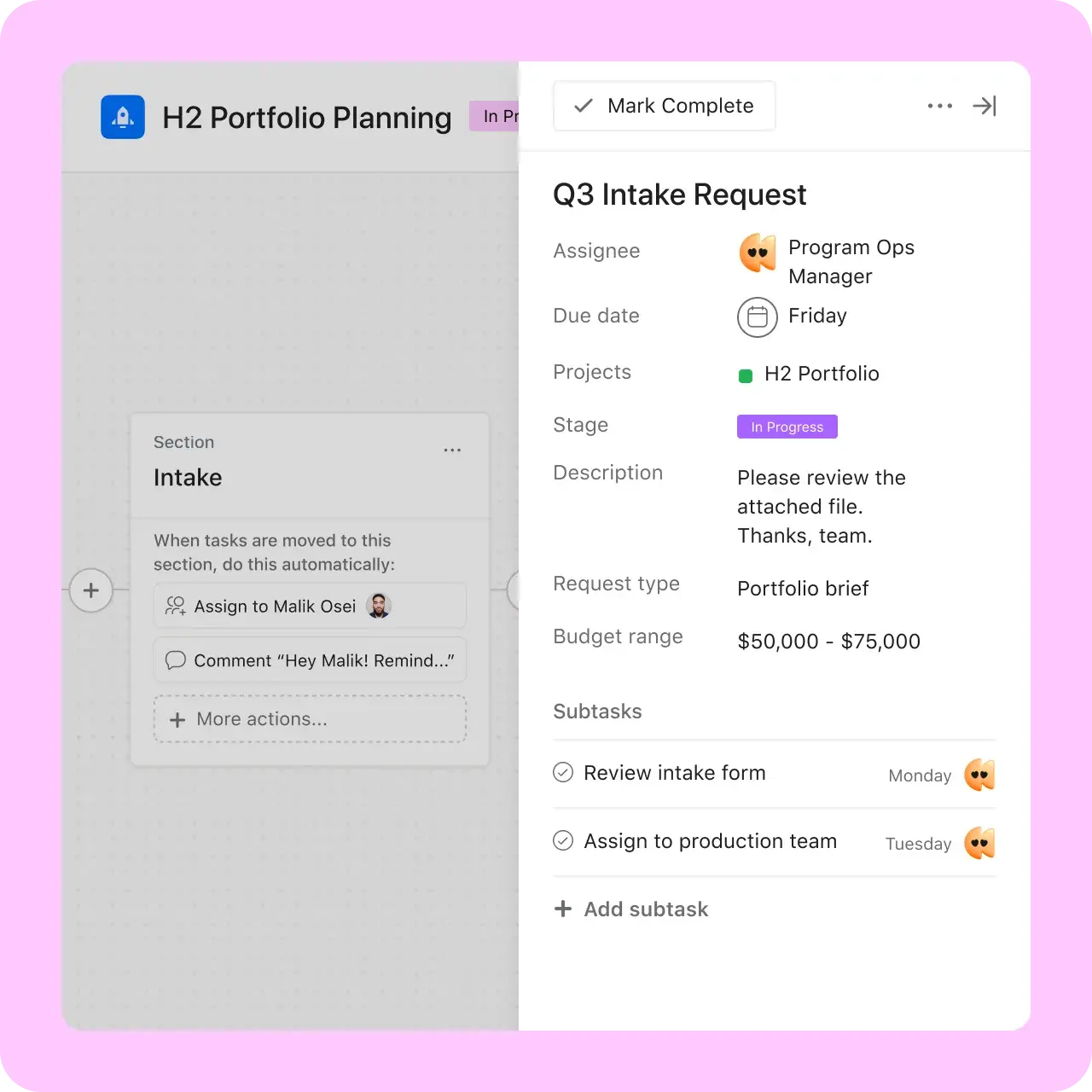
For requests that come in from other teams, AI Studio can route each one to the right team or owner, so nobody sorts the queue by hand.

Turn approvals into a step, not a message
Make legal’s review an approval task with a named approver and a due date. Legal approves, requests changes, or rejects it right on the task, and the requester sees the decision without sending a single follow-up. Since the approval* sits on the plan, every team can see when the project is waiting on legal and for how long.
*Approvals are available on the Advanced plan and above.

Project management collaboration tools that show every dependency
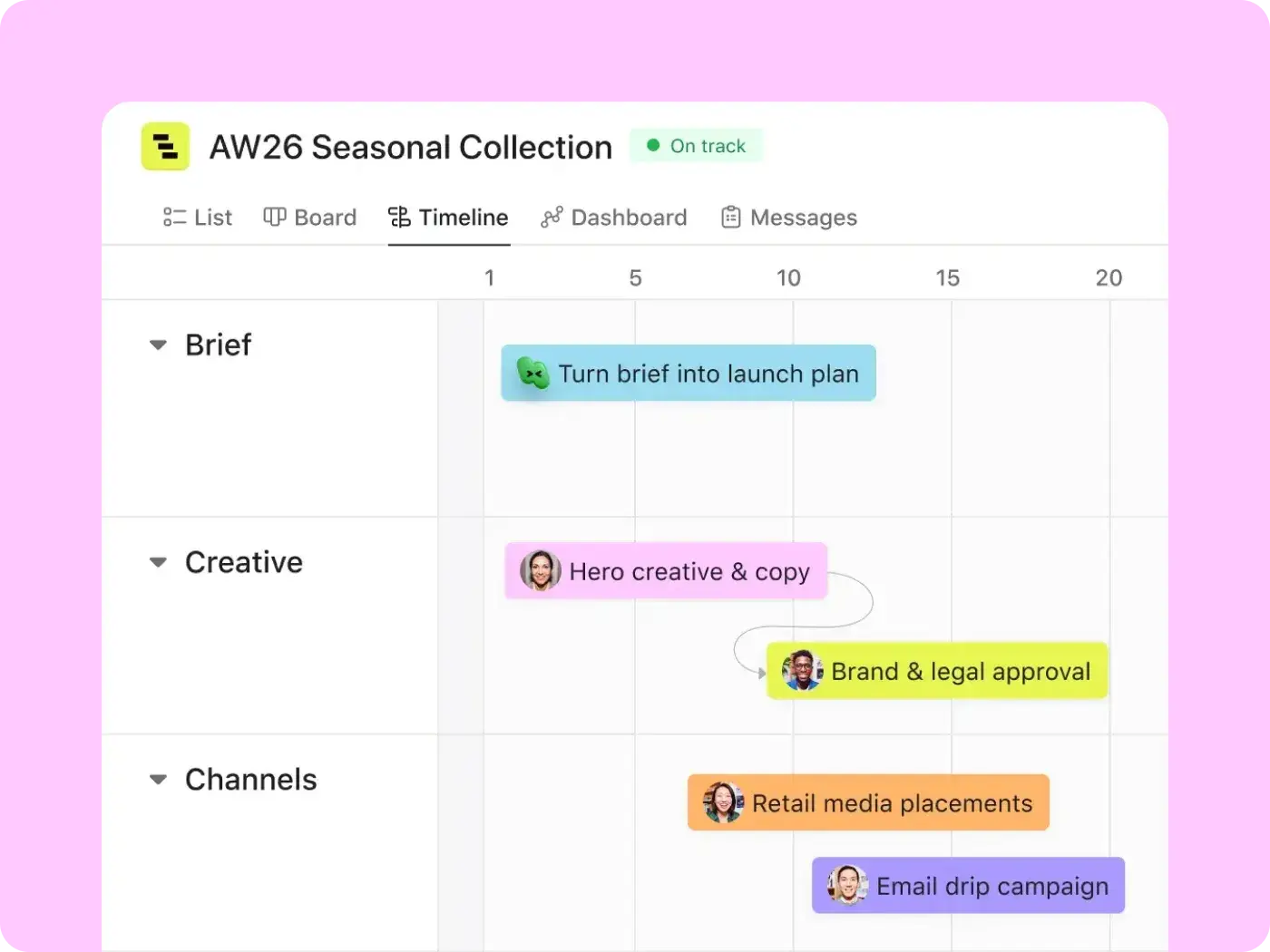
Timeline shows how each team’s work connects, including tasks that depend on work in other projects. When engineering’s date slips, Asana can shift the dependencies, and marketing sees the new launch date on their own tasks that same day. And add an AI Teammate to the project to surface overallocation while the program lead still has time to adjust.

Run cross-team projects at scale
Portfolios* put every team’s projects for an initiative in one view, and goals tie that work to the outcome leadership cares about. Agencies and contractors can join as free guests and work in the projects you share with them. Need a weekly roll-up? Use our suite to draft an Asana smart status from the work itself, and the program lead spends less time writing reports.
*Portfolios are available on the Advanced plan and above.

Built for teams that deliver projects together
Inside one team, team collaboration software keeps conversations moving. Once a project crosses team lines, you need project collaboration tools built around the plan. Here’s who gets the most out of collaborative work management.



Stop being the go-between
You spend more time relaying updates between teams than running the project, and every handoff runs through you. In Asana, handoffs and approvals live in the project, and each owner updates their own tasks. The plan stays current on its own, and you can skip the round of check-in messages before every meeting. Run the project, not the follow-ups.
New Relic saved 282 workdays per year by moving cross-team coordination out of spreadsheets and email and into Asana.
Teams from marketing to people operations now run their work in Asana, launching about 100 projects a month from shared templates. Program leads can check every status without sitting in every meeting.


Asana as a source of truth has been huge for us. I can’t attend all the teams’ standup meetings, but at the end of my day, I can see all the project statuses and easily give my boss a summary. Asana helped us achieve our mission as a PMO, which is transparency, collaboration, and predictability.Pounder Baehr
Director, Program Management, Customer Solutions Hub, New Relic
Bring every team into one plan
Launch week can actually feel calm. Marketing started the hour product finished the spec, legal signed off two days early, and nobody spent Friday chasing updates. Asana makes that your normal week. Pick your next cross-team project, add a rule to each handoff, and Asana passes the work along from there. Start your free trial today, and your next launch runs on the plan, not on someone’s memory.
Frequently asked questions about collaborative project management software
Collaborative project management software is a shared workspace where teams plan projects, assign work, and discuss tasks. Decisions and files stay with the project. Chat tools hold the conversation but leave the plan somewhere else. Asana keeps both together.
For more on teamwork, read our guide to collaboration in the workplace.
Traditional project management runs top-down. A manager assigns the work, then checks in with each person to find out how their tasks are going. Collaborative project management gives every contributor the same plan, so people update their own work, hand it off, and decide in the open. Asana supports both, so a project lead can set the plan while every team keeps it current.
Start with how work moves between teams. Look for handoffs and approvals with named owners, comments that stay on the task, and views each team can choose. Chat integrations and guest access for agencies matter, too.
Asana covers all of these, and our roundup of the best team collaboration software compares other options.
Yes. Asana’s Personal plan is free. As more teams get involved, upgrade your collaboration software to a paid plan that includes project management collaboration tools for cross-team work. Timeline and dependencies start on Starter, and approvals, portfolios, and goals come with Advanced.
Compare every plan on our pricing page.
To set up approvals in Asana, turn any task into an approval, then assign an approver and a due date. The approver marks it as approved, requests changes, or rejects it right on the task, and the requester sees the decision without having to ask for an update.
Approvals are available on the Advanced plan and above.
Yes. On any paid plan, invite agencies, contractors, or clients as free guests. Guests only see the projects and tasks you share with them, so the rest of your workspace stays private. Within those projects, they can comment on and complete tasks like anyone else on your team.
Yes. Mark one task as dependent on another, even when the two sit in different teams’ projects, and the next owner can see what they’re waiting on. When the first task is done, Asana notifies them.
On Starter and above, Asana can also shift dependent dates automatically when a deadline moves.
Asana runs complex cross-team projects every day. Dependencies connect the work between teams, portfolios track every project in an initiative, and goals tie that work to the desired outcome. For financial portfolio modeling or formal stage-gate reviews, a dedicated project portfolio management tool is the better fit.