Deliver great client work at scale with Asana Client Management, now GA

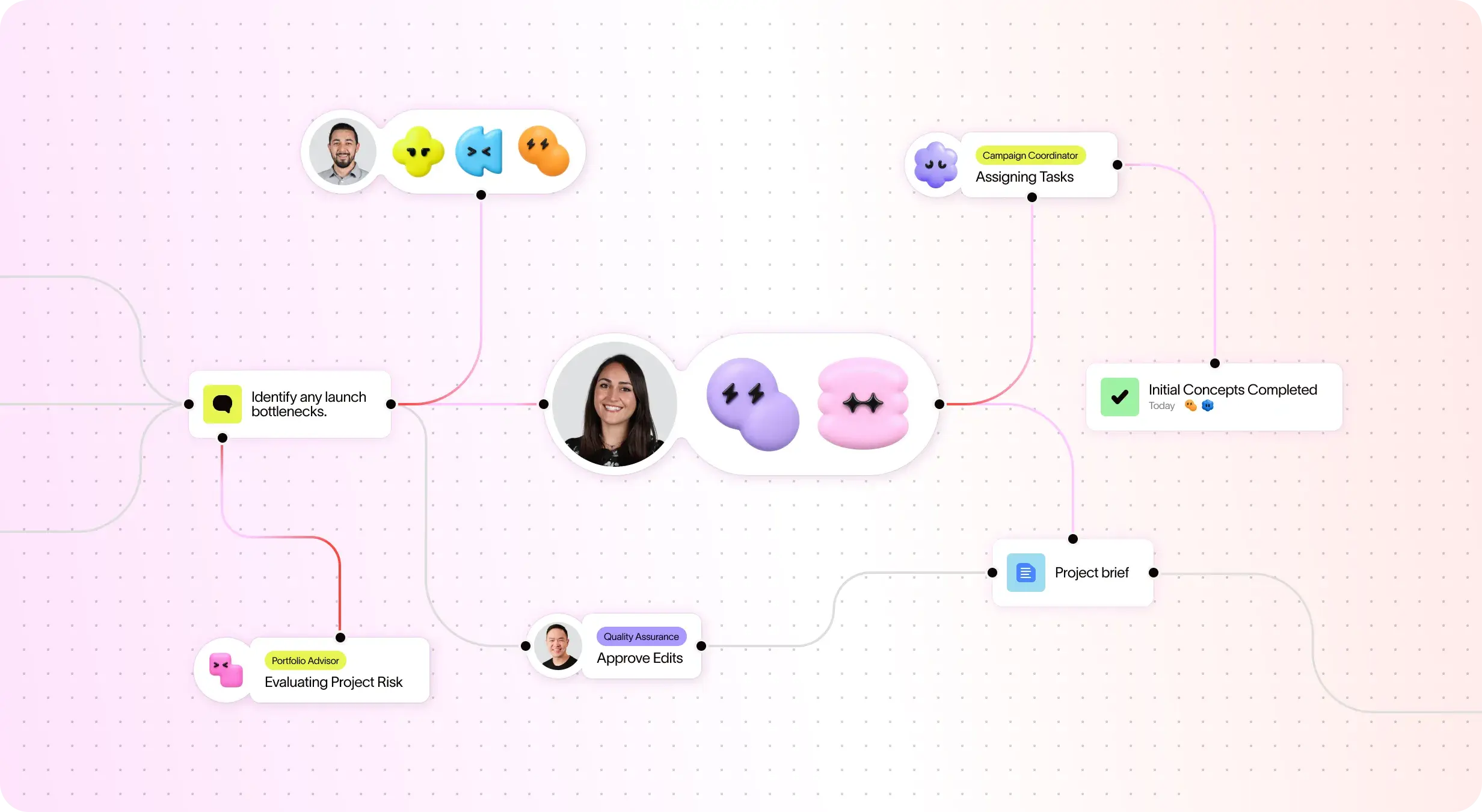
![[ACM Blog] Hero](https://assets.asana.biz/transform/15791025-1526-4e70-a52d-0412d237c30b/Resource-thumbnail_800x450_Client?io=transform:fill,width:2560&format=webp)
Clients stay informed, teams stay focused, and leaders always know where every account stands.
The client relationship is everything to a professional services organization. Business is won on the quality of your work. It’s sustained by trust earned across projects and over time.
Agency teams were among the first to adopt AI. Copywriters draft faster. Designers iterate overnight. Individual work accelerated. But the workflow that delivers client work still runs at the same pace it always has, because it depends on how well handoffs hold together.
A brief arrives via email, feedback lands on Slack, and somewhere between the two, a project manager spends half the morning catching up before anyone starts producing. The AI tools that were supposed to change this are working from the same fragmented picture as everyone else.
Clients experience the effect of this fragmentation with longer turnaround times, lost context, and relationship drift. All of these factors erode trust rather than build it.
"Our client information was living in too many places, and the systems we had built to manage it were workarounds across multiple platforms. We also had limited visibility into team capacity, which made it harder to spot over-delivery before it became a profitability problem. The first outcome I'm looking for is simple: one trusted client record, in one place, that gives our whole team a single source of truth for every client we serve." - Bill Cummings, Co-Founder and Director of Brand Strategy, Liminal
Asana Client Management is designed to close that gap.
One place where critical business information lives alongside the work itself, so teams move faster, AI Agents operate with the full context of the account, and leaders always know where things stand. From that same system, agencies control exactly what clients see: a curated, confident view of progress that keeps relationships strong without exposing the complexity behind them. When the information is right, the work is right. When the work is right, trust follows.
Today it’s generally available.
“Agencies are sought after for their expertise, but too much of their day goes to status emails, approval chasing, and resourcing guesswork. That overhead is where margin quietly disappears. Asana Client Management attacks it directly: a live view of health across every account, a branded client portal that replaces the status call, and AI Teammates that draft the SoWs, updates, and client-ready assets. The result is agencies that scale revenue without scaling headcount.” - Arnab Bose, Chief Product Officer, Asana
Where client delivery breaks down
Since the beginning, we have partnered with agencies to help run their business. While processes and tools have evolved, we’ve seen the same challenges come up again and again.
Scattered client communication. Requests arrive via email, Slack, text, and calls, and they all funnel through the account manager for triage and relay. Senior leaders get pulled into coordination. When a team member is out, things fall through. When a client asks a question, the answer requires a search across many tools.
Decisions made on calls disappear. A meeting ends with open questions and next steps. Someone takes rough notes, but this is time-consuming and error prone. AI can generate a summary but tasks need to be manually logged and assigned. Details are lost and tasks may go unassigned.
Generic AI adds steps instead of removing them. A team member opens a general-purpose tool, gets output with limited client context, and spends hours reworking it into something fit to send. Client feedback lives in comment threads and call notes, never making it back into the work.
Risks surface too late. Budget slip, staffing exposure, and risk signals are spread across spreadsheets and project trackers. Account health gets pieced together manually before leadership reviews. By the time a client looks like "at risk" at a quarterly review, it may be too late.
Streamline every client, every project, every conversation in one place
Keep clients in the loop without the overhead. Give every client a branded portal to view project status, review deliverables, and share feedback, turning transparency into trust.
Every piece of feedback clients leave is captured as an actionable task for your team. When an update is posted to the portal, the client sees it immediately and can respond in the same space. The conversation lives with the work, visible to everyone on both sides of the relationship, so when a client asks what happened to their request, the answer is already there.
"Clients are more discerning than ever before, and as a small agency, we need to deliver a polished, organized experience that builds trust at every step. Asana Client Management will help us create a personalized experience that keeps clients informed and gives them the level of visibility and involvement they want throughout the entire engagement." - Irene Katzias, Creative Director, Irene + Co Events

AI Meetings: Every decision captured, every action assigned. Transcripts, summaries, and action items are automatically generated from every client call and immediately assigned to the right people. When a call produces work, an AI Teammate can take the first pass, so the brief, the update, or the draft is already in motion. Your team stays present in the conversation.

AI Teammates that know the client. Four pre-built and customizable AI Teammates work directly inside your existing Asana workflows, drawing from the same Work Graph® that governs every task, timeline, and dependency in the account, not a separate context window or a single user's personal chat history.
The Creative Producer turns incoming briefs into structured first drafts already calibrated to that client's brand guidelines, tone preferences, past content, and feedback history. A creative opens a draft ready to react to, not a blank document. And because every brief and revision is retained, the output for this client improves with each project.
The Account Advisor handles the handoffs between CRM and project kickoff, drafts client-facing status updates, and flags budget and delivery risks before they become conversations the team has to have after the work is already done.
The Operations Coordinator covers the work that keeps accounts running but rarely shows up in a job description: staffing coordination, billing preparation, decision logs, budget risk flags.
The Executive Advisor gives leadership a view of profitability, capacity, and retention risk across the full book of business, surfacing what needs attention while there's still time to act.
"Keeping clients and internal teams aligned meant juggling scattered updates that didn't always reflect the latest progress. Asana Client Management lets us keep one system of record, extending the way our cross-functional teams already work in Asana to the client relationship itself. Client communication becomes a natural part of the project, so our conversations can focus on decisions and strategy instead of status updates."
Blake Goble, Project Manager, Gravitate

Increase profitability and manage risk. Team Capacity shows planned versus actual resourcing across all client work, so overloads surface before they hit delivery. When margin starts to erode, Project Budgets notify at pre-set thresholds with enough time to change course. Underneath it all, the Client Directory centralizes account health, renewal dates, points of contact, and active project status across the entire book of business, so leadership always has a current picture of the portfolio without anyone having to build it.
"The biggest shift will be bringing the work and the client relationship into one place. That means less time hunting for information, easier visibility into team capacity, and a client portal where updates, feedback, and approvals can happen in one place. I'm most excited about keeping each client's goals at the top of their record." - Bill Cummings, Co-Founder and Director of Brand Strategy, Liminal

What Asana Client Management does differently
One system for your client relationships
Other tools can store client files and track tasks. What they can't do is connect client context to project work to AI output in a single, consistent data model, and keep all of it visible to every person and every AI Teammate working on the account.
How the work flows through Client Management:
AI Meetings captures live conversations, generates summaries, and turns action items into tasks in Asana ready for your team to review and assign
Tasks surface in the Client Portal alongside project status, deliverables, and feedback, visible to clients and internal teams
AI Teammates produce first drafts, monitor accounts, and run workflows informed by each client’s context
Track the agency’s entire book of business in the Client Directory: budgets, project account health, renewal dates
Team Capacity flags where work is concentrated and where conflicts are building before they affect delivery
Built on infrastructure designed for AI to work
Asana has spent nearly two decades building the infrastructure that makes work visible, accountable, and connected across an entire organization. Client Management runs on that same foundation, which is why the AI Agents here work differently from general-purpose tools layered onto a project tracker.
The Enterprise Work Graph. A structured model of who is doing what, by when, and why. Complete context that accumulates on each account.
Shared memory. Every brief completed, every piece of feedback processed, every preference your team records carries forward. No one re-enters the context. No project starts from zero for a client you've worked with for three years.
Multiplayer by design. Every AI Teammate and human works in the same shared space, against the same plan, with access to the same context. When a Creative Producer drafts a brief and an Account Advisor flags a budget risk, they're working from the same record, not two separate context windows.
Enterprise governance. Every client interaction, every AI action, every approval has a full audit trail. IT has control. Leadership has visibility. The record is comprehensive and searchable.
This is the distinction between AI that helps one person move faster in one moment and AI that compounds across a whole team over time. The infrastructure is what makes compounding possible.
Unlocking agency work for your entire org
The best agency work happens when talented people spend their time on the work that actually requires them. Not relaying status updates, rebuilding context or assembling reports. Asana Client Management handles that overhead so every person on the team can focus on doing their best work - the work they got into the business to do.
A creative opens a first draft already calibrated to the client's brand voice, past feedback, and content history, because the Creative Producer ran intake before anyone opened a file.
An account manager stops being the relay point for every client question. Status lives in the portal. Scope gaps surface before the work is done. Budget risk appears in the Account Advisor's output before it becomes a conversation no one wants to have.
A project manager sees which accounts are overloaded, which projects are driving the most hours, and where team bandwidth could become a delivery problem, without building a Friday afternoon report to find out.
An agency leader sees account health, renewal dates, and margin signals across every client in one place. The Executive Advisor flags which accounts need attention while there's still time to act on them.
Get started with Asana Client Management
The work your team does for clients deserves a system built for it. See what that looks like with a 14-day free trial: every feature included, no seat limit.