Management by Objectives (MBO): Steps, Pros & Cons


El 85 % de las empresas Fortune 100 prefieren Asana¹





Summary
The idiom "It takes a village" refers to the idea that success stems from collaboration. As a project manager, you experience this firsthand. You rely on your village, or your team, to complete projects.
Companies also rely on the collective to meet their objectives. But how do team members stay motivated to work toward the objectives of others? In this article, we'll explain how management by objectives (MBO) works, discuss the pros and cons, help you determine if MBO is right for your organization, and share tips for effective implementation.
What is management by objectives (MBO)?
Management by objectives (MBO) is a goal-setting approach where managers and employees work together to define specific, measurable objectives that align individual performance with company goals. First introduced by Peter Drucker in his 1954 book "The Practice of Management," MBO connects team member goals to organizational objectives so everyone understands how their work contributes to the bigger picture.
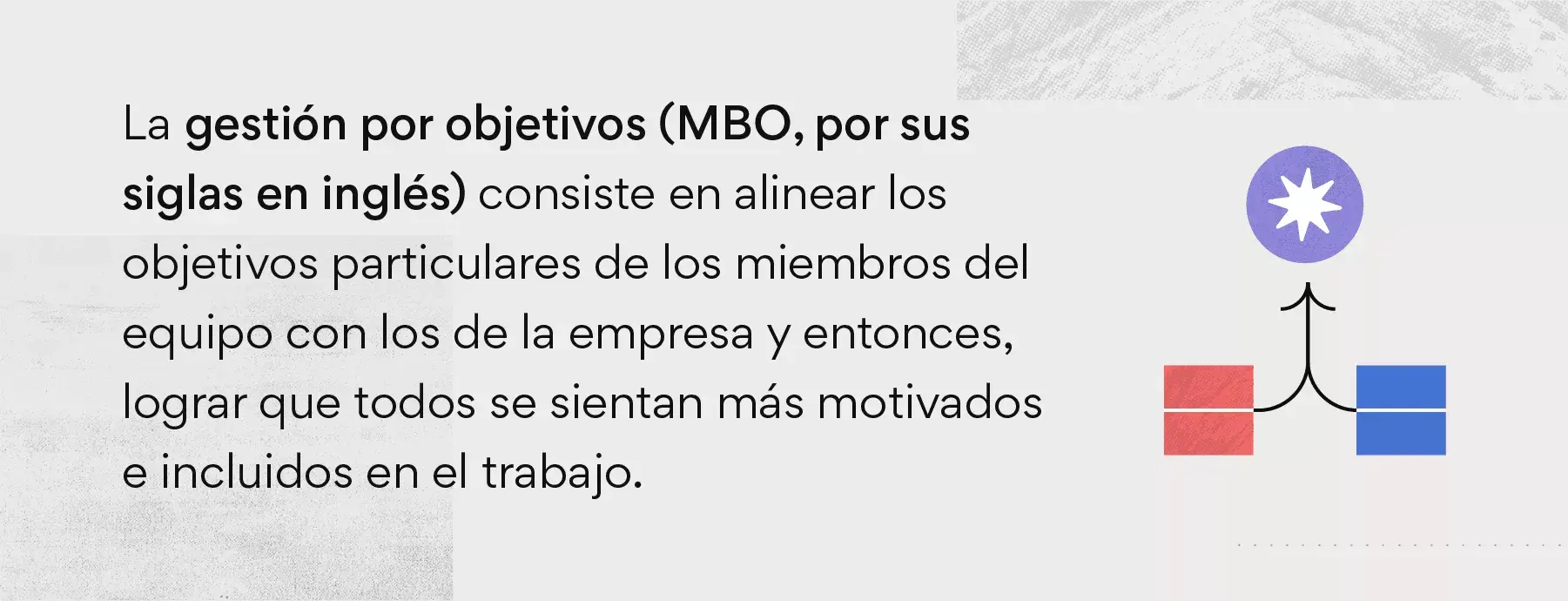
MBO uses objective standards to measure team member and company performance. These standards outline what's fair, reasonable, and acceptable, helping you assess productivity and identify growth opportunities. MBO works because management and team members collaborate to define and agree on these standards together.
The 5-step management by objectives (MBO) process
There are five steps to the MBO technique. Implementing this process involves setting organizational goals and translating them into individual objectives that team members can follow.
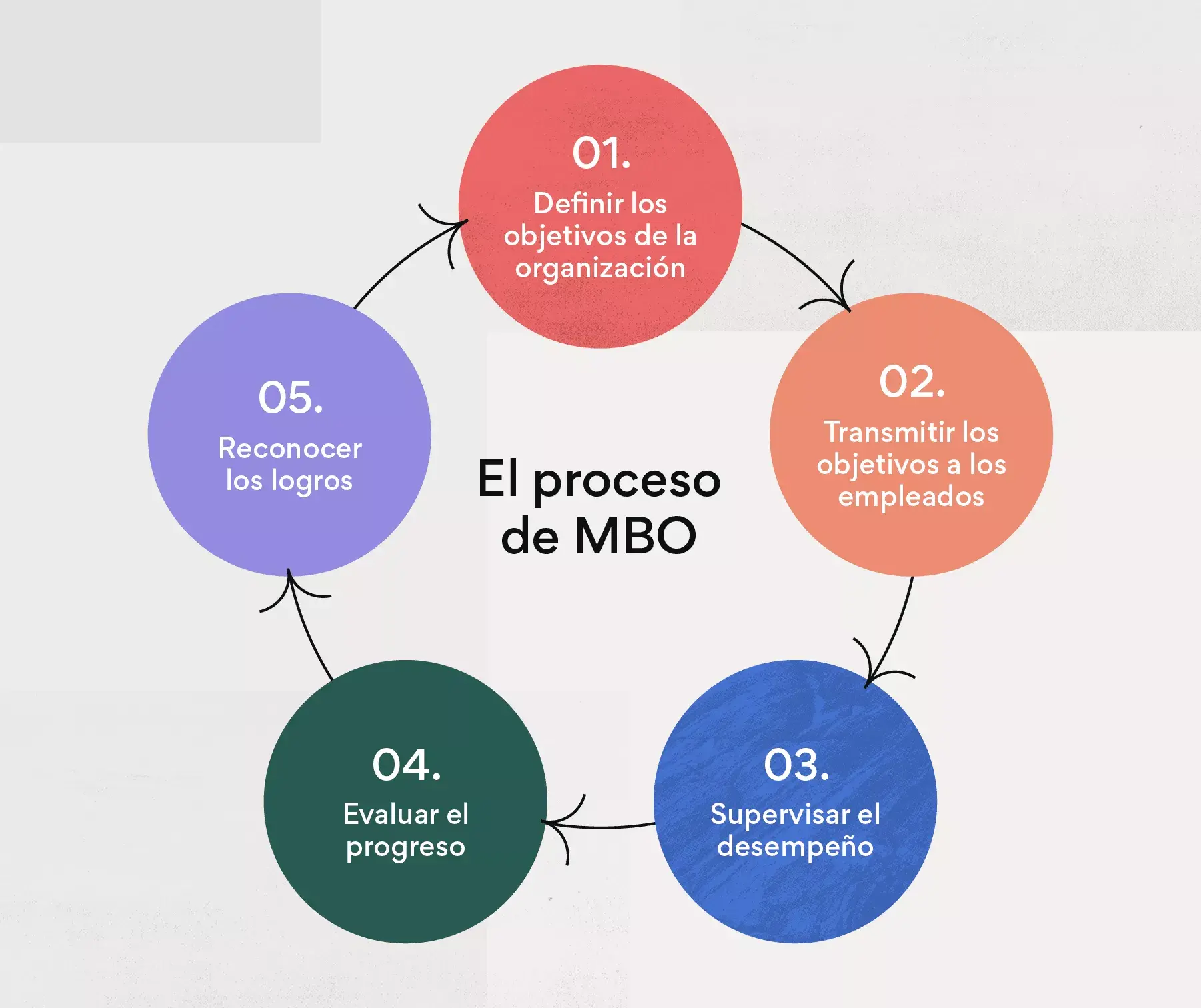
1. Define organizational objectives
The first course of action is to define your organizational objectives. As a project manager, your job may be to work together with the company's objectives or translate them to your team in an understandable way. You can use a business goals template to structure your specific goals at this stage.
Lee: 22 tipos de objetivos empresariales para medir el éxito2. Translate the goals of the organization into employee objectives
After you've defined the company's objectives, use a top-down approach to translate them into individual goals for each team member. Make sure you're using the SMART goals framework to ensure your team members'goals are measurable and achievable.
When team members have personal goals that align with larger company goals, they understand how they fit into the bigger picture. Research shows that only 26% of employees have a clear understanding of how their individual work relates to company goals, and just 16% say their company is effective at setting and communicating goals.
3. Monitor performance and progress
As your team members work toward their specific objectives, you'll need to monitor their performance. You can monitor each team member's progress by gathering success metrics from your project management tool and assessing whether objectives and key results (OKRs) are being met. Monitoring employee performance will also help you assess team members' productivity.
4. Evaluate employee objectives and progress
You can evaluate team member progress by setting up performance appraisals. This step in performance management is crucial because it emphasizes effective communication between management and the team. Team members may look forward to performance evaluations because the feedback can boost team productivity.
5. Provide feedback and rewards
The last step in the MBO system is rewarding the team for their achievements. This increases team morale and keeps teammates motivated to work hard during the next MBO process.
You can reward your team in both intrinsic and extrinsic ways:
Intrinsic rewards: Challenge team members, recognize their hard work, foster a sense of belonging, and offer team-building activities. These actions help team members develop intrinsic motivation and self-confidence.
Extrinsic rewards: Offer praise, paid bonuses, salary increases, promotions, extra responsibility, or paid time off. These tangible incentives motivate team members to continue working toward their objectives.
Management by objectives examples
An example of MBO in action is a company with a quarterly objective to earn 30% of overall revenue from its marketing efforts. To achieve this objective, they break it down into personal objectives for each team member.
For the digital marketers on the team, their personal objectives are to secure three new marketing clients for the quarter.
Managers monitor team member performance over the quarter to identify how each team member plans to achieve their personal goal and whether they're making progress toward the goal.
If a team member reaches their goal at the end of the quarter, they receive a paid bonus.
Pros and cons of MBO
After Drucker first introduced MBO, it became a well-liked management technique in the 1960s and 1970s. However, widespread use of the model has since declined as companies have tested new management styles. Some companies still use MBO today, but there are arguments for and against it.
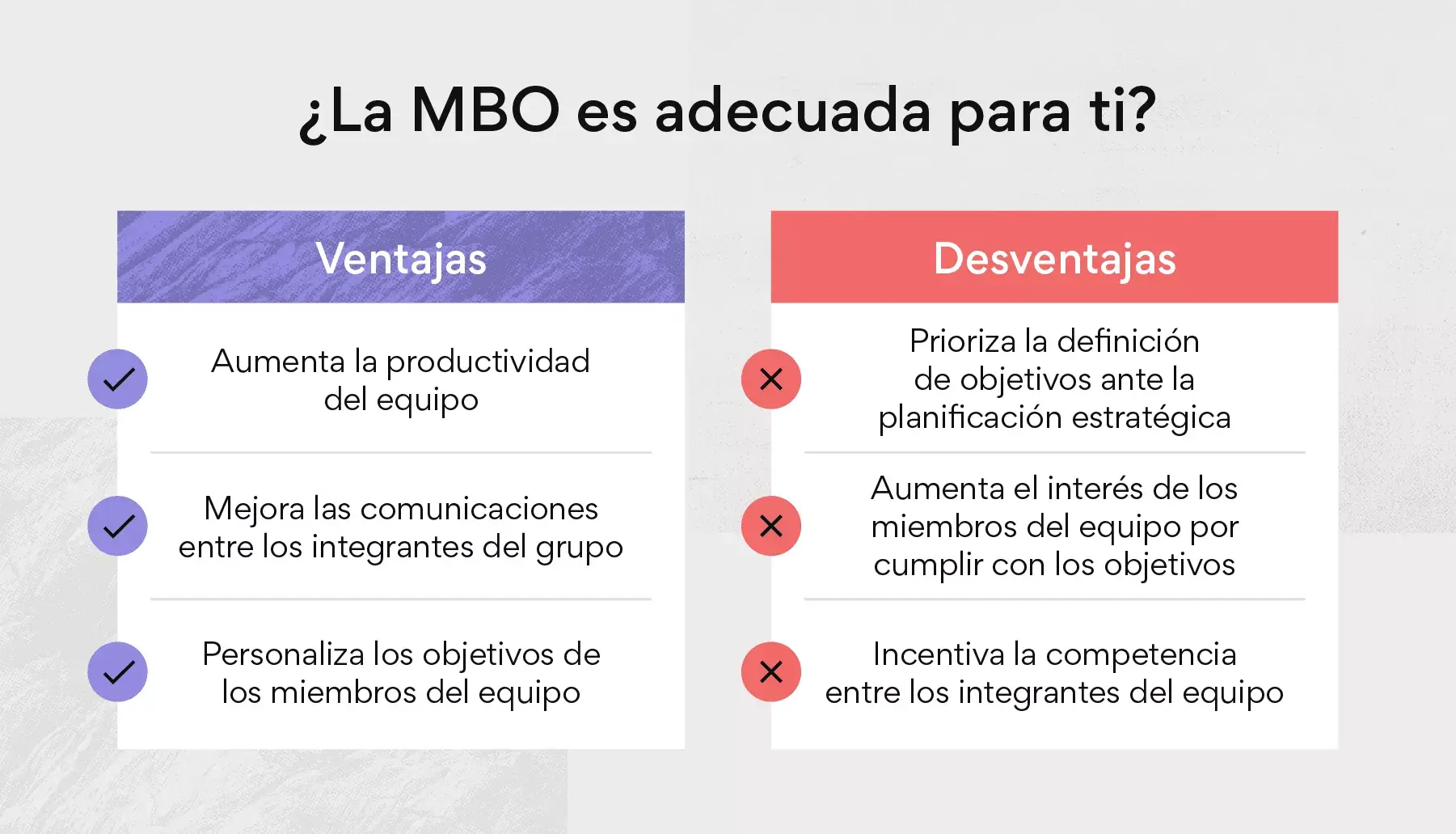
Advantages and benefits of MBO
Supporters of the MBO approach believe that using this form of management within a larger system creates a simpler management structure. Other benefits include:
Increased team productivity: When team members have personal objectives, they have more clarity about why their work matters. As a result, their motivation and productivity increase.
Improved team communication: The MBO model can enhance team communication and foster a more open work environment by helping team members understand the company's objectives and align their personal goals with them.
Personalized team member objectives: Because the MBO system personalizes team member objectives and makes it a priority for team members to reach their full potential, everyone in the company understands how their work impacts the company.
Disadvantages and limitations of MBO
Opponents of MBO believe that the model risks overlooking a company's ethics and values by placing too much emphasis on individual goals. Other drawbacks include:
Prioritization of goal-setting over strategic planning: Prioritizing personal objectives for team members may come at the expense of long-term strategic planning. Companies that spend so much time setting goals may have less time to focus on company culture, operational issues, and other areas of involvement.
Increased strain on team members to meet goals: Because MBO focuses on the individual, team members may feel excessive pressure to meet their goals. This can be a drawback of MBO because team members may become overworked in this type of work environment, leading to low retention and morale.
Competition between team members: The extrinsic-focused reward system incorporated into MBO may promote competition among team members, which can get in the way of creating a healthy work environment. Healthy team dynamics in the workplace should include teamwork and supporting one another to reach personal and company goals.
Is MBO right for your organization?
MBO can be highly effective in some environments and less practical in others. Before implementing MBO, consider these key factors:
Company size and structure: MBO tends to work well in larger organizations with multiple layers of management, where cascading goals from leadership to individual contributors create alignment. Smaller teams may find the formal structure unnecessary.
Industry dynamics: Organizations in stable industries with predictable cycles often benefit from MBO's annual or quarterly goal-setting cadence. Fast-moving industries that require rapid pivots may find MBO too rigid.
Management style: MBO requires active participation from both managers and employees in goal-setting. If your organization values collaborative decision-making and regular feedback, MBO aligns well with that culture.
Strategic clarity: MBO works best when leadership has a clear vision and can articulate specific organizational objectives. Without this foundation, cascading goals become challenging.
Performance measurement capability: To succeed with MBO, you need reliable ways to track and measure progress against objectives. Organizations without established metrics or tracking systems may need to build this infrastructure first.
MBO may be right for your organization if:
You value goal alignment between individual and company objectives
You have structured performance review cycles
Clear accountability is a priority
If you need more flexibility or operate in a rapidly changing environment, consider pairing MBO with agile methodologies or exploring frameworks like OKRs.
Comparing MBO to other goal-setting frameworks
Management by Objectives (MBO) is just one of several popular goal-setting frameworks used in modern business. Here's how it compares to other well-known approaches:
Lee: La importancia de definir objetivos a corto plazo (con ejemplos)Framework | Primary focus | Key difference from MBO |
MBO | Aligning individual goals with organizational objectives | Comprehensive approach with cascading goals, monitoring, and performance evaluation |
MBE (Management by Exception) | Identifying and addressing deviations from standard performance | Reactive approach focused on maintaining status quo; intervenes only when issues arise |
SMART goals | Ensuring goals are Specific, Measurable, Achievable, Relevant, and Time-bound | Goal-setting criteria only; lacks MBO's cascading structure and evaluation process |
OKRs | Setting objectives with measurable key results | Greater emphasis on frequent check-ins and quantifiable outcomes; popularized by Google |
Choosing the right goal-setting framework
The choice of goal-setting framework depends on factors such as organizational culture, industry, and management style. Consider the following when selecting an approach:
Alignment with company values and mission
Level of employee involvement and autonomy
Emphasis on individual vs. team performance
Frequency of progress reviews and feedback
Integration with performance appraisal and rewards systems
Regardless of the framework chosen, effective goal-setting involves clearly defining objectives, aligning them with company goals, and regularly monitoring progress to ensure success. By comparing and adapting elements from different approaches, organizations can develop a goal-setting system that best fits their unique needs.
Lee: 7 modelos de planificación estratégica y 8 marcos para comenzar paso a pasoImplementing effective management by objectives
Implementing a successful MBO program requires careful planning and execution.
1. Define organizational objectives
Start by clarifying your company's overall strategic objectives. These should be specific, measurable, and aligned with your mission and vision. Involve key stakeholders to ensure buy-in and a shared understanding of these high-level goals.
Plantilla gratuita para objetivos empresariales (1)2. Cascade objectives to departments and individuals
Break down organizational objectives into specific goals for each department and individual employee. Ensure that these goals are achievable, relevant to job roles, and contribute to the overarching company objectives. Engage employees in the goal-setting process to foster ownership and accountability.
3. Establish metrics and milestones
Determine how progress and success will be measured for each objective. Define clear metrics, key performance indicators (KPIs), or OKRs to track performance. Set interim milestones to maintain momentum and enable course corrections if needed.
Lee: Cómo establecer, alcanzar y celebrar los hitos de los proyectos4. Implement regular progress reviews
Schedule frequent check-ins between managers and their team members to discuss progress, identify obstacles, and make necessary adjustments. These performance reviews should be supportive and focus on problem-solving rather than blame.
5. Evaluate employee performance and provide feedback
Conduct formal performance appraisals at regular intervals (e.g., quarterly or annually). Assess individual and team achievements against their defined objectives. Provide constructive feedback and recognize successes.
Lee: 15 tipos de evaluaciones de desempeño de los empleados (con plantillas y ejemplos)6. Align rewards and recognition with goal achievement
Tie rewards, bonuses, and promotions to the accomplishment of individual and team objectives. This helps reinforce the importance of the MBO process and motivates employees to stay engaged and driven.
7. Foster a supportive work environment
Encourage open communication, collaboration, and a growth mindset. Provide resources, training, and support to help employees reach their goals. Regularly assess and address any barriers to success, such as conflicting priorities or insufficient tools.
By following these steps and refining your MBO process over time, you can drive organizational success, boost employee performance, and improve job satisfaction and retention.
Set goals and achieve company objectives with MBO
MBO is most effective when used as one part of a more comprehensive management plan. When team members have goals that connect to the company's mission, they'll feel more motivated to collaborate. With goal-tracking software, you can help your team members stay on track and meet their goals in real time.
Ready to align your team's goals with your company's objectives? Get started with Asana to track progress, measure success, and keep everyone focused on what matters most.
Define y alcanza los objetivos con AsanaFrequently asked questions about management by objectives (MBO)
The three types of MBO objectives are:
Strategic objectives: Long-term goals aligned with company mission
Tactical objectives: Short-term goals that support strategic objectives
Operational objectives: Day-to-day goals that keep the business running
The four steps of management by objectives are: setting objectives, developing action plans, monitoring progress, and evaluating performance. This process helps align individual goals with organizational objectives, fostering employee engagement and improved decision-making.
Yes, MBO remains relevant, though many organizations now pair it with agile methodologies or OKR frameworks for greater flexibility. The key is adapting MBO's structured approach to your organization's specific needs and pace of change.
While the initial setup of an MBO program may require some time investment, the long-term benefits often outweigh the initial effort. By clearly defining objectives and streamlining the goal-setting process, MBO can actually save time and increase efficiency in the long run.
Human resources can play a crucial role in implementing MBO by communicating the program's benefits, training managers on setting achievable goals, and aligning performance evaluations with MBO objectives. Additionally, HR can leverage internal communication channels to keep employees informed and engaged throughout the process.