15 exempel på pitchar + mall och tips | Asana

85 % av Fortune 100-företagen väljer Asana¹






Sammanfattning
En bra pitch kan vara avgörande för att vinna nya möjligheter eller försvinna i konkurrensen. Faktum är att ingen vill ha en påtvingad försäljningspitch utan föredrar konstruktiva konversationer. Så hur gör man för att sälja in sig själv och samtidigt vara autentisk under en anställningsintervju eller ett kundmöte?
Vi har sammanställt 15 kreativa exempel på pitchar som kommer att hjälpa dig att lyckas vid nästa kundmöte eller virtuella nätverksevenemang. Oavsett om du är nybörjare eller har erfarenhet täcker våra exempel alla de situationer du kan befinna dig i.
Dessa exempel kan hjälpa dig att göra ett bra första intryck, oavsett om du är på en karriärmässa, under en kort hissfärd eller till och med när du skapar din LinkedIn-profil. Du kommer även att upptäcka andra operativa resurser för att effektivt hantera din verksamhet med teamsamarbetsverktyg.
Vad är en pitch?
En pitch är en snabb, övertygande sammanfattning av vem du är, vad du gör och vilket värde du erbjuder – allt på cirka 30 sekunder, eller den tid det tar att åka hiss. Den kallas även för ett hisssnack och är ditt tillfälle att göra ett minnesvärt första intryck och skapa en meningsfull kontakt med potentiella arbetsgivare, kunder eller medarbetare.
Egentligen har de flesta av oss redan gjort en pitch oavsett om vi inser det eller inte. Anledningen är att det finns flera olika typer av pitchar – från intervjuer till nya affärsmöjligheter. Att förbereda din nästa pitch blir ett viktigt steg i marknadsföringen av både dig själv och ditt företag.
När det gäller att hitta en målgrupp för din pitch är det bättre att välja den bäst lämpade personen och inte nödvändigtvis den högst placerade. Att välja en kontaktperson som har ett samband med eller ett intresse för det du erbjuder kommer att öka dina chanser till försäljning.
Hur lång ska en pitch vara?
En av de största frågorna som kommer fram när man skapar en pitch är hur långa de ska vara. I de flesta fall beror det på syftet med pitchen och vem du vänder dig till. En bra regel som följer affärsetiketten är att göra den så kort som möjligt genom att noggrant välja ut de viktigaste punkterna.
Microsoft har gjort en studie där slutsatsen är att en genomsnittlig person har en koncentrationsförmåga som varar i ungefär åtta sekunder, vilket innebär att det är svårt att få någons fulla uppmärksamhet. När det gäller en bra pitch är 30 sekunder en bra längd – den kan dock variera beroende på din bransch och vad din pitch handlar om.
Pitchns längd varierar beroende på bransch och sammanhang. Så här ser tidsåtgången vanligtvis ut:
Marknadsföring: Du har några sekunder på dig att fånga uppmärksamheten, oavsett om det är med text, video eller bilder. Håll den under 30 sekunder.
Försäljning: På nätverksevenemang är det ofta möjligt att ha längre konversationer. Du kan ha större flexibilitet att gå över 30 sekunder.
Jobbintervjuer: Sikta på 30–60 sekunder när du svarar på uppmaningen: ”Berätta lite om dig själv.”
Om din pitch känns för komplex för 30 sekunder pitchar du förmodligen för fel publik. Fokusera på personer i din bransch eller närliggande branscher som snabbt kan förstå vad du har att erbjuda.
Hur ser en bra pitch ut: De tre K:na
De bästa pitcherna har tre viktiga egenskaper, som ofta kallas för de tre K:na: tydlig (Clear), kortfattad (Concise) och övertygande (Compelling). Om du förstår dessa principer kommer det att hjälpa dig att skapa en pitch som gör intryck på din målgrupp och lämnar ett bestående intryck.
Tydligt: Ditt budskap ska vara lätt att förstå utan branschjargong eller komplicerade förklaringar. Om din lyssnare måste anstränga sig för att förstå vad du säger har du redan förlorat hens uppmärksamhet.
Kortfattad: Gör din pitch till en sammanfattning, helst på 30 sekunder eller mindre. Varje ord bör ha ett syfte.
Övertygande: Ditt pitch ska väcka intresse och leda till ytterligare konversation. Det innebär att du fokuserar på det värde du tillför och varför det är viktigt för just din målgrupp.
När du kombinerar alla tre K:na skapar du en pitch som inte bara är minnesvärd utan också leder till handling. Din lyssnare kommer att förstå exakt vem du är, vad du erbjuder och varför hen borde bry sig.
Skriva en pitch
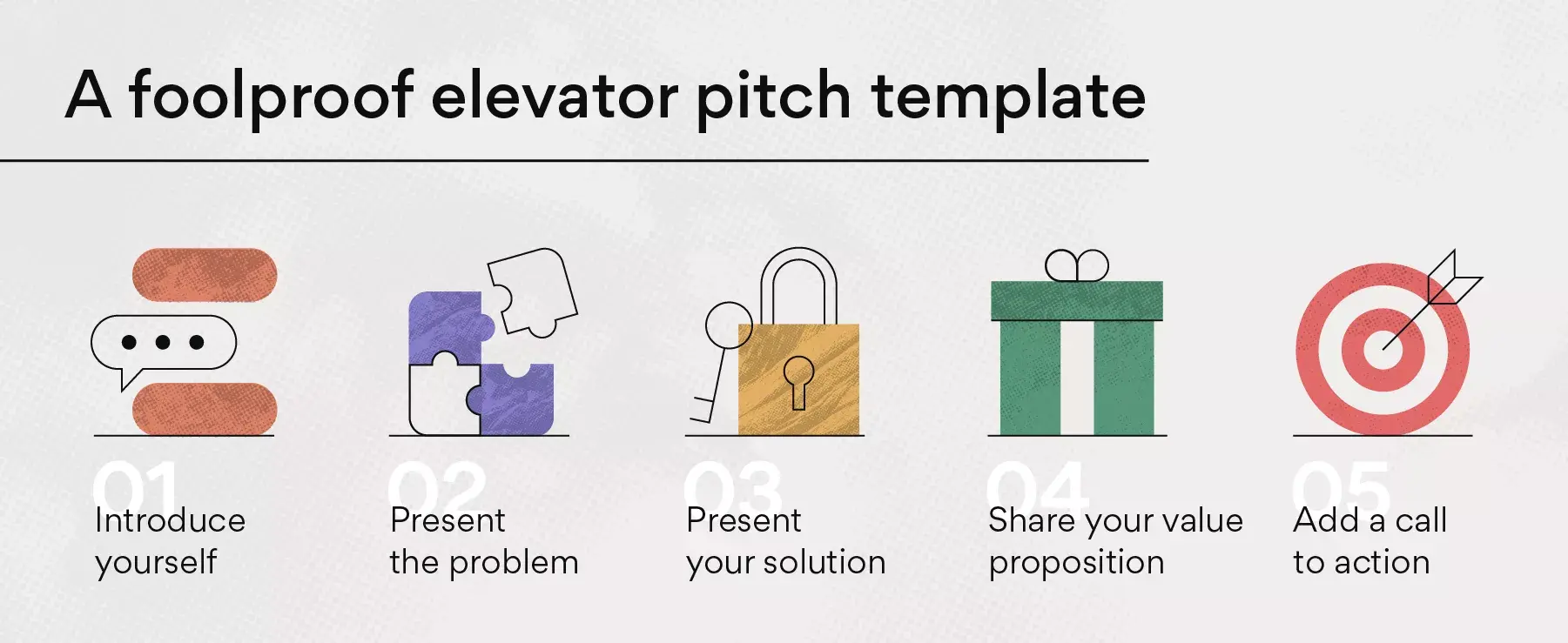
För att skriva en effektiv pitch måste du veta vad som ska ingår och vad som ska utelämnas. Hoppa över hela ditt företags historia och fokusera enbart på de senaste, relevanta detaljerna. Varje stark pitch innehåller fem grundläggande komponenter:
Steg 1: Presentera dig själv
Varje stark pitch börjar med en sammanfattning där du presenterar ditt namn, din roll och ditt företag. Ju mer personlig och naturlig du gör den, desto bättre. Kroppsspråk och ögonkontakt är lika viktiga som dina ord.
Välkomna din publik på ett övertygande sätt som passar för situationen.
Använd en formell hälsning om det handlar om en Business-pitch eller när du träffar rekryteringschefer.
Välj en mer avslappnad hälsning för ett roligt evenemang eller en informell nätverksmöjlighet.
Vid virtuella affärsmöten och professionella nätverksevenemang kan du vara kreativ när du presenterar dig under en videokonferens.
Vid virtuella nätverksevenemang bör du fokusera på att göra ett starkt första intryck, eftersom det kan vara svårare än vid personliga möten.
Överväg att börja med ett litet skämt för att lätta upp stämningen, men se till att det är relevant för din målgrupp. Det kan vara särskilt effektivt på karriärmässor eller när du ger din pitch till rekryterare.
Läs: De 110 bästa frågorna för att bryta isen och bygga upp lagandanSteg 2: Presentera problemet
Alla problem går att lösa. Oavsett vad det är du eller ditt företag försöker lösa, är det viktigt att du gör dig förstådd tidigt i din pitch för att sätta tonen för resten av ditt framförande. Exempel på ett problem: att samordna arbetet mellan team är problematiskt.
Använd om möjligt konkreta exempel för att illustrera problemet för din publik. Det kommer att bidra till att göra problemet mer relevant och fånga publikens uppmärksamhet.
Steg 3: Föreslå en lösning
Om problemet är det som lockade publiken är lösningen det som håller dem kvar. Det är nu du kan visa dem varför de behöver din hjälp. Här är ett exempel på en lösning: Asana erbjuder team ett system för att organisera och hantera arbetet för att alla ska veta vad som ska göras, varför det görs och hur det ska göras.
Lösningen är utan tvekan den viktigaste delen av en pitch, så lägg tid på att finslipa den. Om det är dig själv du pratar om kan du berätta om de färdigheter du har utvecklat och varför de skulle vara till nytta för dina prospekt.
Steg 4: Förklara ditt värdeerbjudande ser ut
Nu när du har fångat publikens intresse är det dags att avsluta affären genom att förklara varför din lösning är den bä bästa. Exempel på ett värdeerbjudande: Asana är den enda plattformen som kopplar samman mål med det arbete som krävs för att uppnå dem.
Värdeerbjudandet skiljer sig från lösningen eftersom det fokuserar på varför din målgrupp ska använda din lösning och inte konkurrenternas. Om du inte har svaret ännu kan du göra en konkurrentanalys för att jämföra ditt erbjudande.
Om du pitchar i samband med ett jobbsökande eller för att bygga upp ditt nätverk bör ditt värdeerbjudande lyfta fram dina unika färdigheter, din karriärbakgrund och hur dessa stämmer överens med företagets eller personens mål.
Om din marknad är väldigt nischad och om inget särskiljer dig, kan du fundera på varför man skulle vilja använda just din idé eller lösning.
Steg 5: Fånga din publik
Det svåraste arbetet är nu gjort men det är viktigt att fånga din publik med en komplimang eller en fråga innan ni skiljs åt. Det är alltid bättre att vara spontan än att leverera ett färdigt avsked.
Det finns inget rätt eller fel sätt att fånga din publik. Glöm inte att inkludera en tydlig uppmaning, oavsett om det handlar om att boka in ett uppföljningsmöte, utbyta visitkort eller få kontakt på LinkedIn.
Mall för pitch
Nu när du vet grunderna är det dags att skapa din egen pitch. Vi har analyserat mallar från branschexperter, bland annat från Harvard och Guy Kawasakis ramverk för pitchande, för att skapa en mångsidig mall som fungerar lika bra för anställningsintervjuer, kundmöten och pitchande för nystartade företag.
Använd den som utgångspunkt och anpassa den med dina egna detaljer. Du behöver inte läsa den ord för ord, men om du har ett ramverk redo blir du aldrig överrumplad.
En generell pitch-mall
Använd vår pitch-mall för att skapa en presentation genom att lägga till statistik och anpassade hälsningar där det behövs. Mallen består av de fyra delarna som beskrivs ovan och innehåller all nödvändig information för att skapa en bra pitch.
***Presentation****: ”Hej, jag heter [namn] och jag är [arbetstitel] hos/på [företagsnamn]. Trevligt att träffas!”*
***Problem****:**”Eftersom du/ni arbetar hos/på/i [företagsnamn eller branch] är du/ni kanske intresserade av att veta att [problem + intressant statistik].”*
***Lösning****: ”Det som är bra är att hos/på [namnet på ditt företag] lyckades vi lösa just det här problemet genom att [lösning].”*
***Värdeerbjudande****: ”Vi är det enda företaget som erbjuder [värdeerbjudande].”*
***Uppmaning till handling (CTA)****: ”Jag tror att vår lösning kan hjälpa er. Kan vi prata mer om det här senare i veckan?”*
Var inte rädd för att ändra din pitch-mall efter din personlighet och professionella expertis. Nedan har vi lagt till anpassade exempel på 30 sekunder långa pitchar för att ge dig en uppfattning om vilken personlig information du kan lägga till för att skapa en engagerande presentation.**
Exempel på 30 sekunder långa pitchar
Här är nio olika stilar för 30 sekunder långa pitchar som hjälper dig att hitta den metod som passar din personlighet och dina mål. Varje exempel visar hur du på bästa sätt kan presentera en programvara för projekthantering för att öka produktiviteten.
Pitch-stil | Bäst för |
Kort och lätt | Snabba presentationer, tidskänsliga situationer |
Mer igenkännande än tillförlitlig | Skapa personliga kontakter |
Intressant statistik | Datadrivna målgrupper |
Ifrågasätt allt | Engagera lyssnarna i en dialog |
Med humor | Lättsamma miljöer, bryta isen |
Berätta en historia | Komplexa ämnen, skapa empati |
Känslomässigt drivet | Uppdragsfokuserade pitchar |
Skriv ned allt | Välformulerat, inlärd framförande |
Slutet är bäst | Lämna ett minnesvärt intryck |
Exempel 1: kort och lätt
Det här exemplet är ett av de vanligaste du kommer att stöta på. Det är ett bra exempel på en snabb och enkel pitch som passar i nästan alla situationer. Låt den inte bli längre än 30 sekunder eftersom målet är att ge en sammanfattning och vara transparent.
Oavsett vilken bransch du är i eller hur bra du är på ditt jobb är det problematiskt att samordna arbetet. Men en bra programvara för projekthantering kan bidra till att förbättra produktiviteten och kommunikationen. Jag har inte missat en deadline på flera år. Hör av dig om du är intresserad så kan vi prata mer om hur det här kan hjälpa ditt team.
Exempel 2: Mer igenkännande än tillförlitlig
Ibland är det mer effektivt att fånga intresset hos din publik genom att berätta en personlig anekdot som de kan relatera till. Det här tillvägagångssättet handlar mer om att skapa en personlig koppling snarare än en omedelbar försäljning.
Så trevligt att äntligen träffas. Hur går det med verksamheten? Jag har förstått att ni har vissa kommunikationsproblem inom teamet. Jag och mitt team har också haft det. Det var först när vi började använda en programvara för projekthantering som vi verkligen såg en förbättring i teamsamarbetet och den övergripande kommunikationen. Jag hoppas att även ni kan hitta en lösning som fungerar för ert team.
Exempel 3: intressant statistik
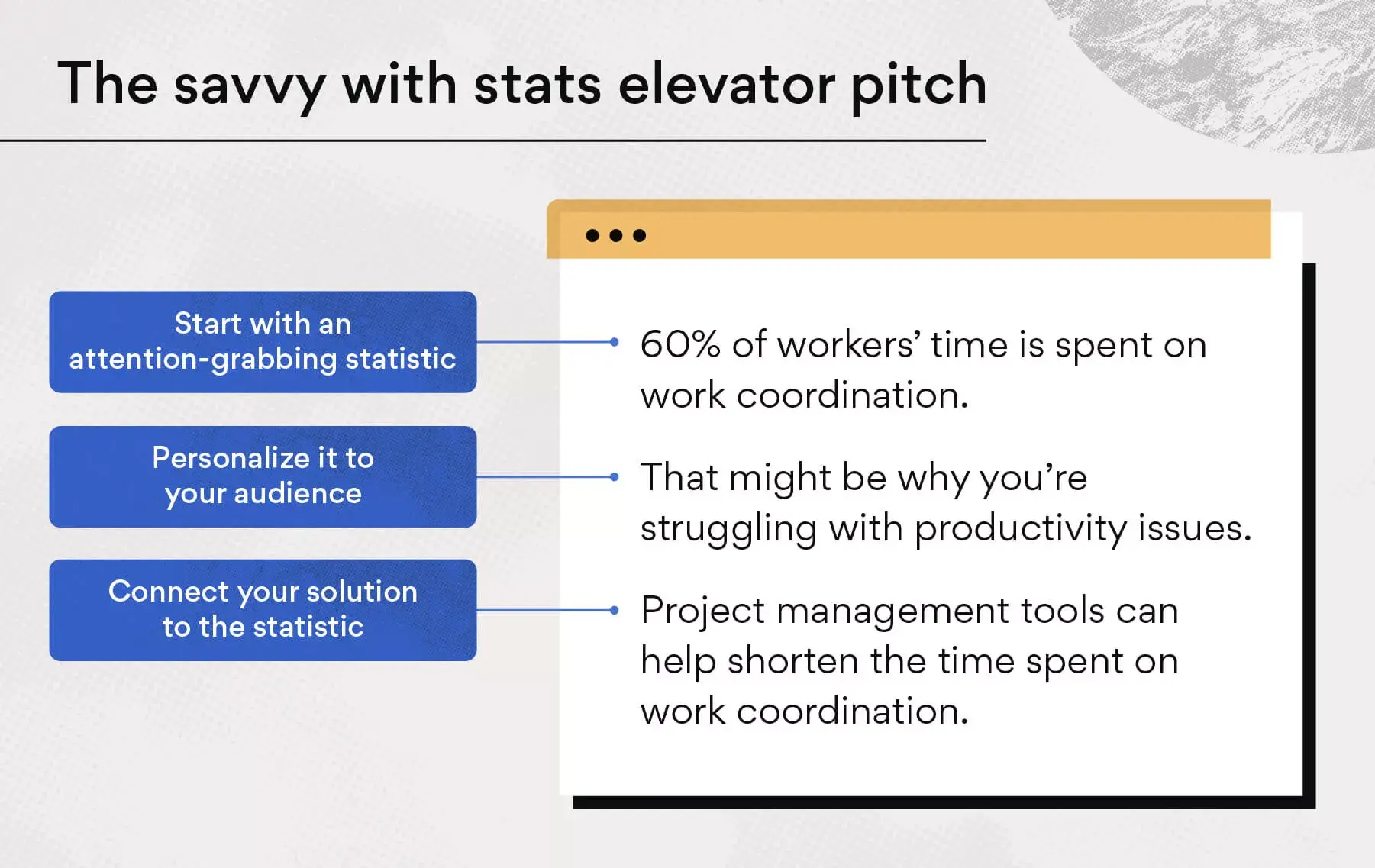
Inled din pitch med statistik som drar till sig uppmärksamhet. Det är viktigt att verifiera att dina data är korrekta innan du använder dem i din pitch.
Visste du att trots att det i dag finns flera verktyg som gör det möjligt att arbeta på distans lägger anställda 60 % av sin tid på att samordna arbetet, och bara 26 % på kvalificerat arbete och 14 % på strategi? Inte undra på att team behöver hjälp med projekthanteringen. Med ett projekthanteringsverktyg lägger ni mindre tid på att samordna arbetet och mer tid på kvalificerat arbetet.
Exempel 4: Ifrågasätta allt
I det här exemplet gör frågorna pitchen lättare att förstå. Det får också publiken att delta i konversationen i stället för att bara lyssna på din presentation.
Känns det som om du lägger för mycket tid på improduktivt arbete? Jag känner många som är frustrerade över samma sak. Jag brukade själv jobba mycket bara för att komma ikapp. Men vet ni vad? Sedan vi började använda en programvara för projekthantering har jag kunnat få mycket mer arbete gjort. Har du provat någon liknande lösning tidigare?
Exempel 5: Med humor
Om din pitch inte handlar om något allvarligt kan du använda dig av humor för att involvera din publik. Det är särskilt användbart när du gör en presentation. Om du använder dig av det här exemplet bör du först se till att det passar tillfället och ditt företags tonfall.
Visste du att en genomsnittlig person bara klarar av att vara uppmärksam i åtta sekunder? Det är inte ens tillräckligt för att beställa kaffe. Det kanske är därför baristan alltid ger mig fel beställning. Skämt åsido, jag tror att det här förklarar varför så många företag har svårt att nå sina deadliner.
Exempel 6: Berätta en historia
Använd kundomdömen eller din egen personliga historia för att illustrera det du berättar för publiken. Att berätta en historia är ett bra sätt att få till en personlig vändning, särskilt om ditt ämne är svårt att förklara på 30 sekunder eller mindre.
Vi har en kund som i år gick över till att ha team som bara arbetar på distans och som behövde hjälp med att säkerställa att de höll sina deadliner. Med vår hjälp lyckades de spara upp till 10 % av sin tid per dag och kunde fokusera på viktigare saker såsom strategisk planering.
Exempel 7: Känslomässig
Även om en känslomässigt driven pitch kan vara svårare att skapa har du en större chans att vinna över din publik. Det är viktigt att hålla en lätt ton för att förhindra att konversationen blir för allvarlig.
Vid första anblicken ser vårt verktyg ut som alla andra, men när man tittar närmare på det ser man att det verkligen förbättrar teamsamarbetet. Dessutom bidrar det till att skapa goda relationer så att teamen gärna samarbetar i nya projekt. Det är inte lätt att uppnå men det är något alla strävar efter.
Exempel 8: Skriv ned allt
Även om de flesta som skriver tal börjar med att skriva en allmän översikt, kan du välja att skriva ned hela ptchen från början till slut. Det gör att du skapar ett tankeväckande och poetiskt flöde när du gör din pitch.
Hej, jag heter Klara! Trevligt att träffas. Ni jobbar på Apollo Enterprises, eller hur? Jag har hört talas om dem en hel del. Jag har också hört att ni behöver hjälp med projekthanteringen. Enligt min erfarenhet behöver vilken organisation som helst – oavsett om det gäller försäljningsavdelningen eller leverantörerna – hjälp med att samordna teamarbetet och -kommunikationen. Arbetet kan vara ganska problematiskt att hantera, särskilt utan något form av stöd. Därför har vi skapat ett programvaruverktyg som hjälper både individer och team att organisera sina projekt och sin kommunikation på ett och samma ställe. Har ni funderat på att använda något liknande verktyg?
Exempel 9: Slutet är bäst
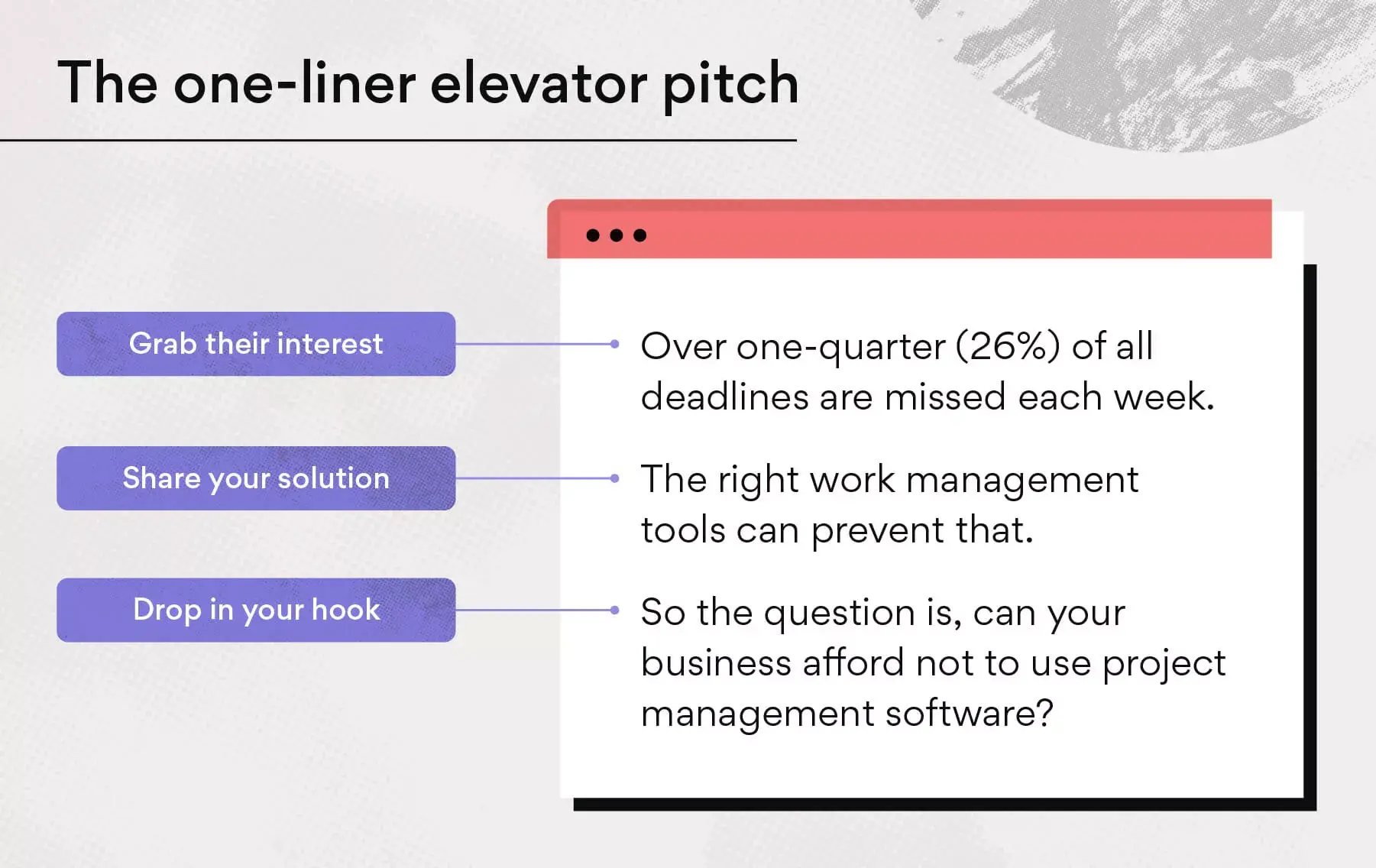
Att få till ett storslaget avslut är inte lätt, men om du lyckas kommer din publik att bli imponerad. Det viktiga är att ge publiken något att minnas efter mötets slut.
Mer än en fjärdedel (26 %) av alla deadliner hålls inte varje vecka på grund av bristande klarhet. Men med rätt projekthanteringsverktyg borde den siffran vara mycket mindre. Frågan är, har ditt företag råd att inte använda ett projekthanteringsverktyg?
Exempel på pitchar efter situation
Nu när vi har tittat på olika exempel på typer av pitchar är det dags att titta närmare på exempel på pitchar för olika scenarier. Oavsett om du pitchar ditt företag eller dig själv kan du använda en pitch för att organisera dina idéer och förbereda dig för den verkliga händelsen.
Exempel 10: Nätverksevenemang
Nätverksevenemang är det vanligaste scenariot för en pitch, och virtuella evenemang gör det ännu mer utmanande att skapa meningsfulla kontakter. Oavsett om du pratar i allmänhet eller träffar en chef behöver du en pitch som fungerar i alla situationer. Förbered en mångsidig mall som du kan anpassa på plats.
Trevligt att träffas. Jag heter Klara och jobbar för Apollo Enterprises. Vi har förbättrat produktiviteten och samarbetet för team över hela världen. Om du skulle behöva hjälp med projekthantering är det bara att kontakta mig. Jag tror att vi har alla möjligheter att göra en stor skillnad för ditt företag. Jag ska se till att ha dina kontaktuppgifter till hands.
Exempel 11: Anställningsintervju
De flesta jobbintervjuer börjar med uppmaningen: ”Berätta lite om dig själv.” Det är din signal att leverera en välformulerad pitch som lyfter fram din erfarenhet och dina nyckelkompetenser. Att ha en pitch redo gör att du gör ett starkt första intryck på rekryterare och anställande chefer.
Jag heter Klara och jobbar som specialist på Apollo Enterprises. Eftersom jag har ett stort intresse för projektledning är det inom det området jag har gjort karriär och jag är stolt över att kunna säga att jag har fått möjlighet att hjälpa till att förändra människors liv. Jag vill fortsätta att utvecklas med en arbetsgivare som delar samma värderingar. Jag vet att mina unika färdigheter kan göra stor skillnad för ert företag eftersom jag redan har bidragit till ett framgångsrikt resultat för flera viktiga projekt.
Exempel 12: Formellt möte
Du har lyckats få ett möte – nu är det dags att hålla en välformulerad och professionell presentation. Överväg att kombinera din pitch med en sammanfattning för att förstärka dina viktigaste punkter. Tänk på din klädsel och inled med ditt unika säljförslag.
Jag har tittat på era nuvarande produktivitetssiffror och såg att det finns en möjlighet till förbättring. Med vår programvara för projekthantering kan ni spara upp till 10 % av er arbetsdag. Det skulle inte bara innebära att ni kan få mer arbete gjort, utan det skulle också ha en positiv inverkan på Business framgång. Dessutom är vårt verktyg det enda i branschen som gör att ni kan se till att teamen är i fas och att de når sina mål.
Exempel 13: Försäljningspitch
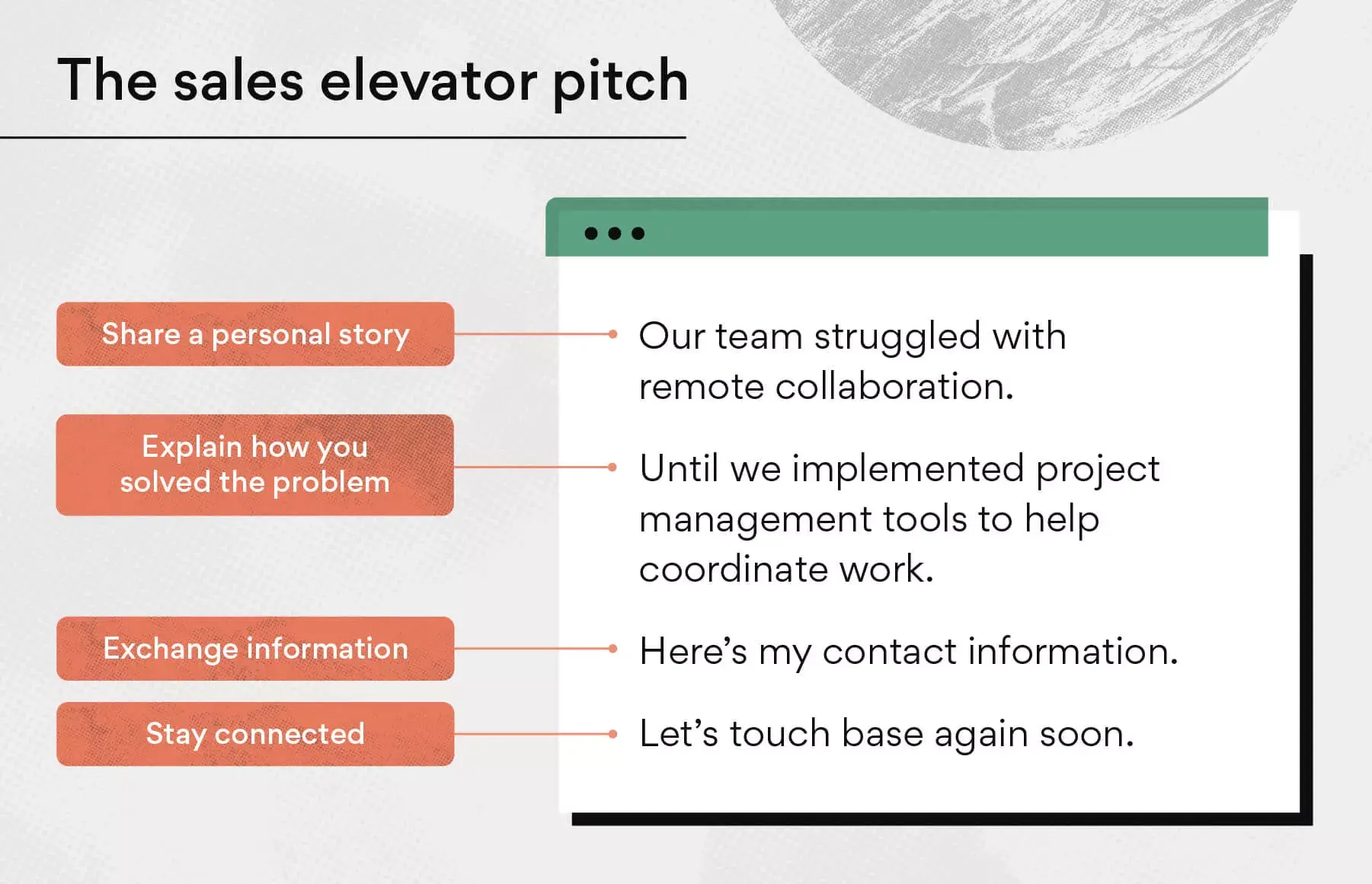
Försäljningspitchar innehåller ofta en traditionell försäljningsjargong, men det viktigaste är egentligen att skapa en mänsklig relation och samtidigt förmedla det du vill sälja. Börja med att berätta något personligt eller med en lättsam introduktion i stället för en typisk säljpresentationen. Du kan också förbereda dig genom att skapa mallar för försäljningsteamets mål för att hålla teamet informerat.
Vårt team tyckte det var väldigt svårt att gå över till distansarbete. Kommunikationen fungerade dåligt och de anställda hade svårt att hitta rätt information för att slutföra projekten. Lyckligtvis hittade vi en lösning på problemet. Att börja använda ett projekthanteringsverktyg förbättrade inte bara produktiviteten utan även teamarbetet. Varje företag föredrar olika verktyg, men jag kan utan tvekan säga att vår programvara var bäst på att ansluta mål med det arbete som behövdes för att uppnå dem.
Exempel 14: Digital presentation
Nu mer än någonsin väljer yrkesverksamma att ha virtuella möten snarare än att träffas personligen. Oavsett om du chattar via LinkedIn eller har ett inplanerat virtuellt möte, är det viktigt att du gör din pitch personlig och att du använder tydliga visuella hjälpmedel för att förmedla ditt budskap.
Tack för att du har kopplat upp dig! Jag har lagt märke till att dina konkurrenter överträffar er när det gäller tillväxt från år till år. Jag tog mig friheten att göra en konkurrensanalys och hittade inga problem. Jag undrar nu om det kan vara ett problem med produktiviteten. Hur har övergången till distansarbete gått? Om du är intresserad kan jag ge dig några siffror på hur din produktivitet skulle påverkas om du bestämde dig för att lägga till ett projekthanteringsverktyg i dina nuvarande processer.
Exempel 15: Företagare och företagsledare
Att göra en pitch inför en företagare är inte samma sak som att göra det inför en chef. Företagare kan vara svårare att övertyga eftersom de ofta är tveksamma till nya investeringar. Det bästa är att använda exempel som rör verksamheten när du förklarar ett problem och dess lösning.
Jag älskar Apollo Enterprises produkter och jag gillar vad ni gör. Jag gillar verkligen vad ni gör. Jag har lagt märke till att det finns vissa möjligheter att förbättra produktiviteten och samarbetet internt. Har du funderat på att använda en programvara för projekthantering? Jag tror att det skulle kunna ha en stor inverkan på verksamhetens tillväxt just nu, men även längre fram.
4 tips för att förbättra din pitch
En bra pitch handlar inte bara om vad du säger, utan också om hur du säger det. Ditt muntliga framförande kan avgöra om ditt första intryck blir positivt eller negativt, allt ifrån hållning till intonation. Här är fyra tips som hjälper dig att lyckas:
1. Håll dig till planen
För att inte komma utanför ämnet är det viktigt att du håller dig till din plan, åtminstone till en viss del. Du behöver inte läsa din pitch ord för ord men det är bättre att kunna det mesta utantill.
2. Tala långsamt och tydligt
Många yrkesverksamma tenderar att prata snabbt när de är nervösa, och det är förståeligt. Men det är viktigt att uttala sig noggrant och tala långsamt så att publiken kan förstå dig, särskilt under ett videosamtal.
3. Spela in din pitch
Spela in dig själv när du övar på din pitch för att identifiera de områden som behöver förbättras. Ett par viktiga områden att fokusera på är hastighet och tonfall. Det är bättre att låta alltför energisk än att ha en monoton röst.
4. Öva, öva och åter öva!
Det finns inget som är så effektivt som att öva på din pitch tills du kan läsa den utantill. Öva inför vänner och familj om det är möjligt för att få konstruktiv feedback på hur du kan göra din pitch ännu bättre.
Vanliga pitch-misstag att undvika
Även om du har de bästa exemplen på pitchar till ditt förfogande är det lätt att gå i vanliga fallgropar. Här är fyra misstag att undvika när du skapar din pitch:
1. Att svamla och använda för mycket fackterminologi
Ett av de största misstagen när man presenterar en pitch är att överskrida den optimala längden och fylla den med branschjargong. Kom ihåg att den bästa pitchen är kortfattad och lätt att förstå.
2. Att inte kommunicera ditt värdeerbjudande på ett övertygande sätt
Din pitch bör snabbt och effektivt förmedla ditt unika värde. Oavsett om du söker jobb eller presenterar ett nytt företag ska du tydligt förklara vad som gör att du sticker ut.
3. Att inte anpassa din pitch till din målgrupp
En och samma pitch fungerar sällan för alla situationer. Skräddarsy ditt budskap för din specifika målgrupp, oavsett om du är på en karriärmässa, deltar i ett evenemang för nätverkande eller till och med skriver personliga brev.
4. Glömmer att inkludera en uppmaning
En effektiv pitch bör avslutas med ett tydligt nästa steg. Oavsett om det handlar om att utbyta visitkort, boka in ett uppföljningsmöte eller bjuda in personen att prenumerera på ditt nyhetsbrev, ska du alltid inkludera en uppmaning.
Gör ett starkt första intryck med din pitch
En pitch är en möjlighet att visa upp dina styrkor och lyfta fram dina lösningar. Även om det låter jobbigt kan du med hjälp av våra 15 exempel på pitchar utveckla din egen metod med hjälp av personliga detaljer som relaterar till dina innovativa lösningar.
Ditt pitch är bara en liten pusselbit. Med rätt arbetshanteringsverktyg kan du hjälpa ditt team att hålla kontakten, sätta upp strategiska mål och fokusera på det viktigaste arbetet. Är du redo att upptäcka vad som är möjligt? Kom igång med Asana i dag.
Vanliga frågor om pitchar
En effektiv pitch bör beskriva vem du är, vad du gör och ditt unika värde, allt på ett sätt som tilltalar din specifika målgrupp och inbjuder till fortsatt konversation.
De tre K:na för en pitch är tydlig (Clear), kortfattad (Concise) och övertygande (Compelling). En tydlig pitch använder ett enkelt språk utan fackjargong. Kortfattad innebär att den är kort (helst 30 sekunder eller mindre), och övertygande innebär att den väcker intresse och leder till ytterligare konversation.
Öva inför en spegel, spela in dig själv och be om feedback från andra. Anpassa din pitch för olika scenarier och förfina den tills den känns naturlig.
Ja, pitchar fungerar bra i LinkedIn-sammanfattningar, e-postpresentationer och personliga brev. Tillämpa samma principer – tydligt, koncist och övertygande – och utnyttja redigeringsfunktionerna för att finslipa varje ord.
Ha en grundläggande pitch utantill som du kan anpassa på plats, och öva regelbundet så att den känns naturlig. Ha visitkorten nära till hands och fokusera på att skapa en genuin konversation snarare än att leverera ett färdigt tal.