Product development process: 6 stages and frameworks

85% firm z listy Fortune 100 wybiera Asanę¹





Streszczenie
This comprehensive guide walks you through the six-stage product development process, from initial ideation to market launch. You'll learn about popular frameworks like Agile, Stage-Gate, and Lean, discover how to measure success with key metrics, and understand how to build an effective product development plan that keeps your team aligned and focused.
The product development process is a six-stage plan that takes a product from initial concept to market launch. This guide covers each stage, popular frameworks like Agile and Lean, common challenges, and how to build an effective product development plan for your team. Product development is both an exciting and difficult endeavor. From initial ideation to research and prototyping, no two product launches are the same. However, there's a general process that can help you get started.
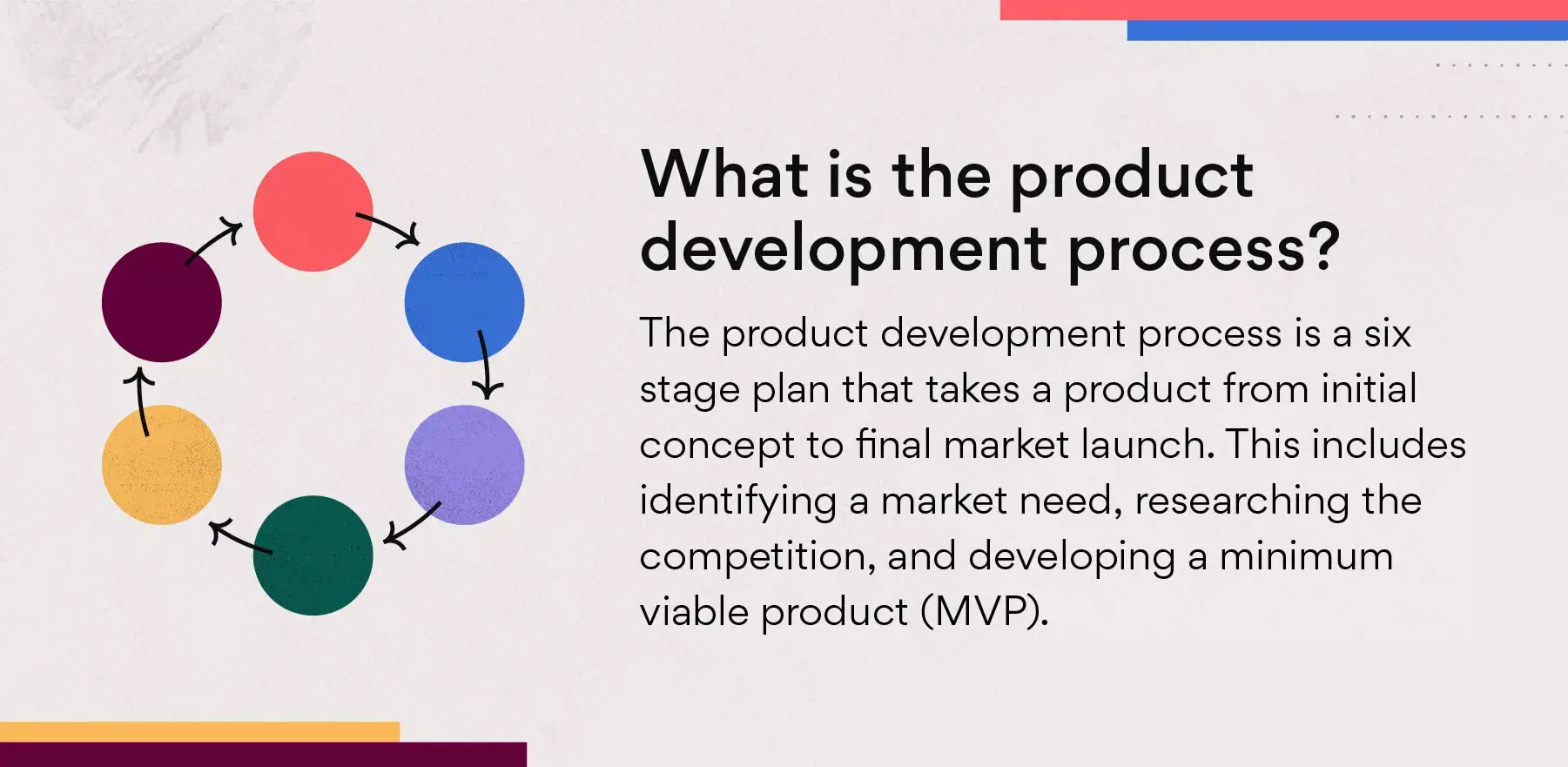
The product development process describes the six steps needed to take a product from initial concept to final market launch. This includes identifying a market need, researching the competition, ideating a solution, developing a product roadmap, and building a minimum viable product (MVP).
What is product development?
Product development is the process of building a new product from initial concept to market launch. It typically follows a six-stage process: ideation, product definition, prototyping, design, testing, and commercialization. This structured approach helps teams move from early brainstorming sessions to a successful launch while keeping creativity and strategy aligned.
Product development vs product management
Though they sound almost identical, there's an important difference between product development and product management. Product development describes the process of building a product, while product management oversees that work. A product manager, who often oversees a team in the product development process, will lead product management.
Stages of product development
Not only does the product development process help simplify a launch, but it also encourages cross-team collaboration with teamwork and communication at the forefront. Let's dive into the six product phases that can help you successfully launch your next product.
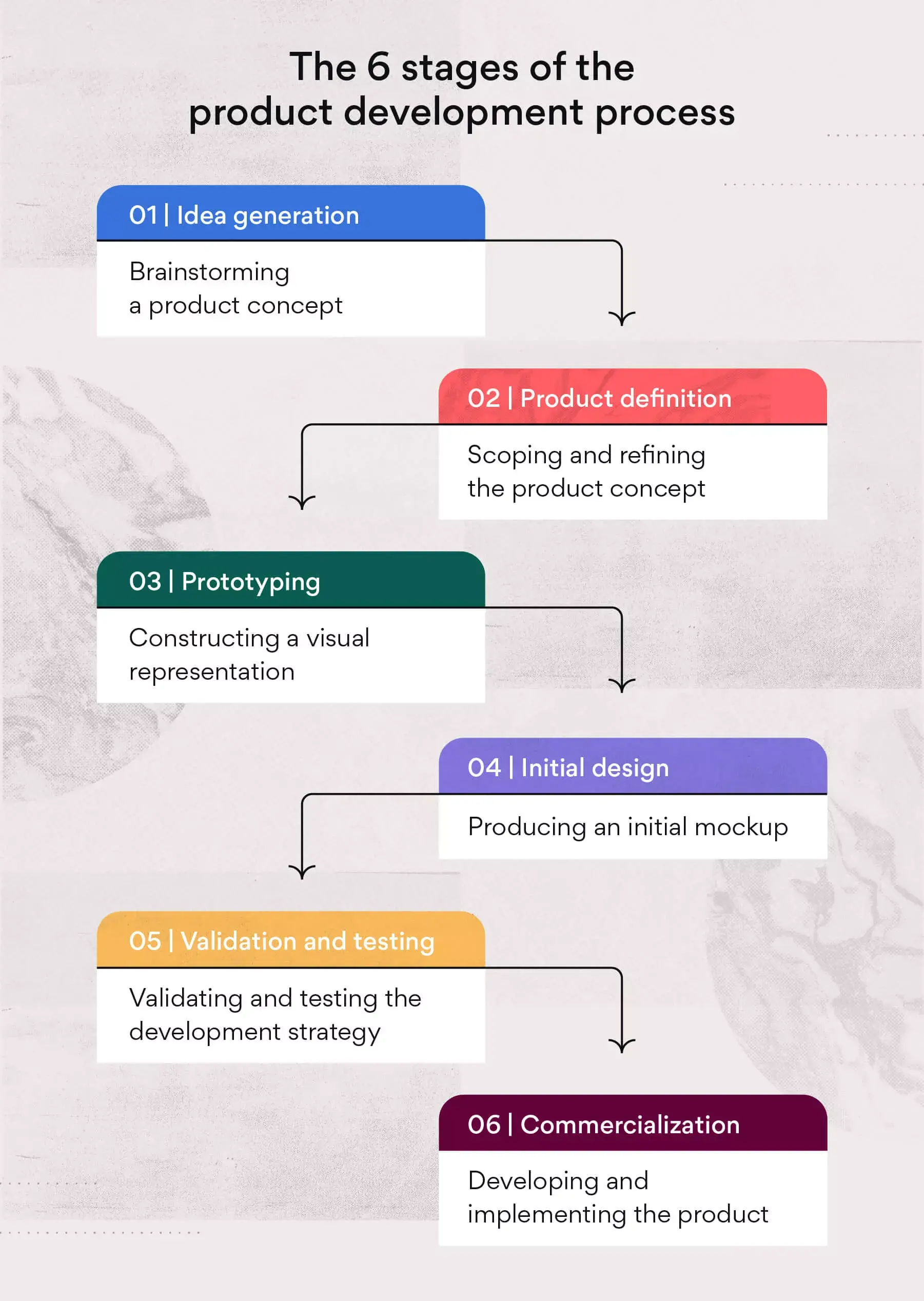
1. Idea generation (Ideation)
The first stage focuses on generating new product ideas. This is where you brainstorm concepts based on:
Customer needs and pain points
Market research and trends
Concept testing with potential users
It's a good idea to consider the following factors when initiating a new product concept:
Target market: Your target market is the consumer profile you're building your product for. You must identify this early so that your new product concept aligns with your potential customers.
Existing products: Evaluate your existing product portfolio. Are there products that solve a similar problem? Is your new concept sufficiently unique to be viable?
Functionality: You should have a general idea of what functions the product will serve. Consider the look and feel, and why someone would be interested in purchasing it.
SWOT analysis: Analyzing your product strengths, weaknesses, opportunities, and threats early can help you build the best version of your new concept.
SCAMPER method: Use brainstorming methods like SCAMPER, which involves substituting, combining, adapting, modifying, putting to another use, eliminating, or rearranging your product concept.
To validate a product concept, consider documenting ideas on an idea board or in the form of a business case. This gives all team members a clear understanding of the initial product features and objectives.
2. Product definition
Once you've completed the business case and discussed your target market and product functionality, it's time to define the product. This stage turns your initial concept into a clear product strategy with defined requirements, success metrics, and a go-to-market plan.
During this stage, it's important to define specifics, including:
Business analysis: Map out distribution strategy, ecommerce strategy, and a more in-depth competitor analysis. The purpose is to begin building a clearly defined product roadmap.
Value proposition: The value proposition is the specific problem the product is designed to solve. Consider how it differs from other products in the market.
Success metrics: Clarify success metrics early to evaluate and measure success once the product launches. These could be basic key performance indicators (KPIs) or custom-set goals relevant to your organization.
Marketing strategy: Begin brainstorming a marketing strategy that fits your needs. Consider which channels you want to use to promote your product, such as social media or a blog post.
Once these ideas have been defined, it's time to begin building your minimum viable product (MVP) with initial prototyping.
3. Prototyping
During the prototyping stage, your team creates early versions of the product to test assumptions and identify risks. These prototypes can range from simple sketches to detailed computer renders. The goal is to validate your concept through a proof of concept before committing significant resources to full development.
During the prototyping phase, you will work on specifics like:
Read: Stage Gate process: How to prevent project riskFeasibility analysis: Evaluate your product strategy based on feasibility. Determine if the workload and estimated timeline are possible to achieve.
Market risk research: Analyze any potential risks associated with production. Document them in a risk register to communicate risks to the team.
Development strategy: Work through your development plan, including how you'll assign tasks and timelines. Use the critical path method to plan tasks and estimate timelines.
MVP: The final outcome of prototyping is a minimum viable product with only the features necessary to launch. Creating an MVP helps your team launch quicker than building all desired features upfront.
Now it's time to begin designing the product for market launch.
Utwórz szablon tworzenia nowego produktu (1)4. Initial design
During the initial design phase, project stakeholders collaborate to produce a mockup based on the MVP prototype. Apply design thinking principles with your target audience in mind, ensuring the product's look and feel complements its core functions. Expect multiple iterations as you source materials and refine details based on stakeholder feedback.
To produce the initial design, you will:
Source materials: Work with various vendors and order materials or create your own. Document the material used in a shared space for later reference if needed.
Connect with stakeholders: Keep tight communication during the design phase. Share weekly or daily progress reports to update and obtain approvals.
Receive initial feedback: Ask senior management and project stakeholders for initial feedback. Make necessary revisions before moving to development.
Once the design is approved, move on to the validation phase for final testing before launching the product.
5. Validation and testing
To go live with a new product, you first need to validate and test it. This ensures that every part of the product, from development to marketing, is working effectively before public release.
To ensure the quality of your product, complete the following:
Concept development and testing: Address any issues that arise during concept development. Test functionality by enlisting team members and beta testers to quality-assure the development.
Front-end testing: Test the front-end functionality for risks with development code or consumer-facing errors. Check the e-commerce functionality and ensure it's stable for launch.
Test marketing: Test your marketing plan for functionality and errors. Ensure all campaigns are set up correctly and ready to launch.
Once your initial testing is complete, you're ready to produce the final product and launch it to your customer base.
6. Commercialization
Now it's time to commercialize your concept by launching your product and implementing it on your website. By now, you've finalized the design and quality tested your development and marketing strategy.
At this stage, you should be focused on:
Product development: The physical creation of your product. Give your team the final prototype and MVP iterations to produce the product to the correct specifications.
E-commerce implementation: Your development team will transition your e-commerce materials to a live state. This may require additional testing to ensure your live product functions as intended.
You have now launched your final product. The final step is to measure success using the initial success metrics you determined.
Product development frameworks and methodologies
While the six-stage process provides a reliable path, the way you move through it can vary. Different frameworks help teams adapt the process to their specific needs. Choosing the right approach helps you stay flexible and focused.
Framework | Best for | Key characteristic |
|---|---|---|
Agile | Projects with changing requirements | Short iterative sprints with continuous feedback |
Stage-Gate | Complex or high-cost products | Structured phases with formal review checkpoints |
Lean | Startups and rapid validation | Build MVP fast, minimize waste, learn quickly |
Agile
Agile development focuses on creating products in short, iterative cycles called sprints. Teams build and release small pieces of functionality, gather feedback, and adjust course quickly. This approach is ideal for projects where requirements may change.
Stage-Gate
The Stage-Gate framework breaks the development process into distinct stages separated by decision points, or "gates." At each gate, stakeholders review progress and decide whether to continue investing. This method is excellent for managing risk on complex or high-cost products.
Lean
The Lean framework is about maximizing value while minimizing waste. The core idea is to build a minimum viable product (MVP) as quickly as possible to test assumptions with real users. Feedback from the MVP guides the next development cycle.
Product development process examples
Now that you understand the six stages of the product life cycle, let's look at real-world examples of successful product development strategies to inspire your own.
Example 1: How Figma expanded its product features
Originally started in 2012, Figma was the first professional-grade UI design tool built entirely in the browser. Today, Figma has become the leading competitor in web application design.
Their mission is to make design accessible to more people and help them bring their creativity to life. They've shown this by continually adding new product features, such as multiple flow capabilities, a brainstorming timer, and an interactive whiteboard.
Read our case study to learn how Figma uses Asana to manage development backlogs.
Example 2: How Uber solved a market gap
While today we think of Uber as the biggest ride-sharing service, that wasn't always the case. They started with a compelling product strategy that made them into the innovative company they are today.
Uber's strategy began by addressing a gap in the existing taxi industry: creating a simpler ride-hailing process with streamlined payment processing. They continued to innovate by developing ride tiers ranging from luxury to budget-friendly.
Measuring success in the product development process
Without clear measures of success, product development can feel like guesswork. By focusing on the right metrics and feedback loops, you can clarify your process and guide your team toward a competitive advantage.
1. Focus on key metrics
The success of your new product development (NPD) efforts hinges on tracking measurable outcomes. Metrics such as customer satisfaction scores (CSAT), net promoter scores (NPS), and user retention rates indicate how well the product resonates with your target market.
Operational metrics such as time-to-market and iteration cycles help you gauge the efficiency of your development plan.
2. Use customer feedback
Customer feedback is a powerful validation tool. Conduct regular surveys, monitor product reviews, and analyze usage data to identify opportunities for improvement. This ensures your MVP evolves into a final product that meets customer expectations.
3. Leverage key performance indicators (KPIs) to adjust strategy
Establish well-defined key performance indicators (KPIs) that align with your business goals. Whether it's tracking market share, monitoring revenue growth, or analyzing feature adoption rates, these data points inform your next steps.
[Przeczytaj] OKR-y czy KPI: która metodologia wyznaczania celów jest skuteczniejsza?Common challenges in product development
Even with a solid plan, product development presents challenges. Anticipating these hurdles helps your team navigate them effectively and maintain momentum.
Unclear requirements: When product goals are poorly defined, teams can lose direction, leading to rework and delays. A clear product definition and business case are essential.
Scope creep: New ideas and feature requests can pull the team in different directions. Sticking to the MVP and managing stakeholder expectations prevents the project from growing beyond its original goals.
Poor communication: Misalignment between design, engineering, and marketing can cause friction. Using a central work management tool ensures every team member has access to the same information.
Inadequate testing: Rushing through validation can lead to a buggy product and a poor customer experience. Thorough testing is critical before launch.
Who is part of the product development team?
Successful product development requires cross-functional collaboration. The product manager typically leads the process, overseeing tasks from ideation and research through development and launch.
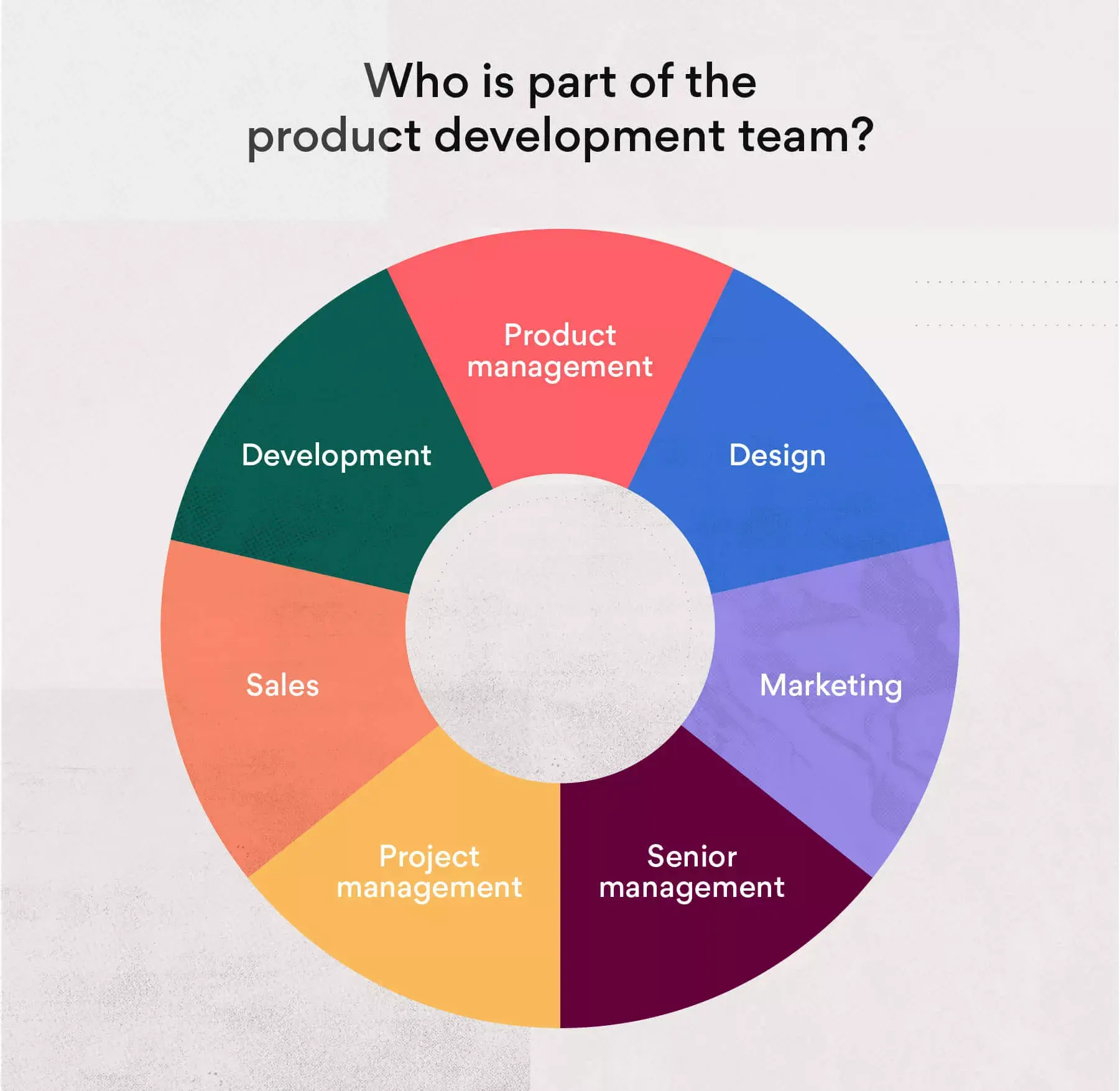
Additional important stakeholders include:
Product management: A product manager oversees all areas of the product life cycle and bridges communication gaps between internal and external teams.
Project management: A project manager assists with cross-departmental communication, task delegation, and goal tracking.
Design: The design team supports the visual product concept during the prototyping and design phase.
Development: The development team helps with product implementation. A team of developers will work together depending on the complexity of the concept.
Marketing: The marketing team develops and tests the marketing strategy before the product goes live.
Sales: The product manager works with sales to develop an effective strategy and report on success metrics.
Senior management: Senior stakeholders may need to give final approval before the product can launch.
Other teams that may be involved include finance, engineering, and any other related stakeholders, depending on the complexity of the concept.
Przeczytak: Menedżer produktu a kierownik projektu – jaka jest różnica?How to create a product development plan
A product development plan provides a structured approach to guide your team from concept to launch. The best plans clearly define objectives, map out a strategy, and build in regular feedback loops to stay adaptable.
Step 1: Define your goals
Start by outlining the core objectives of your new product development process. Clear goals provide a foundation for decision-making and help your team focus on delivering a minimum viable product that meets the identified market need.
Example: A startup developing a mobile time management app defines its goal as "creating a user-friendly tool that improves scheduling for busy professionals by reducing daily planning time by 20%."
Step 2: Plan the strategy
Develop a comprehensive development plan outlining the key stages, milestones, and required resources. This includes creating a product roadmap, conducting concept testing, and aligning stakeholders on the overall vision.
Your strategy should also include actionable steps, such as defining your pricing model, planning for test marketing, and preparing a messaging framework. Use a product strategy template to link your development roadmap to business goals.
Example: An e-commerce company developing a subscription-based meal kit service divides tasks into a three-week prototype phase, a two-month user experience trial, and a regional market test before scaling nationally.
Step 3: Track and adjust
Once the plan is in motion, use key performance indicators (KPIs) and other metrics to monitor progress and make data-driven adjustments. This iterative approach allows you to identify obstacles early and refine your strategy.
Example: A SaaS company tracks engagement metrics like daily active users, session durations, and customer churn for its beta release, then adjusts the design to increase retention.
How long does product development take?
Product development timelines range from a few months to over a year. Key factors that affect duration include:
Product complexity: A simple mobile app may launch in 3–6 months; complex hardware can take years
Team size: Larger teams can parallelize work but require more coordination
Methodology: Agile tends to be faster; Stage-Gate is more thorough but slower
Testing requirements: Regulated industries require more extensive validation
Build a realistic timeline into your product roadmap and adjust as you learn.
Simplify your product development with Asana
The right product development process can help you streamline each step by organizing tasks and fostering team collaboration. The six stages outlined above will get your team through all steps of the process, from initial idea screening to the development phase.
Coordinate tasks and organize your product development process with Asana for product management. Asana can help get your products to market faster by tracking workload and simplifying planning. Get started today.
Utwórz szablon tworzenia nowego produktuFrequently asked questions about product development
The product development process follows six stages: idea generation, product definition, prototyping, design, validation, and commercialization. Each stage builds on the previous one to take a concept from initial idea to market launch.
Product development is the entire journey of creating and launching a product. Product design is one part of that journey, focused specifically on the product's look, feel, and user experience.
Businesses can streamline product development by using agile methodology, setting clear templates, and testing concepts early. Regular team communication and continuous customer feedback help avoid unnecessary delays.
Five-stage models typically include ideation, research, planning, prototyping, and launch. This is a simplified version of the six-stage process, often combining design and prototyping into one phase.
Seven-step models add an explicit "idea screening" stage between ideation and concept development. The steps are: idea generation, idea screening, concept development, prototyping, design, testing, and commercialization.