チームのための AI エージェント: エンタープライズ AI における共有コンテキストと透明性

説明責任のギャップ
エンタープライズ AI エージェントは、チームやプロジェクトを横断する共有ワークフロー内でアクションを実行できる AI システムです。 チームで共有されるコンテンツに関連する独自の AI アシスタンスを提供するプラットフォームが増え続ける中、この分野は急速に成長しています。
ほとんどの組織は、まだパイロット段階を超えることができていません。 Camunda の 2026 年版「State of Agentic Orchestration & Automation」レポートによると、エージェント型 AI のユースケースのうち、本番稼働に至ったのはわずか 11% で、73% の組織が AI に関する意欲と現実との間にギャップがあると報告しています。 別の Dynatrace の調査では、すべての AI プロジェクトの半分がコンセプトまたはパイロット段階で止まっていることがわかりました。 両方の最大の障害は信頼です。
モデルは非常に優れた能力を備えていますが、ボトルネックは説明責任です。 AI エージェントが複数の人に影響を与える共有された仕事に対してアクションを実行する場合、関与するすべての人が、AI が何を、なぜ、どのような範囲で実行したのかを把握する必要があります。 現在のほとんどの AI ツールは、AI が何を、どのような理由で実行したのかを簡単に把握できないため、これらの質問に答えることができません。 アクションは、非公開のスレッドや、AI の関与が不可視のインターフェイスの背後で行われます。 問題が発生した場合 (確率論的なシステムでは問題が発生するものです)、追跡できる記録が残りません。
AI チームメイトは、Asana の歴史から直接生まれた前提に基づいて構築されました。 Asana は 10 年以上にわたって、ワークグラフを開発してきました。ワークグラフは、誰が何をいつまでに、どのような目標に向けて、誰と連携して行うのかを構造化して表現するものです。 その背後にある原則 (共有された可視性、明確なオーナーシップ、権限に基づくアクセス、構造化されたコミュニケーション) は、人間同士のコラボレーションを効果的にするために設計されました。 これらの原則は、AI とのコラボレーションを信頼できるものにするためにまさに必要なものであることが判明しました。
すでに機能しているものを土台に
ほとんどの AI エージェント製品は、モデルから始まり、そこから展開していきます。つまり、AI ができることを明確にし、それをワークフローにどう組み込むかを検討するという流れです。 Asana はその逆の方向からスタートしました。 Asana には、共有された仕事において構造、説明責任、そして簡単なコラボレーションを実現する方法について、長年のイテレーションを通じて製品に組み込まれた確固たる考えがありました。
ワークグラフには、これらすべてが組み込まれています。 すべてのタスク、プロジェクト、目標、会話は、誰が担当者か、誰がコラボレーションしているか、何に貢献しているか、何に依存しているかという関係の網の中に存在します。 チームが Asana を使用する際、この仕事の構造化された全体像を継続的に構築し、改善していきます。
AI エージェントの構築を開始したとき、私たちは「AI がこの同じ構造の中で動作したらどうなるだろうか?」という疑問を抱きました。 AI 専用のコンテキストモデルを作るのではなく、すでに構築されているコラボレーションモデルに AI を参加させたらどうなるでしょうか?
これが AI チームメイトの背後にある当社のコアとなる概念モデルです。可能な限り、AI チームメイトの能力は組織内の人間のユーザーの能力と一致します。 タスクを割り当てられます。 コメントを読み、書き込みます。 同じアクティビティフィードに表示されます。 コンテンツへのアクセスは範囲が設定されているため、チームメイトとコラボレーションしても、誰の権限も既存の権限を超えることはありません。 人間のコラボレーションを整理し、透明性を保つインフラストラクチャは、AI にも自然に拡張されます。なぜなら、エンタープライズ AI の難しい問題 (コンテキスト、アクセス制御、調整、可視性) は、すでに私たちが人々のために解決してきた問題だからです。
共有コンテキストの実際の仕組み
ほとんどの AI ツールでは、エージェントのスコープは、1 人のユーザーが呼び出したときに見ることができるものに限定されます。 AI チームメイトは、これとは異なる仕組みで機能します。チームの実際の業務が行われるワークスペースに存在し、組織が達成しようとしている成果を定義するプロジェクト、タスク、目標、会話と一緒に存在します。
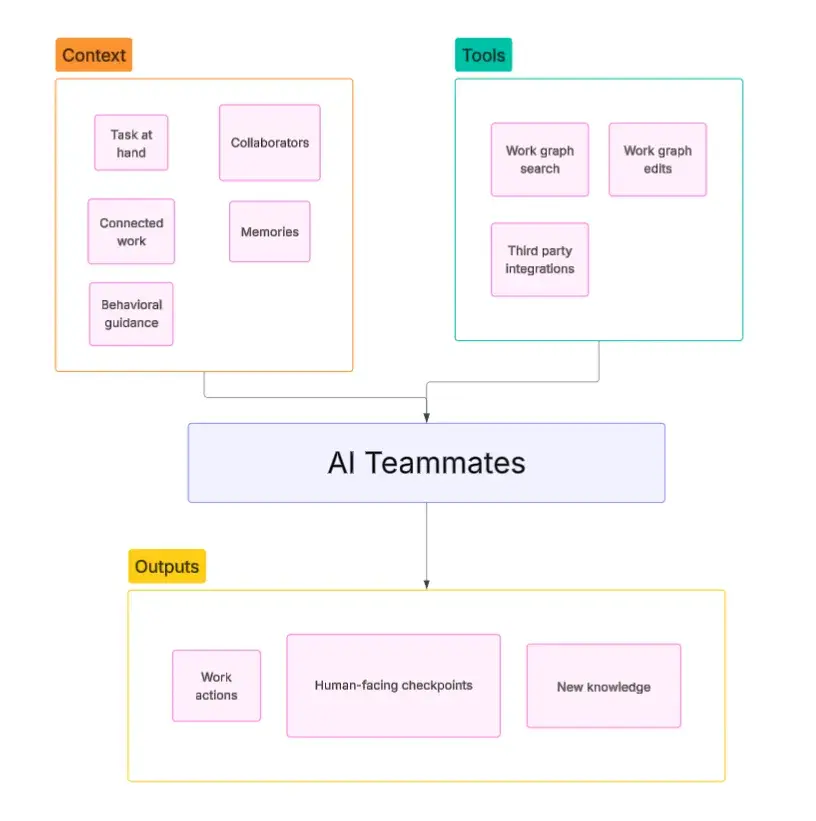
チームメイトにタスクが割り当てられると、そのタスクに関するコンテキストと、そのタスクに直接関連するすべての仕事 (親プロジェクト、関連する目標、依存関係、コラボレーター) が提供されます。 また、より広範なワークグラフ全体を検索し、目の前の仕事に役立つ情報に基づいて、関連するタスク、プロジェクト、目標、人を取得することもできます。
つまり、複数の人が共有された仕事で同じチームメイトとやり取りすることになります。 プロジェクトマネージャーがタスクを割り当てます。 デザイナーが制約をコメントします。 エンジニアが技術的なコンテキストを追加します。 チームメイトはこれらすべてを土台に、
コラボレーターやイニシアチブにまたがる実務知識を蓄積します。
ワークグラフにはすでにチームの調整方法が反映されているため、チームメイトはコラボレーターと同じように、リリースのブロック要因、次のステップの担当者、先週の合意事項など、仕事について推論することができます。 このような推論は、チームがすでに足並みを揃えるために使用しているのと同じ構造内で AI が動作する場合にのみ可能です。

AI チームメイトがプライバシーを尊重する仕組み
人間のユーザーと同様に、AI チームメイトはワークグラフ全体で明示的なアクセス制御の対象となります。 一部のタスクやプロジェクトは、組織の全員 (およびすべての AI チームメイト) に公開されています。 その他のタスクやプロジェクトには、個人に明示的に付与された、またはチームを通じて継承されたプロジェクトやポートフォリオのメンバーシップが必要です。
チームメイトからのアクションをトリガーできるのは、特定の人々 (多くの場合 Asana チーム) のみです。 チームメイトの知識、ガイダンス、仕事へのアクセスは、このグループがまとめて管理します。
AI チームメイトには追加の保護措置が適用されます。チームメイトの有効なアクセスは、常にトリガーしたユーザーの権限によって制限されます。 このアフォーダンスにより、チームメイトはコンテンツに幅広くアクセスできますが、AI チームメイトが別の非公開コンテキストで学んだ情報を含めるために、誰かがアクセス権を拡大するリスクは最小限に抑えられます。

厳格なワークフローではなく、非決定論
同じ仕事でも、組織によって構造がまったく異なります。 タスクの関連付けで依存関係を管理する組織もあれば、サブタスクで管理する組織、プロジェクトのセクションで管理する組織もあります。 Asana は、1 つのワークフロースタイルに完全に対応する厳格な実行モデルを構築することもできました。 しかし、その代わりに、特定のワークスペースにおける関係性のあり方に関する背景情報をチームメイトに提供し、さらに過去の作業を検索して学習する機能を提供することで、組織固有の専門知識を蓄積させるようにしました。 新しく採用されたチームメンバーと同じように、Teammate はお客様のチームの働き方を学びます。お客様に Teammate の働き方を強制することはありません。
AI がリクエストを処理する方法を 1 つのフローチャートで表現することはできません。 これは意図的なものです。 決定論的なシステムは、私たちの前提条件に一致する少数のチームにとってはうまく機能するものの、それ以外のチームにとっては機能しません。 非決定論的であることで、同じエージェントが根本的に異なる仕事の整理方法に適応できるようになります。 また、Asana のワークグラフには各チームのコラボレーションの構造がすでに反映されているため、チームメイトは初日から、組織固有の豊富な基盤から学ぶことができます。
タイトなフィードバックループを備えたシンプルなメモリ
チームメイトのメモリシステムは、本質的に、テキスト形式の事実のリストであり、それらの事実が関連するオブジェクトにリンクされています。 ベクトルデータベースやナレッジグラフではなく、この方法で始めたのは、より大規模なインフラストラクチャに投資する前に、緊密なフィードバックループで何が達成できるかを理解したかったからです。
その結果、ループが大部分の重労働を行うことがわかりました。 チームメイトは共有コンテキストで動作し、ユーザーは仕事を進める中で自然に修正を行い、指示を改善し、出力とやり取りを行います。 学習した事実が今後のターンでコンテキストウィンドウに再入力されるためのパスを提供することで、あらゆる種類のエマージェントインテリジェンスとカスタマイズが可能になります。 そこで、まずは迅速かつシンプルな実装に焦点を当てました。
アーキテクチャは製品の成熟に伴い進化していきますが、優れたフィードバックループは、ストレージの高度さと少なくとも同等に重要であるというインサイトは変わることがありません。 また、現在メモリは単なるテキストであるため、完全に検査可能です。 ユーザーは、チームメイトが保持するすべてのメモリを、チームメイトのプロフィールで直接確認できます。
メモリへのアクセスは、Asana の他のすべての機能と同じ権限モデルに基づいています。 メモリは、チームメイトが作成時に取り組んでいたタスクを閲覧できるユーザーにのみ表示されます。 AI がアクセスレベルの異なる複数のプロジェクトにアクセスできる場合、これが権限の境界を越えて情報が漏洩するのを防ぐ境界線となります。
チームのワークフローを反映したアクションレベルの説明責任
チームメイトが作業を実行すると、ユーザーはその作業のリアルタイムインジケーターを見ることができ、AI アクションログを開くことができます。このログには、タスクの作成、コメントの投稿、検索の実行、オブジェクトの変更など、すべてのアクションの完全な履歴が記録されています。 具体的な結果は、アクセス権を持つすべてのユ���ザー (チームメイトをトリガーしなかったユーザーを含む) に対してワークグラフに表示されます。 プライバシーに関わるアクションを実行する前に、チームメイトはユーザーからの明示的な承認を得る必要があります。これはシステムに組み込まれた厳格な制約です。
この説明責任モデルは、チームが Asana で既に行っている作業の延長線上にあります。 人間のコラボレーターがタスクを完了したり、更新を投稿したりすると、チームに表示されます。 AI チームメイトも同じパターンに従います。 AI チームメイトが行ったことを確認できます。 理由を尋ねると、決定を下したときと同じコンテキストに基づいて説明してくれます。 AI Teammates は、許可なく重要なアクションを実行することはありません。 何か問題が発生した場合、明確な記録が残ります。 ほとんどの組織が透明性を展開の障壁として挙げている状況において、私たちは、具体的な説明責任 (可視化されたアクション、検査可能なメモリ、承認リクエスト) の方が、説明可能性に関する抽象的な約束よりも価値があると考えています。 AI チームメイトは共有されたチームスペースで動作するため、その作業は、AI をトリガーした人だけでなく、チーム全体が確認できます。 これは組み込みの監査可能性です。AI が行ったことを、依頼した人だけでなく、全員が確認できます。
これらの特性が切り離せない理由
説明責任のない共有された文脈はリスクです。 複数の人の仕事から知識を蓄積するものの、その知識や行動を検査する手段を提供しない AI は、すぐに信頼を失うでしょう。 監査できない AI には、人々はコンテキストを提供しようとしません。そうなると、チームを対象とした設計の目的が損なわれてしまいます。
共有コンテキストのない説明責任は、よりシンプルであまり興味深くない問題を解決します。 AI が分断されたスレッドで動作する場合、監査は簡単です。 真の課題は、アクセスレベルや関与度が異なる人々に影響を与える、共有された部門横断的な仕事に AI が関与する場合に、AI に説明責任を持たせることです。
アクセスモデルがそれらを結びつけます。 Asana が長年にわたって構築してきた人間同士のコラボレーションのための権限モデルが、基礎のほとんどを担っています。 それを AI に拡張するには、さらに踏み込んだ対応が必要でした。チームメイトとのコラボレーションによって、誰のアクセスもエスカレーションされないようにすることです。 この階層化されたアプローチがなければ、チーム範囲の AI はほとんどの組織で実現不可能でしょう。
私たちの現状
チームは、プロジェクトマネジメント、文書化、調査、部門横断コーディネーションに AI チームメイトを活用しています。 最も一般的なパターンは、人間の注意力が及ばない規模のコーディネーションを AI が管理可能にすることです。 製品リリースプロジェクトに割り当てられたチームメイトは、目標設定から実行までの作業をフォローし、誰かが手動でステータス更新をまとめることなく、要注意の点を提示します。
当社が集めたポジティブなフィードバックでは、一貫して 3 つの特質が強調されています。 チームメイトは割り当て可能で、コラボレーションに優れており、共有タスクでユーザーと一緒に作業を行います。 監査可能なアクセス権で動作するため、何が行われたかを確認でき、機密性の高い操作を行う前に確認を求められます。 そして、適応型の知識を構築し、フィードバックループとシンプルなメモリが蓄積されるたびに、すべてのやり取りを通じてより有用になります。
業界全体が、AI のデモ機能と信頼できる本番パフォーマンスの間のギャップを埋めることに取り組んでいます。 AI チームメイトの真の価値を実感しているチームは、効果を発揮するために背景情報、フィードバック、明確な境界が必要な新入社員のように AI チームメイトを扱っているチームです。
社内では、ステータスレポートの作成、バグのトリアージ、リリースの順序付けなど、機密性の高い作業に AI チームメイトを使用しています。 アクセス制御モデルと人間によるチェックポイントを活用することで、目の前のタスクが何であれ、人間と AI が安全かつ生産的にコラボレーションできるという確信を得ることができました。
最も印象的なデモを披露するエージェントが、最後に残るわけではありません。 チームがすでに信頼しているコラボレーションパターンに基づいて、共有スペースで、アクションが可視化された形で、チームがすでに働いている方法で機能するエージェントです。 Asana は、人間によるチームワークを構造化し、可視化し、説明責任を明確にする方法を長年にわたって学んできました。 AI チームメイトは、協働する AI の時代におけるこれらの原則の進化形です。
AI チームメイトを使い始める
新しいチームメイトが、すぐにサポートを開始します。チームや組織の規模を問わず、今すぐ AI チームメイトを使い始める手順をご説明します。
この記事は、ソフトウェアエンジニアの Cory Desautels 氏が執筆しました。 Cory Desautels は、AI チームメイトチームのエンジニアとして、Asana のコラボレーティブエージェント AI 製品の構築とスケールアップに取り組んでいます。