Implementation plan: 6 steps to create one (+ template)


85% perusahaan Fortune 100 memilih Asana¹






Summary
Projects require planning to be successful. An implementation plan functions as the blueprint for any shared objective, covering everything from project strategy to budget to the people working on the project.
In this guide, we'll discuss what an implementation plan is and how to create one. These steps can help you and your team prepare for projects both big and small.
What is the purpose of an implementation plan?
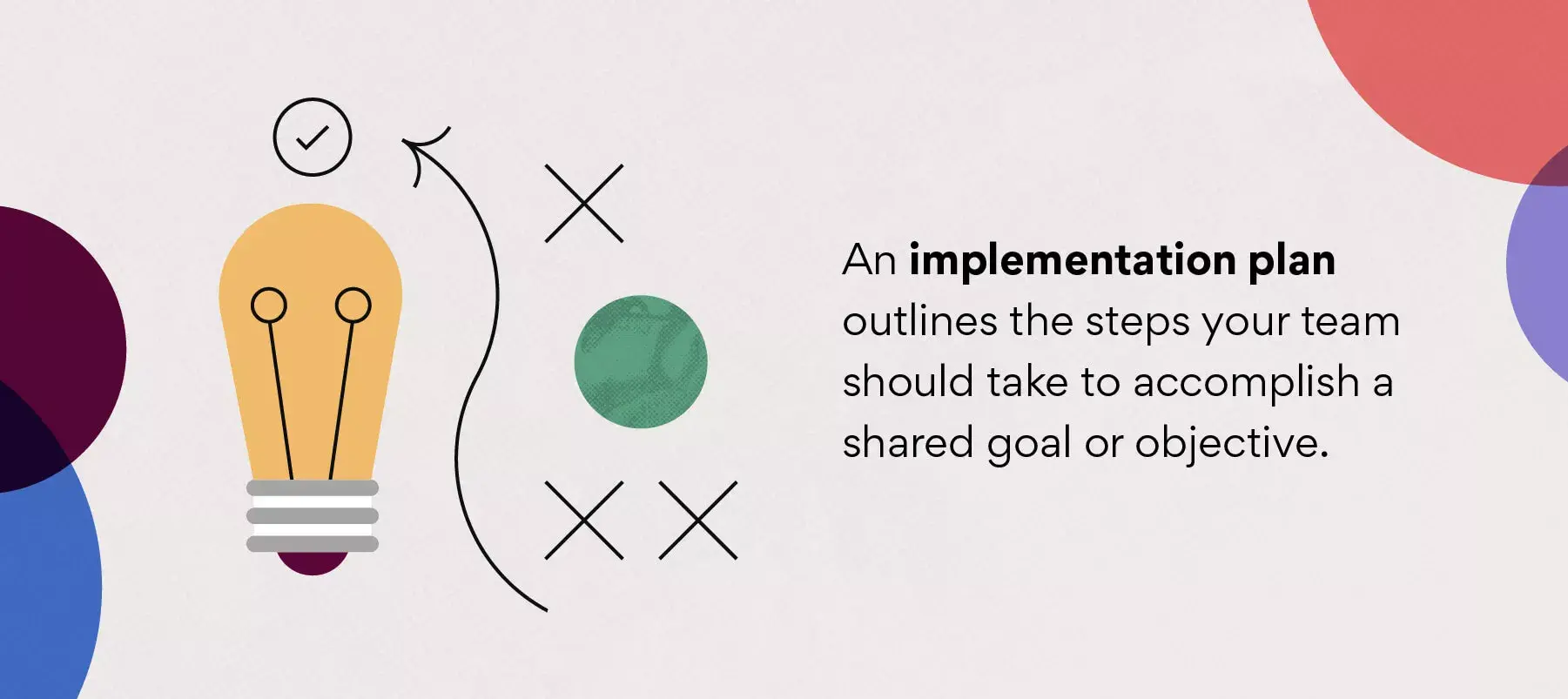
An implementation plan is a detailed document that outlines the specific steps, tasks, timelines, and resources your team needs to accomplish a shared goal. It serves as the counterpart to a strategic plan, while the strategic plan details what strategies you'll use, the implementation plan is the step-by-step guide for how those goals will be achieved.
The purpose of an implementation plan is to ensure that your team can answer the who, what, when, how, and why of a project before moving into the execution phase. In simple terms, it's the action plan that turns your strategy into specific tasks.
A good way to know whether your implementation plan is effective is to hand it to someone outside of your team and see if they can understand the project in its entirety. Your implementation plan should leave no questions unanswered.
Apa itu implementasi strategi + 6 langkah utama meraih kesuksesanImplementation plan vs. project plan
While the terms are sometimes used interchangeably, an implementation plan and a project plan serve different purposes.
Aspect | Project plan | Implementation plan |
Scope | Comprehensive overview of the entire project | Focused on specific execution steps |
Content | Schedule, budget, scope, risk management, stakeholder strategy | Tasks, responsibilities, timelines, resources |
Audience | Project managers and leadership | Team members executing the work |
Key question answered | "What are we doing and why?" | "How exactly will we do it?" |
Think of your project plan as the full picture and your implementation plan as the practical roadmap your team follows day-to-day.
Benefits of having an implementation plan
The top benefit of implementation planning is an increased chance of project success. A solid implementation plan creates a roadmap for execution, helping you prevent issues before they occur.
Other benefits include:
Improved communication between team members and key stakeholders
Better organization and management of resources
Increased accountability for everyone involved in the project
More structured project timeline and daily workflow
Easier collaboration between team members
Going straight into the execution phase without an implementation plan may feel like walking on stage to give a speech without knowing what you're going to say. Preparation is key to top-notch performance.
Templat rencana implementasi gratisHow to create an implementation plan in 6 steps
Follow these six steps to create a comprehensive implementation plan and reduce the risk of gaps in your strategy.
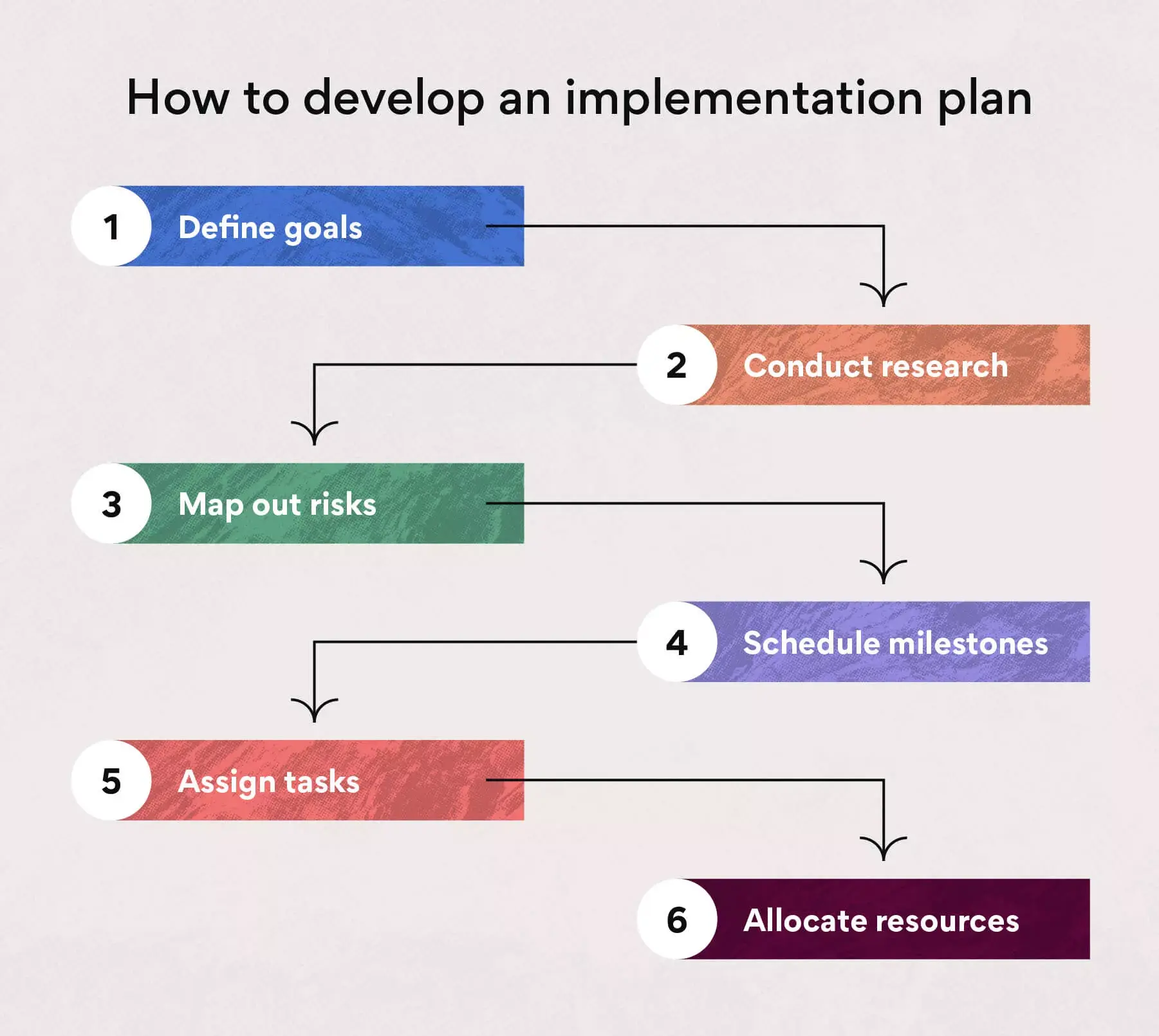
1. Define goals
The first step in the implementation process is defining your goals. Determine what you want to accomplish when your project is complete, whether that's winning a new marketing client or revamping your internal content strategy. Starting with clear objectives helps flesh out the rest of your plan.
Tips to consider:
Ask questions: When defining your goals, you and your team may want to ask questions about your project, such as, "What are we trying to achieve with this project? What deliverables do we hope to produce? Who are the stakeholders we plan to share our project deliverables with?"
Brainstorm risk scenarios: Although you'll perform a more in-depth risk assessment later on in your implementation plan, brainstorming potential risk scenarios early on gives you a more realistic idea of what you're able to achieve.
2. Conduct research
Once you have a broad idea of your project goals, hone in on them by conducting research. Gather input from key experts, whether team members or external stakeholders, through methods like:
Interviews
Surveys
Focus groups
Observations
Your research outcomes should include a preliminary view of your project timeline, budget, and personnel needs.
Tips to consider:
Collaborate using shared tools: Collaboration is easier when you have the right communication tools in place. Use a team collaboration tool to share your project goals and get feedback from others, regardless of their location.
3. Map out risks
You brainstormed risk scenarios in step one, and now you'll map out all potential risks you may face. Common project risks include:
Team availability (paid time off, holidays)
Budget constraints
Loss of personnel
Resource shortages
Timeline delays
A great way to map out your risks is by using a risk register. This tool will help you prioritize project risks and prepare for them accordingly. You can also conduct a SWOT analysis to identify any weaknesses or threats affecting your project.
Tips to consider:
Be flexible and proactive: Mapping out risks is more than just a preparation strategy. If you identify preventable risks during this stage of the implementation plan, you can implement risk mitigation strategies to address them. This may mean adjusting your initial project goals.
4. Schedule milestones
Scheduling your project milestones is essential because these checkpoints help you track progress during execution. They serve as metrics to measure how far you've come and how far you have left to go.
To visualize project milestones and keep your entire team on track, use a Gantt chart or milestone chart. With a Gantt chart, you can visually lay out your implementation schedule and show how long you think each task will take.
Tips to consider:
Add wiggle room: Things don't always go as planned, even if you do everything in your power to a schedule. By adding wiggle room to your schedule, you can ensure your project stays on track instead of keeping tight milestones and failing to meet them.
Clarify dependencies: Dependencies are tasks that rely on the completion of other tasks. Clarifying your dependencies makes it easier to keep the project on track and hit your milestones.
5. Assign responsibilities and tasks
Every action plan must include a list of responsibilities, with team members assigned to each. By assigning responsibilities, you can assess each team member's performance and monitor progress more closely. Using a RACI chart can be an effective project management tool for clarifying roles and responsibilities.
Assigning responsibilities is different from assigning individual tasks. One team member may oversee the project review, while you may assign three other team members to handle the project's delivery and communication to various teams for review. When you assign responsibilities and tasks, be sure to make your expectations clear.
Tips to consider:
Communication is key: When assigning roles, responsibilities, or tasks, it's best to explain why you're choosing one team member over another. Instead of letting team members question why they have specific roles, you can use this step in the planning process to highlight team members' strengths.
Track responsibilities in a shared tool: Having a shared tool, like project management software, can give team members clarity on who's doing what and by when.
6. Allocate resources
Resource allocation is one of the best ways to reduce risk. If you can plan out what resources you need for your project and ensure those resources will be available, you'll avoid the risk of running out of resources mid-project. If you notice that you don't have enough resources in this step of the implementation process, you can adjust your project accordingly before it kicks off.
Resources may include money, personnel, software, equipment, and other physical or technical materials. Time can also be a resource because the team members you need to complete the project may be working on other projects.
Tips to consider: Ask yourself the following questions when identifying available resources for your project:
What is the project's priority level?
Who is available to work on this project?
What budget or tools are available?
What additional resources do we need?
Who needs to approve the resource allocation plan?
Following these steps as you create your implementation plan will increase the likelihood of hitting your project goals.
What to include in an implementation plan
Knowing how to create your implementation plan is crucial, but you also need to know what to include. Here are the six most important components of a successful implementation plan.
Templat rencana implementasi gratis1. Objectives
You'll outline your project objectives in step one of the implementation process. Set your goals and decide what metrics your team will use to measure and monitor progress. By clearly identifying your project objectives, you and your team can measure progress and performance as you move forward.
2. Scope statement
You'll set the scope of your project in step two when conducting research. Your project scope statement should outline the boundaries you've set for your project and broadly define what goals, deadlines, and project outcomes you'll be working toward. Defining your project scope in the implementation plan can help prevent scope creep as you move further into the project.
3. Outline of deliverables
Deliverables are the tangible goals of your project. Outlining the deliverables you hope to create can serve as a resource when managing time frames, delegating tasks, and allocating resources.
4. Task due dates
Although the project timeline may change as your project progresses, it's important to clarify your expected due dates during implementation planning. When you estimate task due dates, you can schedule milestones around them and plan for project completion. You will commonly see Gantt charts used for strategic planning and implementation planning because they display information in a linear path, similar to a timeline.
5. Risk assessment
You'll conduct your risk assessment in step three of the implementation process. Whether you use a risk register, SWOT analysis, risk matrix, or contingency plan to identify risks, be sure to include these documents in your plan. That way, others involved in the project can review your findings and help you prevent these risks.
6. Team member roles and responsibilities
You assigned roles and responsibilities to team members in step five of your plan, and keeping a detailed record of them can hold everyone accountable. Whether you use a RACI chart or another tool to clarify team member roles, there should be a place in your plan for everyone to refer to in case questions arise.
Your implementation plan will be unique to each project, so use these six items as your guide to ensure it's comprehensive. As a project manager, you can save time by working on your implementation plan alongside your strategic plan and housing everything in a work management platform.
Turn your implementation plan into action
Knowing the steps for implementation planning is the foundation of project management. A well-planned project leads to success.
With a clear implementation plan in place, your team can move from strategy to execution with confidence. By defining goals, assigning responsibilities, and mapping out risks upfront, you set everyone up for success.
Ready to bring your implementation plan to life? Get started with Asana to keep your projects organized, your team aligned, and your goals on track.
Read: What is lean portfolio management (LPM)? 6 steps to start nowFrequently asked questions about implementation plans
The key components of an implementation plan include project objectives, a scope statement, an outline of deliverables, task due dates, a risk assessment, and clearly defined team member roles and responsibilities.
You should start implementation planning after you've completed your strategic plan and have clear goals in place. Begin the process before any project work kicks off so your team has time to identify risks, allocate resources, and clarify responsibilities.
An implementation plan typically includes a project overview, goals, a task breakdown, timeline with milestones, resource allocation, and roles and responsibilities. Many teams use tools like Gantt charts to visualize the plan and track progress.