Project risks: 7 common types and how to mitigate them

Summary
As a project manager, knowing what could go wrong during your project can help you set your team members up for success. For example, what if project stakeholders propose a new app and you don't consider the time and resources it will take to create it? When the app heads to the development team, the project is at risk of falling apart before it starts.
When you know the potential risks for each project, you can create reasonable project objectives and keep the team on track. In the guide below, we'll explain what project risk is, outline the main risk categories, and cover the seven most common project risks you may encounter when conducting risk assessments.
What is project risk?
Project risk is any uncertain event or condition that could negatively affect your project's timeline, budget, scope, or quality. When you identify risks early in the planning process, you can develop strategies to avoid them entirely or minimize their impact.
Types of project risks
Project risks generally fall into a few main categories:
Internal risks: Factors within your organization's control, such as resource availability, team performance, or communication breakdowns.
External risks: Factors outside your control, such as market changes, regulatory shifts, or supply chain disruptions.
Technical risks: Challenges related to technology, tools, or technical complexity that could affect project delivery.
Financial risks: Budget overruns, funding changes, or cost estimation errors that could derail your project.
By categorizing risks, you can more easily identify which ones apply to your project and develop targeted mitigation strategies.
1. Scope creep
Scope risk, also known as scope creep, occurs when the initial project objectives aren't well-defined. If you don't communicate your project roadmap effectively, stakeholders may try to change requirements mid-project.
How to mitigate scope creep:
Define clear parameters: Establish and document project boundaries from the start.
Align with stakeholders early: Get agreement on scope before work begins.
Schedule regular check-insto review progress and ensure the project stays on track.
2. Low performance
Performance risk occurs when the project doesn't meet expectations. Common causes include time crunches, miscommunication, and unclear goals.
How to mitigate low performance:
Anticipate risks early: Identify potential performance issues during planning.
Use project management software: Track progress in real time with tools like Asana.
Promote open communication: Keep team members aligned and informed throughout the project.
3. High costs
Cost risk occurs when your project exceeds its budget. This often results from unrealistic estimates or insufficient detail during the planning phase.
How to mitigate high costs:
Estimate accurately: Create a detailed list of every project element and its cost.
Use a project plan template: Align on deliverables, scope, and schedule with a standardized template.
Review regularly: Schedule budget check-ins throughout development to track pacing.
4. Time crunch
Time risk, also known as schedule risk, is the risk that tasks will take longer than expected. Delayed timelines can impact your budget, delivery date, and overall performance. It's easy to underestimate duration when you're not doing the work yourself.
How to mitigate a time crunch:
Build in contingency: Overestimate the time needed for tasks during planning.
Use visual scheduling tools: Create a project schedule with a Timeline or Gantt chart.
Track dependencies: Monitor how tasks connect to adapt quickly when delays occur.
5. Stretched resources
Resource risk occurs when you don't have enough time, skills, budget, or tools to complete the project. As a project manager, you're responsible for procuring resources and keeping your team informed about availability. Plan for resource allocation 1-2 months before project execution.
How to mitigate stretched resources:
Create a resource allocation plan: Use a resource allocation plan to map out what you need from the start.
Maximize impact: Assign resources strategically to support team goals.
Plan early: Knowing your needs upfront minimizes the chance of running short later.
6. Operational changes
Operational risk involves changes in company or team processes that can create distractions, require workflow adjustments, and impact timelines. Examples include:
Unexpected shifts in team roles
Changes in management
New processes your team must adopt
How to mitigate operational mishaps:
Communicate early: If you know a change is coming, inform your team as soon as possible.
Allow adjustment time: Build buffer into your schedule for transitions.
Provide support: Offer team meetings, scheduling tools, or additional training to ease the shift.
7. Lack of clarity
Lack of clarity may stem from stakeholder miscommunication, vague scopes, or unclear deadlines. The result can include siloed work, budget overruns, missed deadlines, and disappointing outcomes.
How to mitigate the lack of clarity:
When planning your project, use this checklist to ensure everything is in place:
Is everyone involved on the same page?
Are team members prepared for the next phase?
Is the scope clearly defined?
Is project information accessible to all in a central tool?
How to use risk management to prepare your team
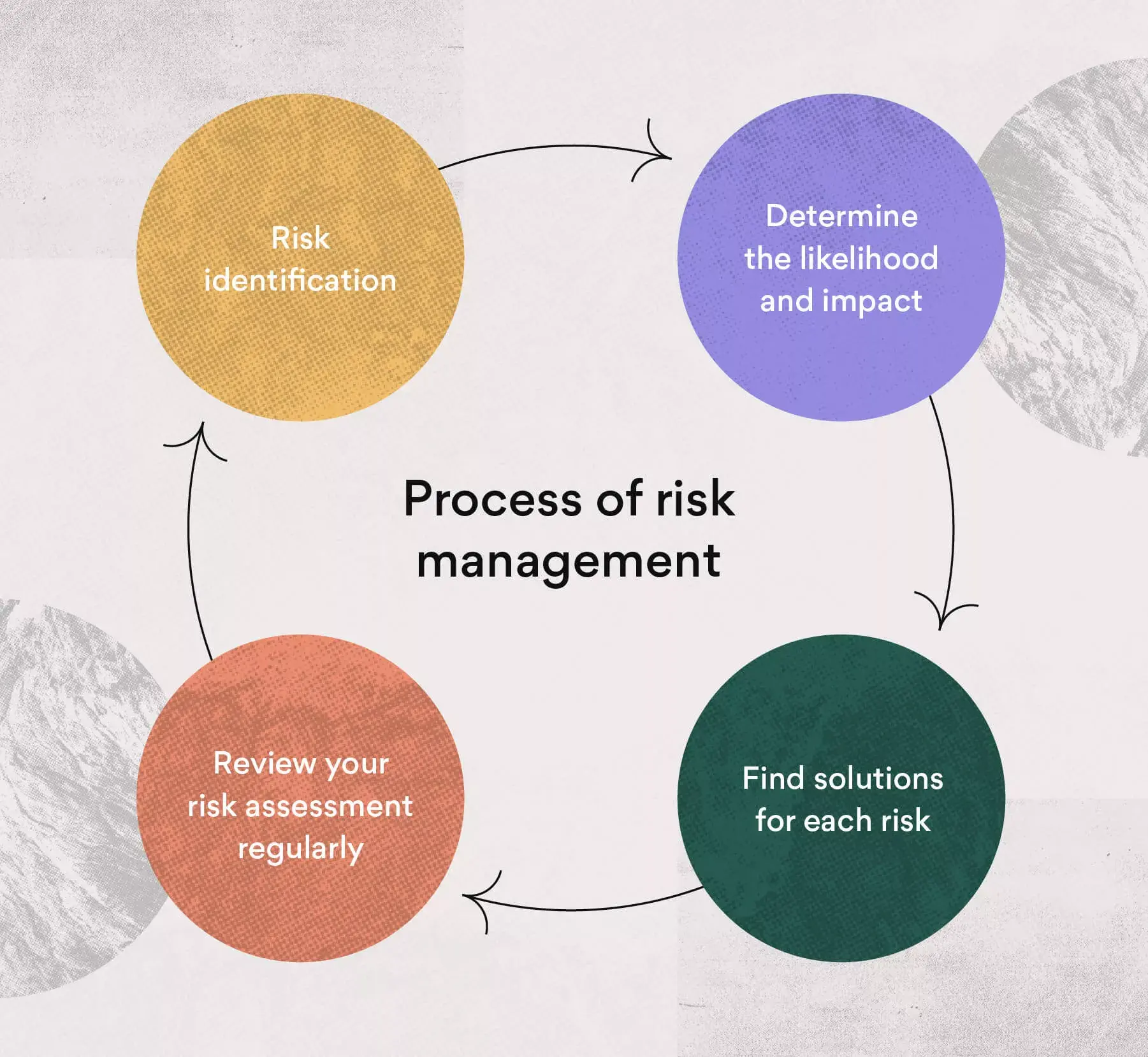
Risk management involves identifying which risk categories are most likely to affect your project and developing a plan to mitigate them.
Project management tools make risk management easier because they allow you to organize your projects from start to finish. You can also use work management software to collaborate across teams, making the most common risks less likely.
Using the following four steps, you can anticipate risk and keep your projects running smoothly.
1. Risk identification
The first step in the risk analysis process is identifying risks you think could affect your project. We mentioned the seven most common risk events above, but other project risks could include contractor failure, unexpected life events, data transfer issues, shifting priorities, legal risk, market risk, and project deferral.
Ask yourself these questions below to begin the risk identification process:
What is the likelihood of this risk event?
What is the business impact and severity if the risk occurs?
What is our risk response plan?
Given the likelihood and impact, what is the priority level?
Who owns this risk?
Once you have answers to these questions, you'll continue the risk management process by prioritizing risks, developing actionable solutions, and regularly monitoring.
참고: 명확한 프로젝트 리스크 관리 프로세스 6단계2. Determine the likelihood and impact
Sort through your list of risks by determining which ones are most likely to occur and which would have the greatest impact. Prioritize risks that score high on both factors.
Likelihood | Impact | Priority |
High | High | Address immediately |
High | Low | Monitor closely |
Low | High | Prepare a contingency plan |
Low | Low | Track but deprioritize |
3. Find solutions for each risk
Once you've prioritized the risks, create a response plan for each. Here's how to get started:
Collaborate with stakeholders: Meet with relevant team members to identify solutions for top-of-mind risks.
Review past projects: Look at lessons learned to see how similar risks were handled.
Document your plan: Record mitigation strategies so your team can act quickly if risks materialize.
4. Monitor your risk assessment regularly
Once you've developed your risk assessment, it's important to monitor it regularly because circumstances can change. The likelihood of risk can shift, and so can the business impact.
It's also possible that new risks can come into play, or risks that were once possible may become less likely. Monitoring your risk assessment regularly through continuous improvement practices can make you feel the most prepared for uncertain events.
참고: 위기 관리 계획이란? (위기 관리 계획을 세우기 위한 6가지 단계)Project risk management tools
The right tools can make the risk assessment process easier by allowing you to analyze and prioritize risks. With real-time tracking and shared information in one place, everyone on your team can have instant access to project materials, and you can monitor team progress.
Project management tools can also help your team develop strong project planning skills. Knowing your process and the project management phases can prevent risks before they occur.
Risk register
A risk register is the go-to tool for identifying and prioritizing risk. Your risk register should include:
Likelihood of each risk
Business impact level
Prevention strategies
Response plan if the risk occurs
Owner responsible for taking action
![[목록 보기] Asana의 리스크 관리 대장 프로젝트 예시](https://assets.asana.biz/transform/aa7a1c85-5c6c-47e3-b8b3-e161bfb0f353/inline-project-management-risk-registry-3-2x-png?io=transform:fill,width:2560&format=webp)
Once complete, your risk register becomes a living document you can reference throughout your project to reduce long-term damage.
SWOT analysis
SWOT stands for strengths, weaknesses, opportunities, and threats. A SWOT analysis goes beyond identifying the risks for a project because it also identifies the strong points in your project. You can also use a PEST analysis to evaluate external factors that could affect your project. You can use your project's strengths to stand out from competitors.
To complete a SWOT analysis, go through each letter of the acronym and ask questions like the ones below to uncover new ways to improve your project and prepare your team.
Strength: What do we do well?
Weakness: What could be improved?
Opportunity: What are our goals for the year?
Threat: Where are our competitors outperforming us?
After creating a SWOT analysis, you can feel confident moving forward with projects because you'll have a better understanding of where you stand in relation to competitors.
Brainstorming
Brainstorming is a powerful way to generate ideas, but its effectiveness is often overlooked. When you have a team with different perspectives, brainstorming is a great way to spark creativity and assess risk.
Brainstorming is often the first step in creating a risk register because identifying risk requires starting somewhere. Learning new brainstorming techniques can help your team identify risks, stay agile, and potentially prevent them.
Plan ahead to mitigate project risk
The project planning phase is the most important part of any project. You may think the development phase is where the magic happens, but planning for your project is what mitigates risks and leads your team to success.
There are various types of project management software out there that allow you to automate processes, streamline communication, share information, and provide real-time tracking. With these tools in tow, you can transform your projects from good to great. Ready to take control of your project risks? Get started with Asana today.
리스크 관리 대장 템플릿 만들기Frequently asked questions about project risks
The four main types are financial risks (budget issues), strategic risks (goal alignment), performance risks (quality concerns), and external risks (outside factors you can't control).
A risk is a potential future event that could affect your project, while an issue is a problem that has already occurred. Risks require proactive planning; issues require immediate action.
Review lessons learned from past projects, brainstorm with your team, and consult experienced stakeholders. Tools like SWOT analysis and risk checklists can help uncover challenges before they become problems.
Internal risks are factors within your control, like team capacity or communication. External risks come from outside your organization, like market changes or vendor delays, and typically require contingency planning.