


Why allocating people gets harder as projects multiply

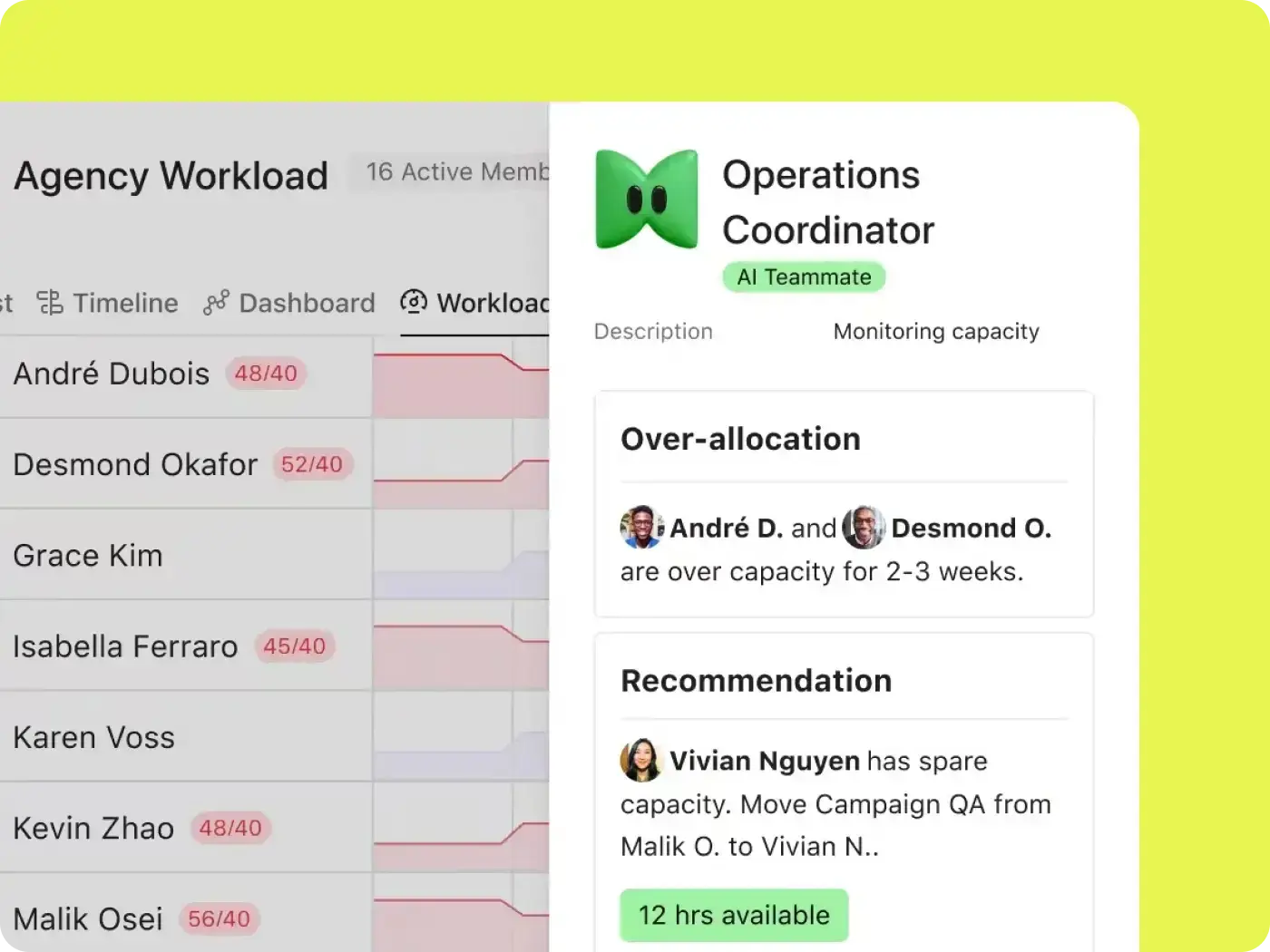
작업 수용량 추적
팀의 인력 배치 방식과 비즈니스 전반에서 사용할 수 있는 리소스를 시각화하세요.

번아웃 방지
워크로드의 균형을 재조정하여 업무량이 많거나 부족한 사람이 없도록 하세요.

빠르게 전환
지능형 리소스 권장 사항으로 변화하는 비즈니스 요구를 충족하세요.
How Asana works as a resource management tool
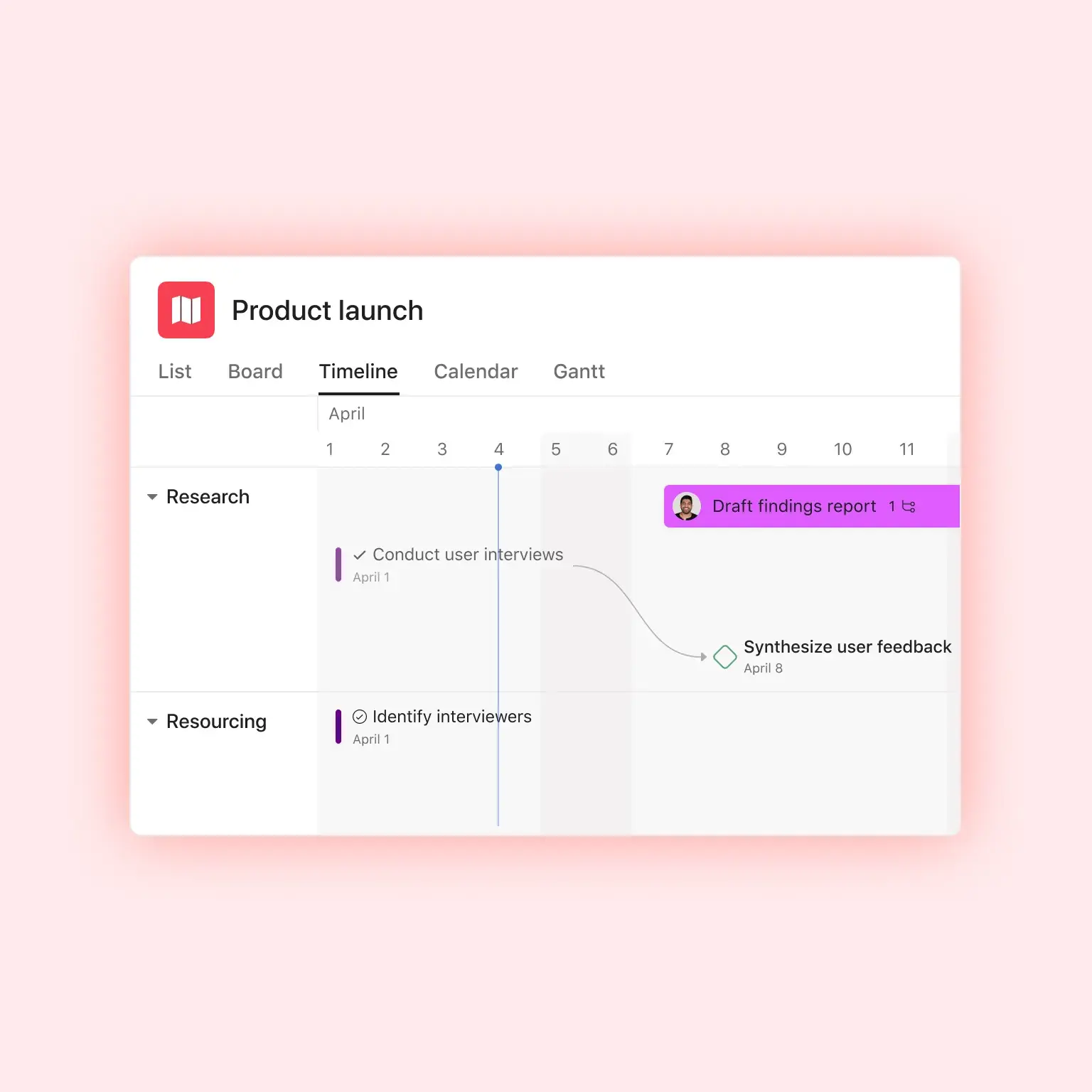
In Asana, every task has an owner, a due date, and an estimate of the effort it takes. The resource management features build your staffing view from those details, so project resource management happens where your projects already live. Here's how that plays out.
직원 주요 이니셔티브
팀의 작업 수용량에 따라 신규 프로젝트 요청에 원활하게 인력을 배치하여 우선순위 이니셔티브에서 필요한 리소스를 확보하세요.
현재 및 향후 과제를 시각화하여 주요 이니셔티브에서 누가 무엇을 담당하는지 알 수 있습니다.

리소스 재조정
개인 간 업무를 손쉽게 이동하여 팀 업무량을 재조정하세요.
어떤 워크스트림이 계획에서 벗어났고 더 많은 지원이 필요한지 확인하도록 AI에 요청하세요.

데이터 기반의 의사 결정을 내립니다
팀이 업무에 사용하는 동일한 플랫폼에서 원활하게 시간을 추적할 수 있도록 지원하세요.
타임라인을 원래 추정치와 비교하여 워크플로를 최적화하려면 시간 추적 데이터를 사용하세요.

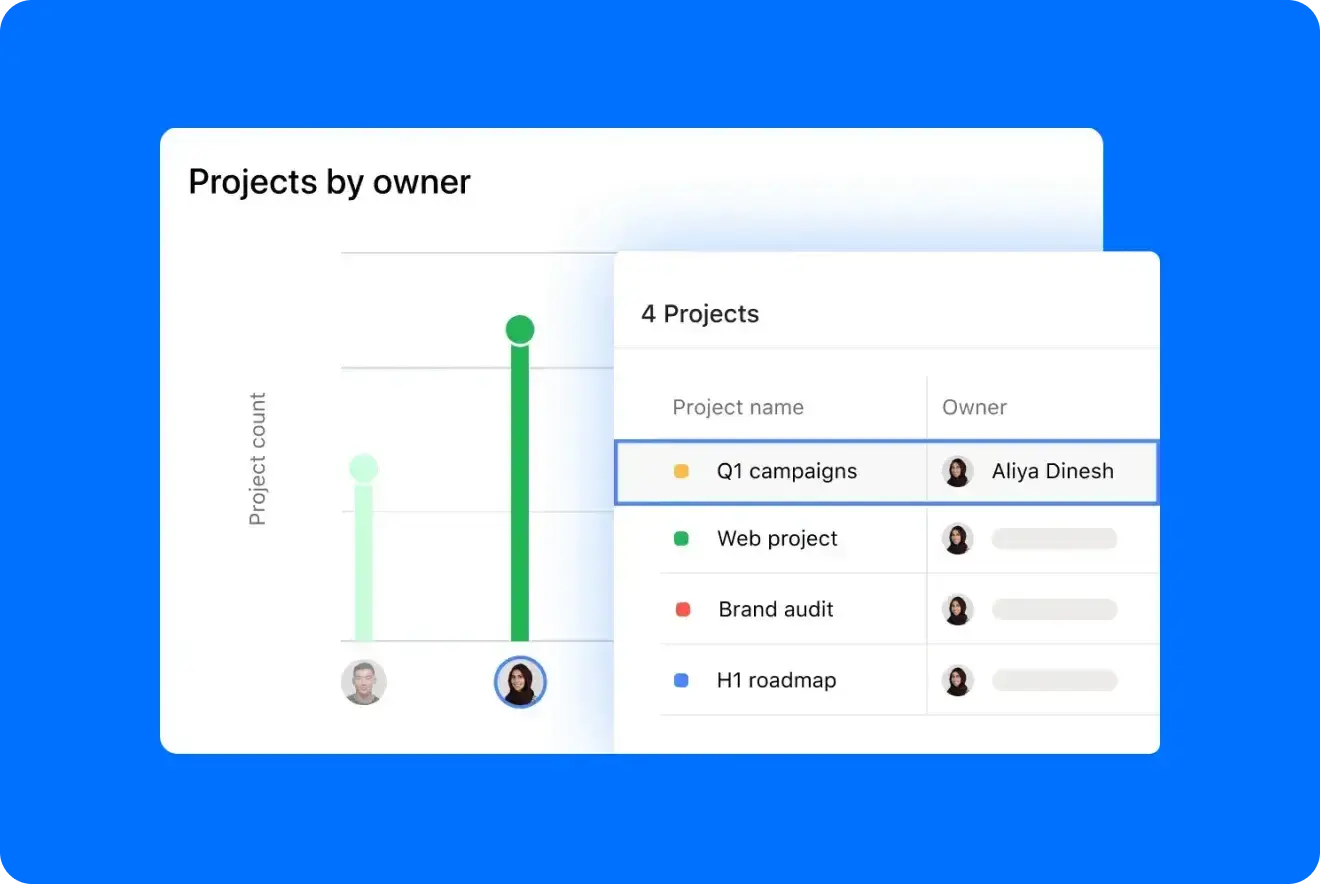
Report on allocation across teams and portfolios
When leadership asks why your team needs another hire, show them. Portfolios and reporting dashboards roll allocation up across projects and teams, so you can point to where people are stretched and where there's room. There's no separate report to build first. Together, these resource management tools give you the numbers for a hiring request, or for saying no to the next project.
Purpose-built for the teams that decide who does the work
Staffing looks different depending on who's doing it. Here's how teams use Asana project resource management software.

![[팀 - 에이전시] 히어로 이미지](https://assets.asana.biz/transform/bd8fb516-1527-40d9-a49d-1978e69c189e/-16_9-Hero-Agency-Lo-Fi?io=transform:fill,width:2560&format=webp)

![[팀 - 운영] PMO 접수(이미지)](https://assets.asana.biz/transform/52e2b46b-6cdf-41f7-bb18-e20cd55b27fb/ops-pmo-intake-mid-fi?io=transform:fill,width:2560&format=webp)

Every project in a single view
When utilization is your business model, one idle consultant or wrong assignment shows up in your margin, and the staffing spreadsheet is out of date by Wednesday. Asana puts every client project in one view, so account and delivery leads can staff each engagement against who's actually free. With the timesheets and budgets add-on, you can also separate billable hours and see how time tracks against each budget.
Asurion improved capacity planning and reached 89% team utilization with Asana
Asurion is a global technology care company serving more than 300 million customers. Its 1,100 people across training, content, media, and innovation teams use Asana to track utilization and bandwidth in real time, so managers can see who's available and where work is piling up. Projects now start 37% faster.

![[케이스 스터디] Asurion(이미지 공유)](https://assets.asana.biz/transform/7fd36f72-23bf-4f93-b431-a631334123e5/WEB-JPG_Customer-Story_Asurion?io=transform:fill,width:2560&format=webp)
Asana has completely changed the way our design team works. We now have full visibility into priorities, timelines, and workloads, which has helped us deliver higher-quality work faster—and with less burnout.Mike Evans
Sr. Manager Multimedia, Asurion
Know who’s free before you promise the work
The next time a project needs two people, you can skip the round of messages to project leads. Just open Workload, see who has room over the next few weeks, and check what else would shift if you moved someone.
Frequently asked questions about resource management tools
A resource management tool is software that tracks how your team's time is committed across projects and shows who has room before you assign new work. Unlike a spreadsheet, it updates as plans change and totals each person's workload for you. In Asana, that view is built from the updates your team already makes to their tasks, like reassigning work or pushing a due date.
Most teams use spreadsheets, dedicated scheduling tools, or a work management platform. With the first two, the staffing plan lives apart from the project plan, and you have to copy every moved deadline or new assignment over by hand. In a work management platform like Asana, the staffing view updates on its own whenever a task changes.
Resource management decides who does what work and when. Capacity planning looks at how much work your team can take on before you commit to it. You need both to make a good staffing call, and Asana supports both, including capacity-planning software to size up what your team can absorb.
You can track resource allocation across multiple projects by rolling every person's assignments into one view. But that only works if the work lives in one place. In Asana, each task carries an owner, dates, and an effort estimate, and Workload totals them per person across every project they're on.
You don't need a separate resource management tool if your team's work is already in Asana. Allocation comes from the assignments and effort on real tasks. A dedicated professional services tool can still make sense if you need deep billing, invoicing, or financial resource planning.
With the Advanced plan, you get Workload for $24.99 mo./per user, billed annually. Upgrade to Enterprise and you can see workload across your whole organization and plan your team's capacity. Neither requires a separate resource management add-on. See Asana pricing for the full breakdown.
The allocation view is only as accurate as what's in it. You don't need perfect estimates, though. Rough effort on the bigger pieces of work is enough to show who's overloaded. Start with hours or points on your largest tasks, then refine as you learn how long things actually take.
Yes. Allocation rolls up across projects and Portfolios, which lets an operations or PMO lead see the whole organization instead of one team at a time. When one team is stretched and another has room, you can move work between them.