


Vereenvoudig taakbeheer en prioriteer werk
Asana is de toonaangevende software voor projectbeheer, volgens G2¹. Bekijk al je werk op één plek zodat je kunt prioriteren wat er het meest toe doet.
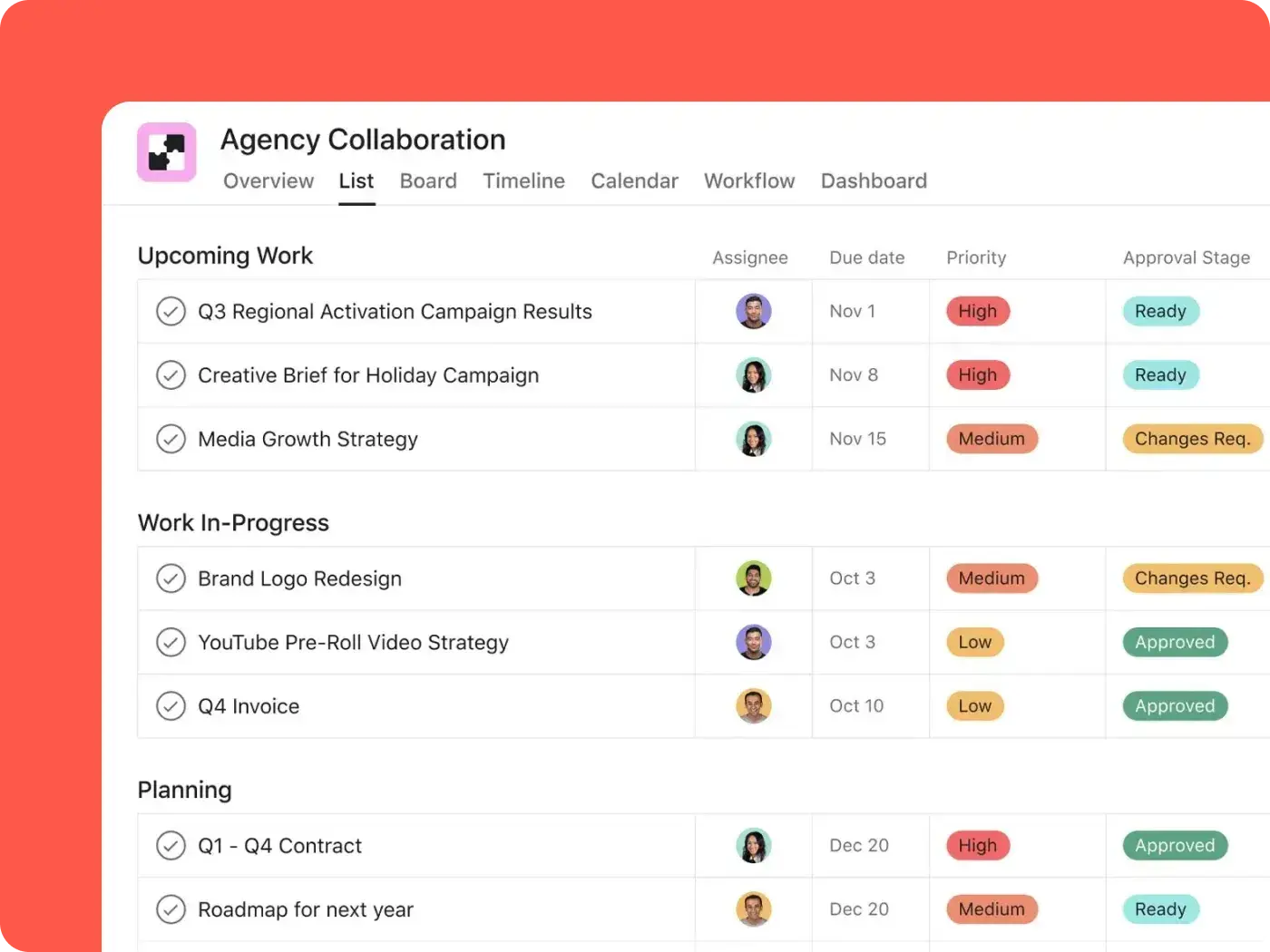
Why team tasks fall through the cracks

No single list is the real list
snellere uitvoering van bedrijfsprocessen

Nobody is sure who owns what
meer bedrijfsprocessen voltooid

Status only exists when someone asks for it
verhoging van werknemerstevredenheid
How Asana works as task management software
Get every task into one list, with an owner and a due date
Turn a request from a meeting or message into an Asana task, then add an owner, due date, files, and comments to keep the details with the work. Use subtasks to track each step of a larger assignment. Use time tracking to record expected and actual time when effort matters. In My Tasks, each teammate can see their assignments across projects.

Make priority and ownership visible, not assumed
The assignee is visible on each task, and custom fields let your team mark priority or request type and sort work accordingly. When two departments need to track the same assignment, multi-homing lets you place that task in both projects without making separate copies. An update in one project appears in the other, so everyone sees the same owner, details, and progress.

See where work stands without asking
As a task management system, Asana lets your team see upcoming work in List, Board, Calendar, or Timeline project views. Dependencies show when a task is waiting on another, making blockers easier to spot before a deadline arrives. For a broader picture, status updates bring progress and changes together for stakeholders. Managers can check what’s due and what’s held up without collecting a round of individual updates.

Automate the parts of task management nobody should be doing by hand
Rules let you assign tasks or notify teammates when work reaches a new stage. Workflow Builder helps teams set up those handoffs, while custom templates preserve the steps for processes they run repeatedly. Recurring tasks keep routine work on the calendar, and together these features make Asana a task management tool that adapts to how your team actually works. For processes that span multiple teams, explore how Asana supports workflow management.

Built for the teams that assign, track, and finish work together

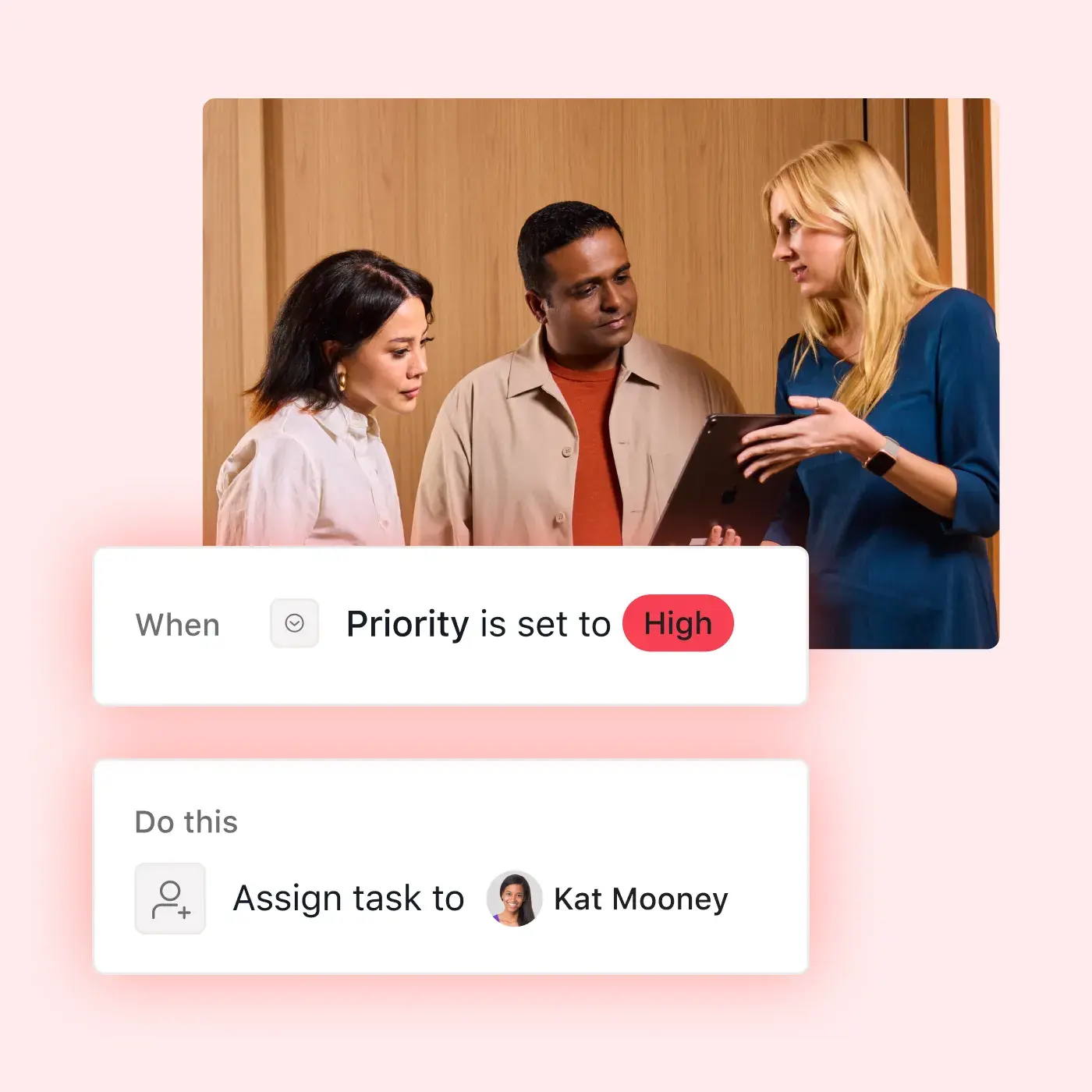



Assign work effectively
Handing out work all day and tracking it becomes a second job. Asana provides managers with task delegation software that records an owner and due date for every assignment, while each teammate sees their work in My Tasks. As employee task management software, Asana gives managers one place to see who owns what and watch it move, instead of asking about it.
Blackboard status updates take just 15 minutes with Asana
Blackboard’s UX design team previously tracked requests across several tools, making it hard to see priorities and gather updates. After bringing requests into Asana, the team reduced the effort needed for updates and quantified their work, so they know where they’re overallocated and where to improve resourcing.

![[case study] Blackboard-share-image](https://assets.asana.biz/transform/da36eecc-4de6-4778-b564-bdb9f76a3ec0/card-blackboard-asana-customer?io=transform:fill,width:1120&format=webp)
My monthly status update used to take me an hour or two, and now it takes just 15 minutes. Asana Portfolios has decreased the amount of bespoke updating we do.Joannie Wu
Design Manager, Blackboard
Put your team’s tasks in one place
Every week used to start with a round of “Where are we on this?” messages. With Asana, you can open your team’s task list and see what’s due, who owns it, and what needs attention. Teammates can update their work in the same place. When someone asks for a status update, the answer is already there.
Veelgestelde vragen
Taakbeheer is het proces van het organiseren, prioriteren en bijhouden van Taken om ervoor te zorgen dat ze efficiënt en op tijd worden voltooid. In de kern gaat het om het toewijzen van taken, het opsplitsen van projecten in kleinere stukken en het stellen van deadlines die alles in beweging houden.
Maar taakmanagement gaat niet alleen over georganiseerd blijven, het gaat erom voorop te blijven lopen. Of je nu de taken van een team beheert of een klein bedrijf runt, het is wat grote ideeën omzet in uitvoerbare stappen. Tools zoals subtaken, takenlijsten en sjablonen maken het gemakkelijk om zelfs de meest complexe projecten aan te pakken. Door de voortgang van Taken regelmatig te controleren, kun je ervoor zorgen dat elke inzet aansluit bij je doelen, waardoor je slimmer werkt, niet harder.
Task management software is a shared tool for recording the work a team needs to do and following its progress through completion. It replaces scattered to-do lists and spreadsheets that leave people unsure which assignments are current. With Asana, teams can keep task details and updates together so everyone can see who is responsible and what comes next.
De beste taakbeheersoftware helpt individuen en teams taken effectief te plannen, te organiseren en te voltooien. Door je werk in één werkruimte te centraliseren, kun je het toewijzen van taken stroomlijnen, prioriteiten stellen en de voortgang bijhouden, terwijl iedereen op dezelfde lijn blijft.
Tools voor taakmanagement gaan verder dan eenvoudige organisatie. Met functies zoals Kanbanborden, Gantt-grafieken en agendaweergaven kun je tijdlijnen, workflows en projectroutekaarten in realtime visualiseren. En geavanceerde samenwerkingsfuncties brengen teamwerk tot leven, waardoor teamleden contact kunnen leggen en updates kunnen delen. Met dynamische visualisatietools en ingebouwde statistieken zet een taakmanagement-app gegevens om in bruikbare inzichten.
Look for task tracking tools that give your team one place to capture work, a clear owner and due date for each task, useful project views, and automation for repeatable steps. Asana brings all those capabilities together, so teammates can track assignments and managers can see progress. For a fuller comparison of options, see our guide to the best task management software.
Je taakbeheertool zou alles moeten bieden wat je nodig hebt om je werk te beheren en uit te voeren. Zorg ervoor dat de software voor taakbeheer die je kiest je taken in één overzicht samenbrengt - op project- en portfolioniveau. Zoek ook een tool die je de flexibiliteit biedt om je werk op jouw manier te doen door integraties te bieden met je favoriete zakelijke apps. En last but certainly not least, zorg ervoor dat de software voor taakbeheer die je kiest je workflows kan automatiseren met regels, sjablonen en meer. Je kunt ook Asana en Todoist vergelijken om te zien hoe hun functies voor taakbeheer verschillen.
Multihoming is een krachtige functie in de taakbeheersoftware van Asana waarmee een enkele taak tegelijkertijd in meerdere projecten kan bestaan. Je belangrijkste werk gebeurt met teamleden van andere afdelingen, die elk hun eigen manier hebben om taken op te slaan en te organiseren. Met multihoming kun je dezelfde taak onderbrengen in meerdere projecten (in plaats van duplicaten van de taak te maken, duplicaten die snel verouderd kunnen raken). Als je vervolgens de details van een Taak in een project wijzigt, worden die wijzigingen onmiddellijk en automatisch in realtime in elk ander project doorgevoerd.
Subtaken zijn kleinere, uitvoerbare delen van grotere Taken, ontworpen om werk op te splitsen in beheersbare stappen. Hiermee kun je specifieke verantwoordelijkheden toewijzen aan verantwoordelijken, elk detail bijhouden en de algehele functionaliteit van je workflow verbeteren.
In een agile-raamwerk kan een taak voor 'functieontwikkeling' bijvoorbeeld worden onderverdeeld in subtaken zoals het schrijven van gebruikersverhalen, codering, testen en implementatie - allemaal afgestemd op een specifieke sprint. Deze subtaken zijn afgestemd op de use case van het project, wat het bijhouden van taken vereenvoudigt en alles afstemt op het grotere geheel. Door subtaken in je taakbeheersoftware op te nemen, kunnen teams georganiseerd blijven, effectief samenwerken en hun doelen efficiënter bereiken.
Asana is een taakbeheertool die teams helpt bij het maken van taken, het toewijzen van eigenaars, het instellen van vervaldatums en het koppelen van het dagelijkse werk aan het grotere projectschema. Teams kunnen Asana gebruiken als een gedeelde Takenlijst en vervolgens de details toevoegen die elke taak nodig heeft, zoals prioriteit, afhankelijkheden, projectfase, bestanden, reacties en goedkeuringsstappen.
Voor teamprojecten helpt Asana managers werk te delegeren, terugkerende taken te plannen en statusupdates te delen als prioriteiten veranderen. Teams kunnen ook aangepaste velden gebruiken voor het bijhouden van problemen, blokkades, lanceringsdatums, budgetten, aanvraagtypen of details over middelenbeheer.
Asana ondersteunt ook grotere workflows die het bijhouden van taken verbinden met andere soorten werk:
Documentbeheer: voeg bestanden toe, voeg reacties toe en bewaar taakgerelateerde details bij het werk dat ze ondersteunen.
Programmabeheer: houd gerelateerde projecten, mijlpalen, afhankelijkheden en statusupdates bij in een gedeelde werkruimte.
Middelenbeheer: bekijk eigenaren, vervaldatums, prioriteiten en werkbelastingdetails voordat je nieuw werk toewijst.
Met Workflow-automatisering kan Asana aanvragen routeren, taken toewijzen, velden bijwerken en teamgenoten op de hoogte stellen wanneer het werk de volgende stap bereikt. Teams kunnen snel zien wat er moet gebeuren, wie de eigenaar is, wat er geblokkeerd is en wat er vervolgens aandacht nodig heeft.
Taaksjablonen zijn vooraf ontworpen structuren binnen een takenbeheersysteem die je helpen repetitieve workflows te standaardiseren en te vereenvoudigen. In plaats van elke keer vanaf nul te beginnen, kun je sjablonen gebruiken om consistente processen te maken voor taken zoals het onboarden van nieuwe medewerkers, budgettering en facturering, of het beheren van productlanceringen.
Deze sjablonen zijn vooral nuttig voor het opsplitsen van grotere workflows in uitvoerbare stappen. Een sjabloon voor contractbeoordeling kan bijvoorbeeld belangrijke subtaken voor verantwoordelijken bevatten, zoals opstellen, bewerken en definitieve goedkeuring, allemaal met duidelijke vervaldatums. Door gebruik te maken van een taakbeheer-app met ingebouwde sjablonen, kun je tijd besparen, fouten verminderen en georganiseerd blijven.
You set up your first shared task list in a day by creating a project and assigning owners and due dates. You can start with a simple list and add more detail as your team uses it. For repeatable work, a task management template provides a starting structure so you don’t have to build every process from scratch.