Cara Asana menggunakan Manajemen Kerja untuk kampanye yang lebih berdampak


85% perusahaan Fortune 100 memilih Asana¹






Efficiency is the buzzword of this ever-changing AI era. For marketers, this means maximizing the return on every single dollar they spend.
It’s no different when it comes to managing effective campaigns that drive engagement and, ultimately, revenue for your company. At Asana, the revenue marketing team approaches campaigns with a focused and structured design. The foundation needs to be sturdy and well-adapted to the dynamic nature of their work. So they organize their campaigns with the most reliable tool they can find—Asana.
Lihat cara kerja perencanaan pemasaran
Dengan Asana, tim pemasaran dapat menghubungkan pekerjaan, menstandarkan proses, dan mengotomatiskan alur kerja—semuanya di satu tempat.


The challenges of managing campaigns
When you’re managing campaigns, you’re constantly connecting dots—focusing on minute details while also keeping an eye on broader campaign goals. Simultaneously, you’re working with partners in sales, product marketing, brand marketing, and more.
That’s why it’s crucial to adopt an integrated approach to campaign management for smoother execution and better alignment.

Mengelola kampanye adalah pekerjaan terbaik karena Anda dapat bekerja sama dengan semua orang. Tetapi, ini adalah pekerjaan tersulit karena Anda harus mengatur semua orang.”
The 4 biggest challenges campaign leaders face
1. Coordinating across teams
Coordinating campaign stakeholders often means working with people across your company. It involves coordinating plans across various teams, a process that can feel like a never-ending “Just following up” cycle. But it’s a necessary part of the job because you need everyone aligned on a unified strategy. This requires having multiple discussions and reconciling views to build one cohesive campaign plan.
2. Maintaining visibility at micro and macro levels
When you’re navigating shifting deadlines, external and internal partners, and the actual content and structure of your campaigns, organization can feel like the last priority on your list. But to drive clarity and accountability, you have to see the small details of what's happening, when, and with who.
At the same time, you also need to show how campaign work ladders into bigger picture goals. In order to build even more effective campaigns, your partners need full visibility—from macro-level goals all the way to daily work tasks.
3. Improving campaign processes
To drive successful campaigns, you need a straightforward production plan that stakeholders can easily access. This means building streamlined and consistent processes. But trying to build these without the right tools can be extremely time-consuming and inefficient.
4. Navigating disconnected tools
Using disparate tools for different aspects of campaign management adds unnecessary complexity. Visibility becomes fragmented, making it hard to maintain a single source of truth. This scattered approach complicates communication with external agencies, partners, and internal teams alike. Without a centralized platform, you need to constantly update materials to ensure everyone is on the same page and has the latest information.
Jess Kircher, Head of Experience Marketing at Asana, has seen this play out in real time.
Sebelum Asana, jika ada pembaruan, saya harus memastikan saya memperbarui semuanya di semua alat dan platform berbeda yang saya gunakan untuk menjaga keselarasan kampanye. Jadi, jika kami mengubah batas waktu, saya harus masuk ke setiap informasi yang menampung batas waktu itu dan memperbaruinya.”
How Asana uses Asana for smoother, more targeted campaigns
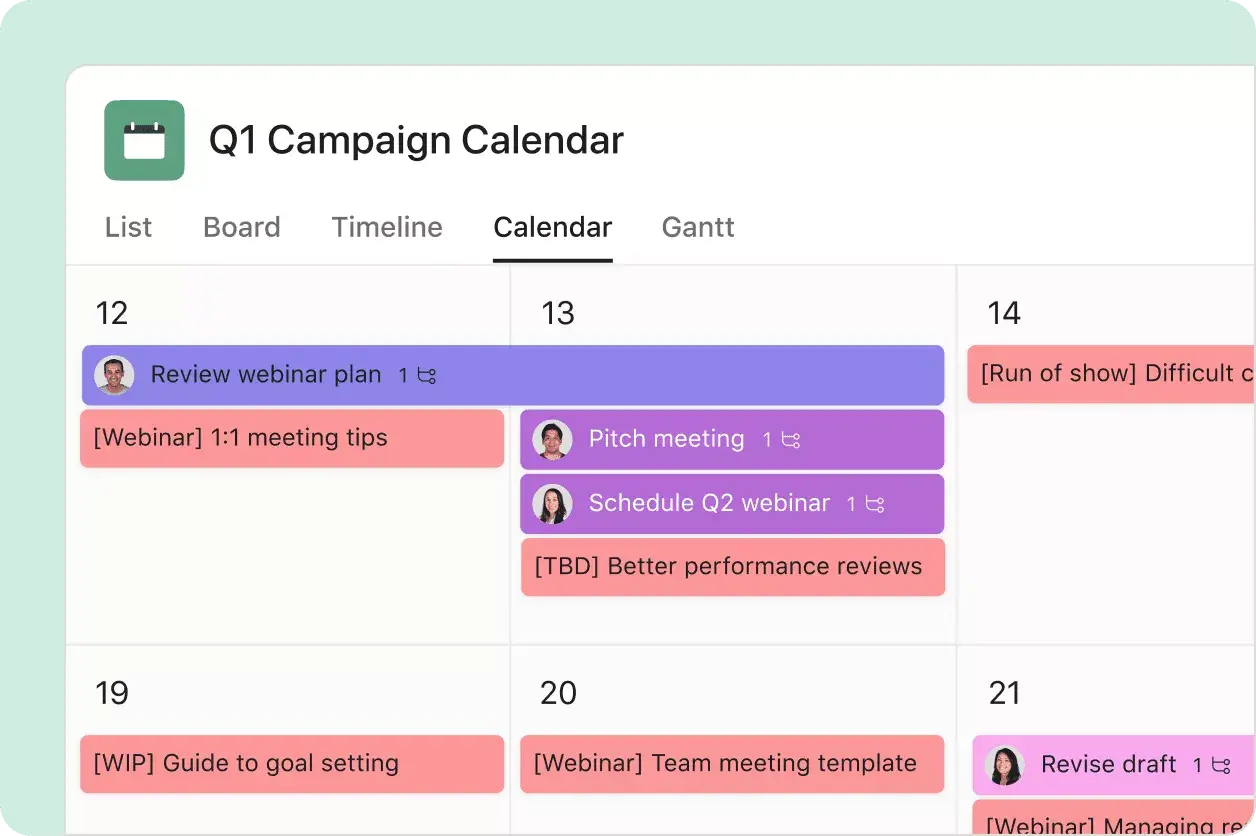
Campaign management can be complex, but with the right tools, it doesn't have to be a bottleneck for your team. Asana offers a unified platform that not only streamlines your campaigns but also brings visibility and efficiency to your work processes.
Using Asana, the campaigns team has centralized all aspects of their campaign management—from planning and production to coordination and communication. This has helped them move toward a system where everyone is on the same page and can access the information they need, without sifting through endless email threads or attending countless meetings.
Here’s how Asana empowers the revenue marketing team to seamlessly coordinate campaign efforts, use templates for quick and consistent processes, and align day-to-day tasks with broader organizational goals.
1. All campaign work is visible
Without Asana, teams need presentations, status updates, and decks to share what they’re doing. Meanwhile, the actual work happens in emails, spreadsheets, and meetings. But with Asana, all of these things happen in one place, giving you one central source of truth.
For the campaigns team, this means being able to develop campaign plans in one place, allowing leads, teams and partners to see upcoming milestones and progress in a campaign planning project. They also use a global campaign calendar where they track all campaign activities, providing visibility to leaders, teams and partners. The result? Leaders can self-service the information they need, reducing unnecessary meetings and eliminating lengthy status update emails.
2. Operate from one single source of truth
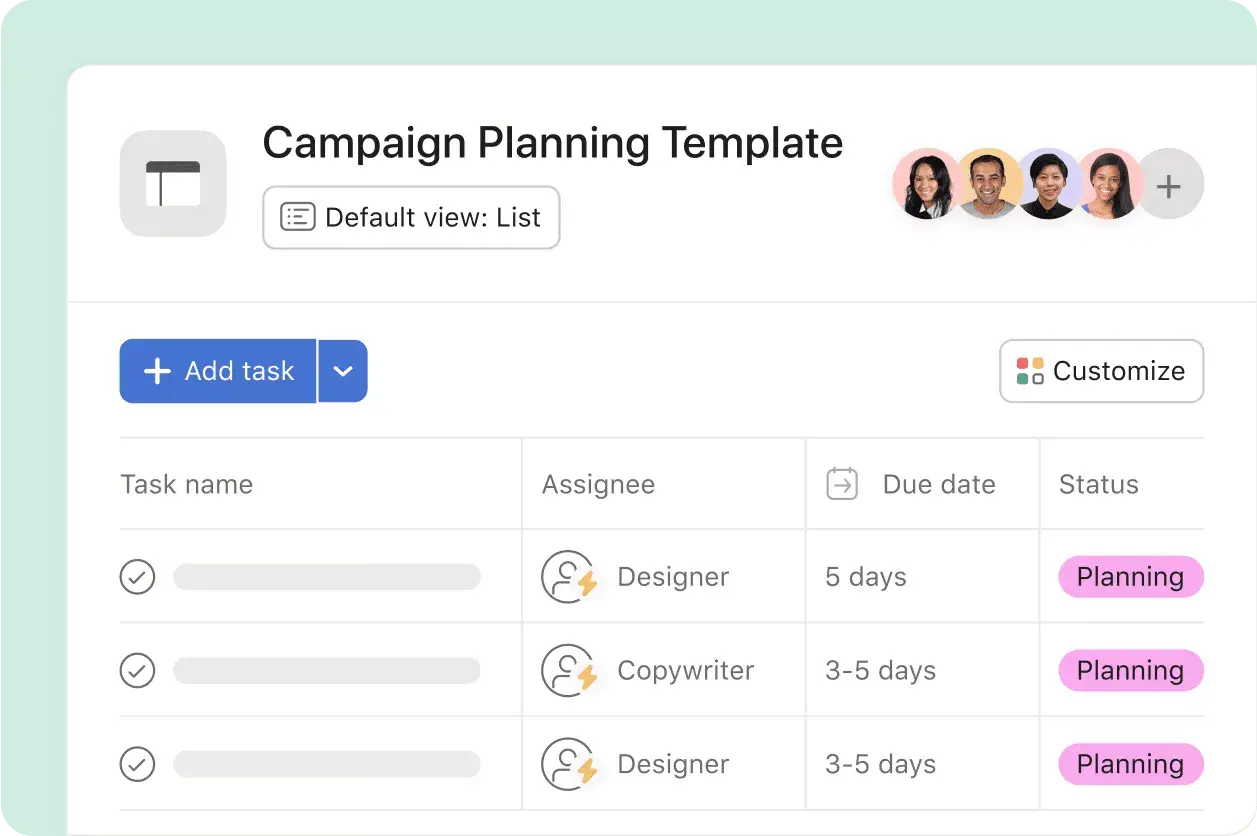
Managing campaigns often requires you to communicate with a variety of partners—both internal and external. You might need to hire an outside agency to help with webinar sign-ups, ask your content marketing team to write that same webinar, and recruit a customer to speak at it.
Usually this communication happens in disconnected email chains where it’s hard to stay on top of who needs what, by when. But at Asana, the campaign management team can use Asana for both internal and external collaboration. Asana features include guest access for agency partners or external contractors, so you can coordinate work effortlessly between teams across both different departments and companies.
3. Connected daily campaign work, from daily work to goals
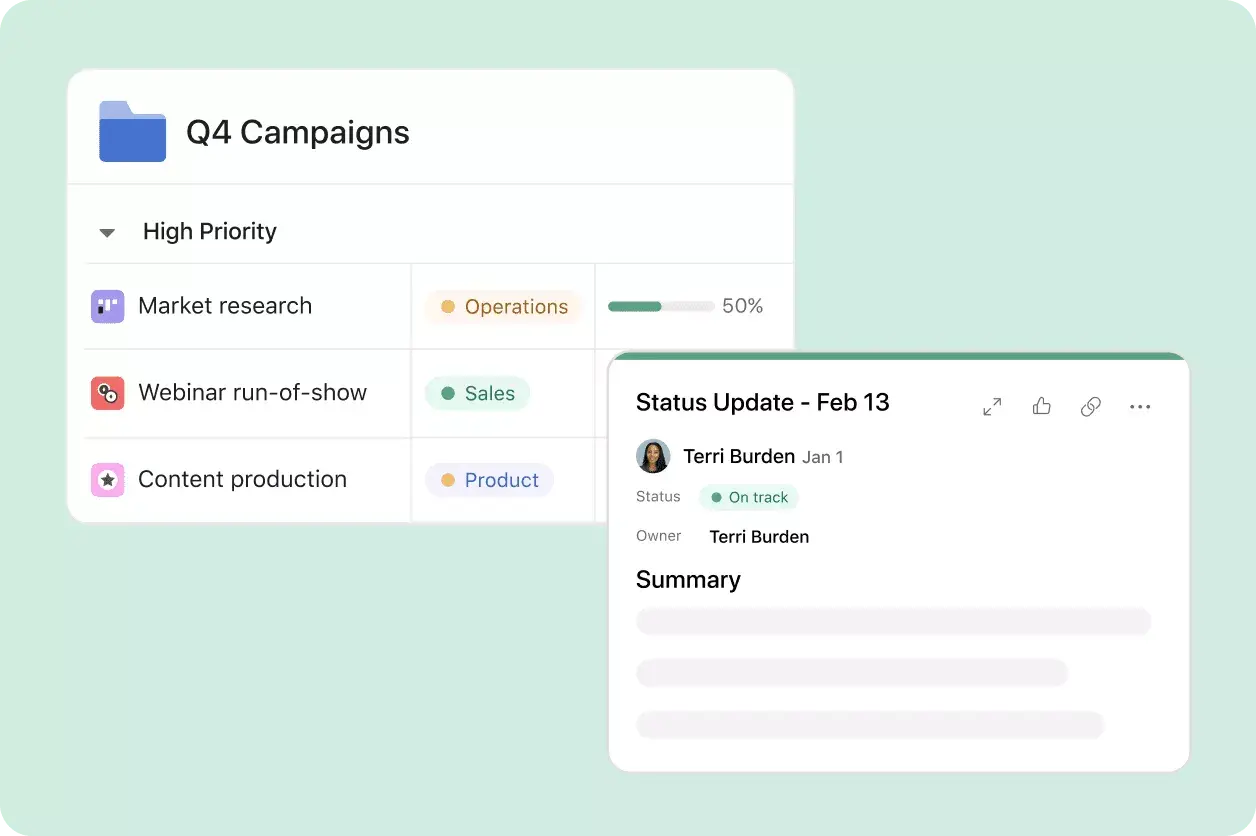
It’s not enough to just have visibility into individual, daily tasks. Leaders need to think at a higher level and connect that work to marketing goals and metrics. At Asana, the team starts by connecting their campaign work to high-level marketing goals. For example, let’s say your team has set a revenue goal to generate $50 million in revenue from your AI product line next quarter.
You can set that goal in Asana and from there, the team can build a portfolio for all their related campaign projects. In this example, they might have a project for each webinar promoting AI features. That portfolio houses all the related projects with day-to-day work and planning. So if there’s a project for the planning stages of a webinar, one for content development, and one for the run-of-show, they’re all connected.
This helps your teams understand how their work is making an impact. And because Asana lets you connect campaign projects to key marketing goals, every time they make progress towards a campaign, like hitting a certain number of leads in a target persona, the goal automatically updates and stakeholders can see progress in real-time.
4. Using AI to boost efficiency
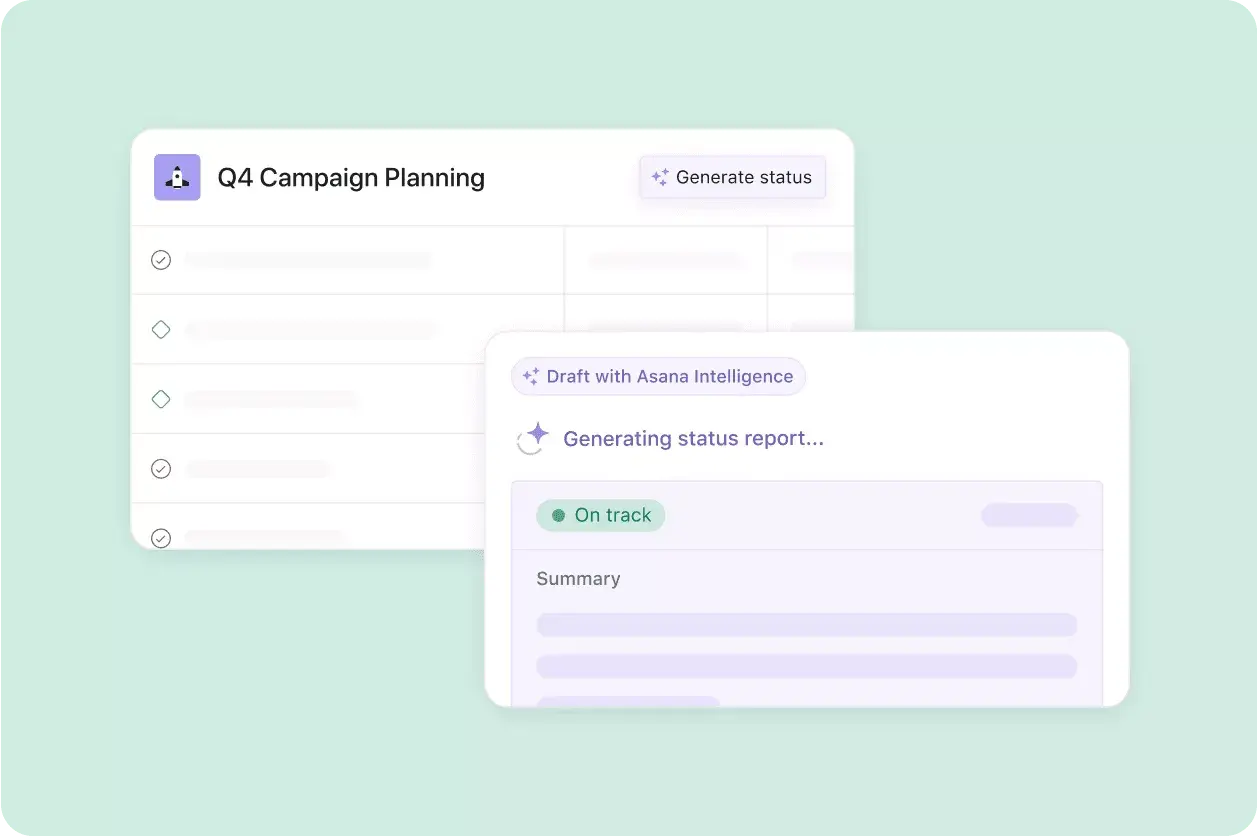
One of the most time-consuming parts of campaign work is updating many different stakeholders across platforms. At Asana, the campaigns team has two advantages. First, they’re all on one platform—so when an update is made, everyone immediately knows about it. Second, they can utilize AI to draft and share status updates even faster.
With Smart status, leaders on the campaigns team can create an AI-generated status update from all their connected projects and work. Instead of having to browse through tasks and tally up the progress, AI does the leg work for them, allowing them to automate this normally tedious process.
Tingkatkan ROI kampanye Anda
Buat kampanye tetap sesuai rencana dan sesuai pesan, apa pun lingkungan pasarnya.
Unlock the future of campaign management with Asana
By leveraging Asana's capabilities—from centralized workspaces and unified communications to AI-driven efficiencies—teams are empowered to execute campaigns with precision and agility. The journey from planning to execution is no longer littered with fragmented communications and inconsistent processes. Instead it's clear, consistent, and provides real-time visibility into your progress towards overarching marketing and business goals.
Embracing Asana's full potential allows the campaigns team to not just manage campaigns, but redefine what it means to work collaboratively towards common objectives. The future of campaign management is here, and with Asana, you can be ready to meet it head-on, driving leads, sales, and ultimately, the growth of your company.
Lihat cara kerja perencanaan pemasaran
Dengan Asana, tim pemasaran dapat menghubungkan pekerjaan, menstandarkan proses, dan mengotomatiskan alur kerja—semuanya di satu tempat.