


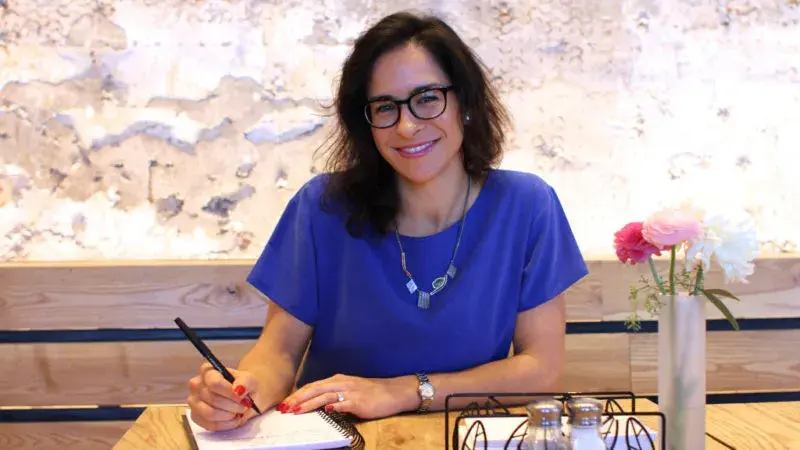
We hear from a lot of users and candidates that they want to know more about the day-to-day lives of Asanas: what a typical workday looks like, what drives us…what we eat for lunch. We sat down with a few individuals from different teams to give you a more intimate look at the personalities who make Asana what it is: a collective of peers. We’re excited to get to know you and for you to get to know us.
Yev is widely considered to be one of the most stylish people in the office (we didn’t tell her this). Her thoughts on style: “It’s true, I do think about what I wear. Sometimes I’m very casual, but I figure, we’re in San Francisco, so we should dress to impress. Also, I walk to work, so I’ve gotta strut my stuff!”
Without further ado, we’d like to introduce you to Yevgeniya Goykhman, or “Yev,” as we know her in the office. Originally from Uzbekistan and part of our team of five Customer Success Managers (CSM), Yev is known for many things, among them: her elaborately printed outfits, devotion to her adorable mutt Rocco, and friendship with fellow CSM Shannon. Not only is she a smiling face and presence in our office, Yev shares her joie de vivre while visiting our customers’ offices, too.
As a CSM, Yev works with larger teams using Asana (100+ users), setting them up for success with on-site presentations, trainings, and support. Our CS team is crucial to the success of our product as it ensures customers have a smooth onboarding and user experience in Asana. Read on to learn about how Yev came to join Asana, what a typical day looks like in her role, and how Asana has changed her workstyle, as well as her lifestyle.
A day in the life of a CSM at Asana
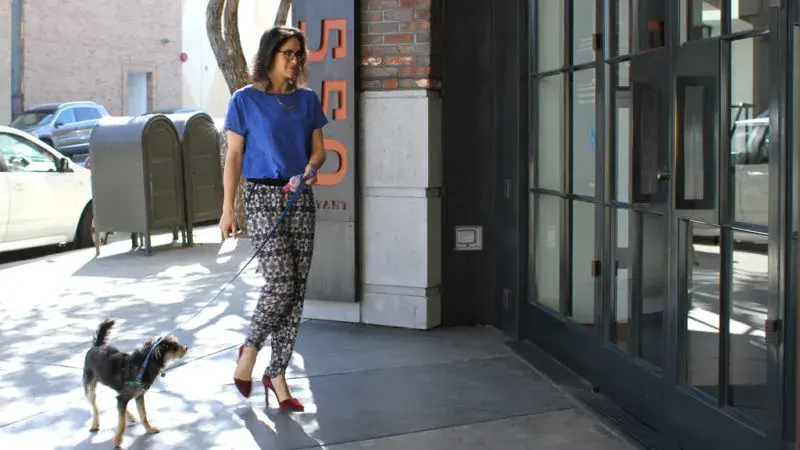
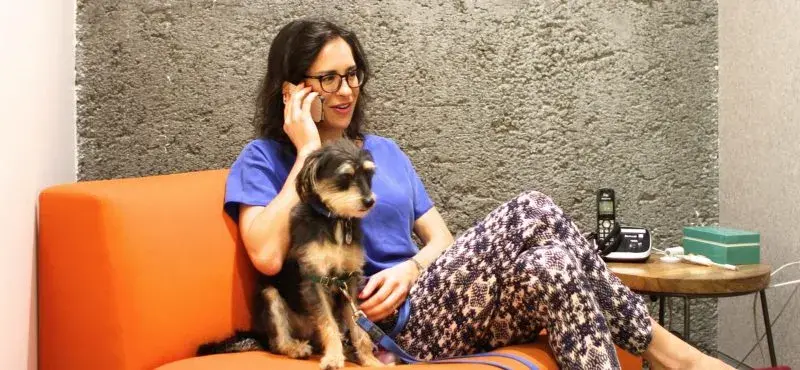
Yev lives a few blocks from Asana’s offices, so she walks to work each day for breakfast after working out and walking her dog, Rocco.
You get up pretty early each morning to work out and walk your dog before breakfast. What’s it like being a morning person working at a startup?
The office is pretty quiet earlier on in the day, so I’m able to get a lot done in the morning. It’s a time for me to zero in on things. I clear out my emails and try to get back to our international customers in the hopes that they may still be in the office when I respond. If I have high priority work that requires a lot of focus, it’s usually getting done in the morning; there’s definitely less pep in my step after 3pm. That’s why I never have calls after 3pm [laughs].
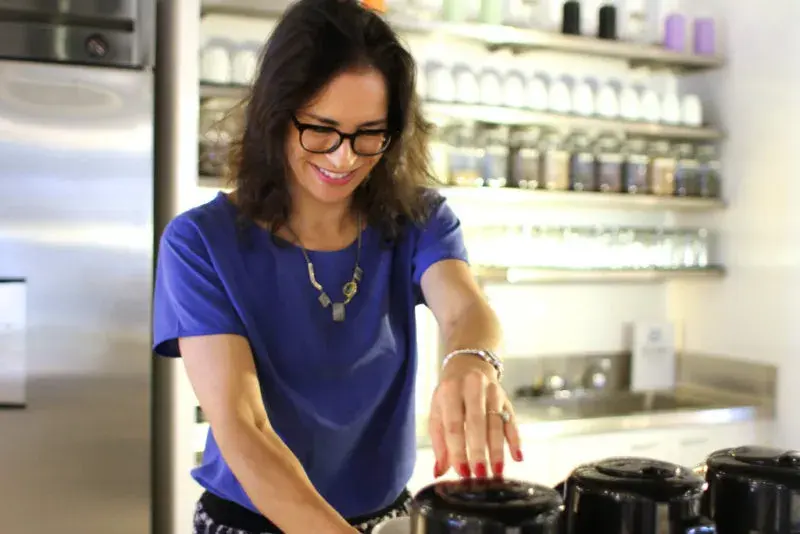
“Most days I order eggs with lots of veggies, and if there’s bacon, I definitely go for it because they cure it in-house. I’m a huge fan of bacon.”
What kind of work do you like to do in the afternoons?
After 3pm, when I’m no longer so good on the phone, I do my general cleanup. I figure out who I’m going to reach out to tomorrow, what my day looks like, and what content I need to pull together. Sometimes I like to walk over to Coffee Bar or Blue Bottle with my teammate and friend Shannon, to see what’s new at Heath Ceramics (to scout my wedding registry items!). I recruited Shannon to come work here. She’s my workout buddy, as well as a bridesmaid in my wedding!
What do your evenings look like?
Usually I grab dinner to go, and leave at about 7:15pm. I go home, walk my dog Rocco, and eat dinner with my fiancé. Sometimes my fiancé will bring Rocco into the office for dinner. After dinner, it’s time to turn my brain off or continue with wedding planning! I try really hard to be in bed by 10:30pm.
Defining and building a function from the ground up
What were you doing before you transitioned to Customer Success?
Before working in Customer Success, I worked in events and tradeshow management. I got bored of it because the process was the same every time. I knew that I liked working with and interacting with people, so when Customer Success landed in my lap, I figured, “It fits the bill, I’m going to try it”. Now I get to interact with people, helping them be successful in Asana. Because every customer’s needs are different, no single day is the same.
What brought you to Asana?
I had heard about Asana through a family friend who worked with one of our co-founders at Facebook. The more I learned about Asana, the more I thought “wow, this sounds so peaceful and balanced.” I came in and met with some people, and the more people I met, the more I knew that this was the place for me.
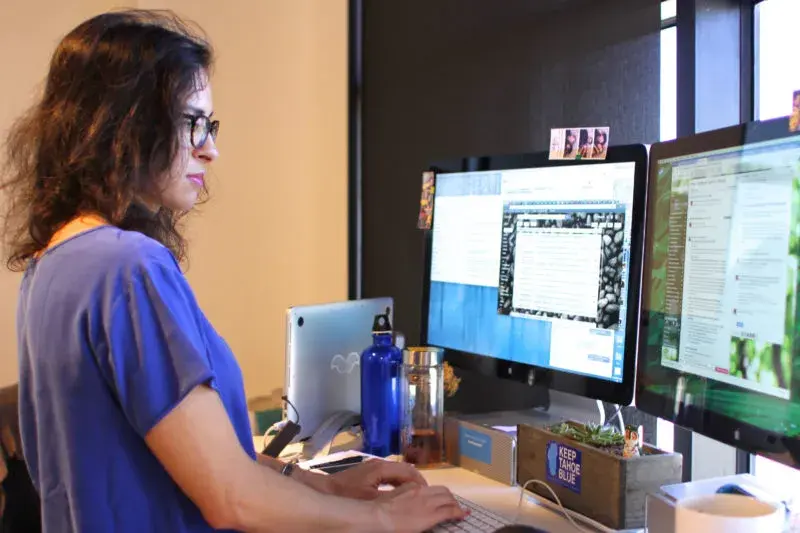
What sets Asana apart from the other places you’ve worked?
It feels like there’s so much opportunity to do things that you’re passionate about. Each person has the core work that they do, but everyone is able — and encouraged — to insert themselves into other projects, whether they’re within their function or not. There’s no red tape, so I never feel bored here, or like it’s a hard grind. That’s exciting for me.
If you have an idea and you can back it up, you can go and just do it. ”
Customer Success sounds like a high order. What exactly does your role entail?
I work with our customers to get them acquainted with Asana and fully onboarded. I have to familiarize myself with how different teams work together, how they work within their companies as a whole, and how Asana can best help them work together. Then, I work to show them how to get the most use out of the tool.
What’s your favorite part of your work?
I love going on-site to a customer’s space and seeing all the fabulous people who work there and how they work. Usually, I’ll go on-site to do trainings and kick off our relationship with a customer.
What does that involve?
It depends on why I’m there. Most of the time, I’ll go to extract as much information from the teams as possible so I know how to set them up for success. I take slides to explain our CS program, do a Q&A, and answer specific questions about workflows. After our first on-site explorational visit, I’ll often do a full on-site training.
If a customer has been an Asana user for some time, my approach is different: I’ll go have lunch with the team and chat with them about their needs, delights, and frustrations. There’s always some way that I can help a team get more from Asana, regardless of the stage they’re at, which keeps my day-to-day really interesting.
How would you describe your job?
It’s fun. I really enjoy it. I get to talk to so many different teams and people. Yes, there’s typically a common issue that we’re solving, but the way we get there is always different. It keeps it interesting.
The CS program has evolved a lot since you joined it. How do you measure success of the program and within your role?
The Customer Success program has only existed at Asana for a year and a half; I’ve been a part of it for just over a year. When I joined, it consisted of reaching out to customers in parallel with the sales process. Since then, we’ve evolved the program into 3 tracks based on the size of the team we’re working with, among other criteria.
I work with larger (100+) teams, where we measure success by whether we meet our customer’s key success criteria (which are defined in the discovery phase). Basically, have we helped them achieve their goals in both the short and long term? To measure this, we look at various feedback points, including:
Making sure the customer is happy.
Their account health metrics look good.
Deployment goes well, and we can forecast a way to sustain it.
I think the key to Customer Success is to keep evolving the program, and that’s how I measure my own success: when I’m continuously redefining how I engage with people, I’m doing something right. For example, at the start, there’s some hand holding, but then I make them love the product, understand how it works, and finally, I become a source of inspiration and empowerment for them.
Asana is a productivity tool used by different kinds of teams, from engineering teams to non-profits to merchants and artisans, with whom you work each day. How has using Asana changed your own work style?
Honestly, when I first started, it felt overwhelming. It was such a shock to realize how unproductive I was before, how differently I approached getting things done. Now, I’m in the habit of coming to work, checking my Asana Inbox, and looking at my tasks. It’s a routine that helps me get into the right headspace: I know what I’m doing and what needs to be done. I know exactly what’s happening all the time.
What’s been your proudest accomplishment since joining Asana?
Just six months after I joined Asana, my only teammate moved to the UXR team. It was new to me, but I did pretty well given that I was able to learn how to solve workflow mapping questions in such a short period of time. I kept the program afloat and it’s growing now!
Last episode, we saw an increase in engagement, which was a good sign that the program was working. That felt good.
A workstyle and a lifestyle
Balance is core to several Asana values. Do you feel you’ve achieved balance at work?
Yes. I feel it’s something that just happens here. Thinking back to previous jobs, it was normal to work through dinner, to work when you went home, to just work all the time. Here, without needing permission, it’s ok to go on a walk, go to the gym, or get some fresh air during the day (or whenever). Asana has brought a lot of balance into my life, to the point that I don’t feel stress at all (except around my looming wedding date!).
Speaking of your wedding, Are you using Asana to plan your wedding?
I am! It’s been really helpful. At the beginning, I started assigning tasks to my fiancé and I could tell he wasn’t looking at them. I wasn’t as patient with him as I am with customers, but he got on really quickly…maybe by force!
You joined the company when we were 57 people. What do you hope Asana retains when we grow?
I love our company-wide meetings, like TGIFs and Show & Tells, because I learn about what other teams are working on, in their own words. It reminds me that everyone is participating, we’re one unit. At weekly All Hands meetings, teams demo their latest work, or leaders present on the future of the company or strategies they’re pursuing.
We’re looking forward to introducing you to more Asanas: if there’s a role or function you’re interested in seeing profiled on our blog, let us know in the comments.