Kiat Asana: 3 cara untuk menetapkan gol yang dapat dicapai


85% perusahaan Fortune 100 memilih Asana¹






Kita semua pernah melakukan latihan penetapan gol di tempat kerja—namun, berapa banyak dari gol tersebut yang terasa relevan, dapat dicapai, atau Personal? Meskipun sebagian besar tim mencurahkan waktu dan energi untuk menetapkan gol di awal kuartal atau tahun, kita jarang melihat tingkat tindak lanjut yang sama. Ini karena gol di Tempat Kerja sering kali tidak terkait dengan pekerjaan kita yang sebenarnya. Untuk menetapkan gol yang dapat dicapai, kita perlu menghubungkannya dengan pekerjaan sehari-hari. Memahami bagaimana pekerjaan harian Anda terhubung dengan gol Anda tidak hanya membuat Anda lebih mudah menetapkan gol. Menurut Indeks Anatomi Kerja, Pegawai yang memiliki kejelasan tentang dampak pekerjaannya pada organisasi mereka akan 2X lebih termotivasi daripada rekan-rekannya. Dengan peluncuran Gol, Tim akhirnya memiliki cara untuk menghubungkan pekerjaan mereka dengan misi organisasi mereka. Namun, untuk memanfaatkannya semaksimal mungkin, Tim Anda perlu mengetahui cara menetapkan gol terbaik. Dengan mempertimbangkan hal di atas, berikut tiga cara untuk menetapkan gol yang dapat dicapai menggunakan Asana:
1. Tentukan gol yang spesifik
Gol hanya bermanfaat jika Anda tahu kapan tenggatnya, bagaimana Anda akan mengukurnya, dan apa sebenarnya yang ingin Anda capai. Gol yang spesifik juga memberikan cetak biru tentang langkah-langkah yang perlu diambil untuk mencapainya.
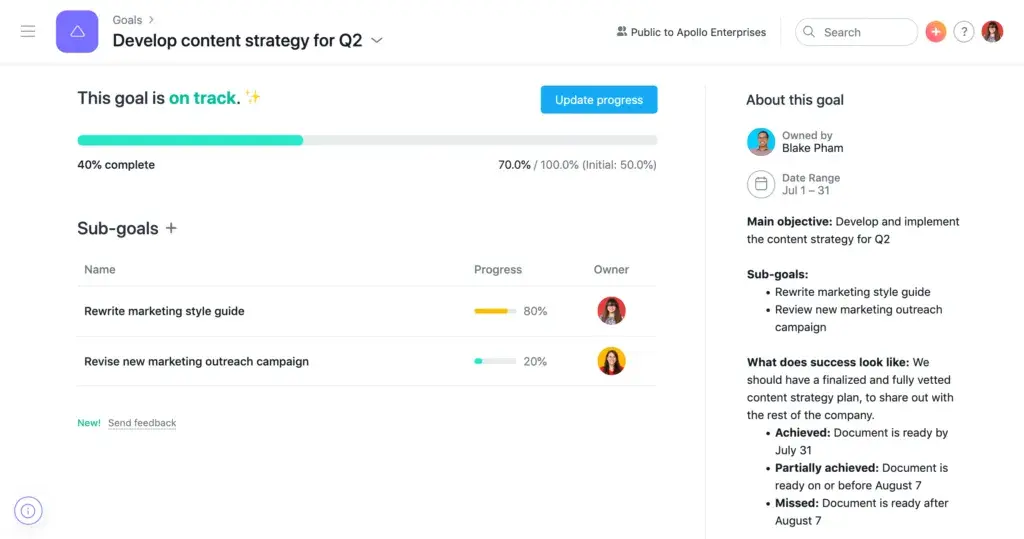
Saat menentukan Gol, Anda harus memperjelas:
Tujuan utama Gol dalam frasa atau kalimat yang berorientasi pada tindakan
Detail tentang cara Anda akan mencapai Gol
Cara Anda akan mengukur kesuksesan
Apa yang dimaksud dengan mencapai gol, mencapai gol sebagian, atau gagal mencapai gol
2. Periksa progres secara berkala
Baik Anda menetapkan gol untuk seluruh organisasi atau gol khusus tim, pastikan Anda memeriksa gol Anda secara berkala. Alih-alih menetapkannya lalu melupakannya, Gol harus menjadi bagian dari pekerjaan harian yang Anda lakukan. Dengan menjadwalkan pemeriksaan berkala, Anda dapat memastikan bahwa pekerjaan Anda selaras dengan tujuan keseluruhan.
Dengan Gol, Anda dapat menetapkan gol Tim dan gol perusahaan, lalu menghubungkan pekerjaan Anda di tingkat proyek atau Portofolio untuk mendapatkan wawasan real-time tentang cara pekerjaan tim Anda secara langsung berkontribusi pada tujuan strategis. Anda dapat melihat berapa persen dari Gol Anda yang telah selesai, dan membagikan pembaruan progres kepada semua pemangku kepentingan Gol.
![[Sumber Daya] Kiat Asana: 3 cara menetapkan gol yang dapat dicapai (Gambar 2)](https://assets.asana.biz/transform/917a8886-b469-447b-8a06-3296bbb170d3/Goals-progress-view-1024x527?io=transform:fill,width:2560&format=webp)
3. Tinjau dampak Anda
Jika Anda menetapkan Gol secara konsisten, akan ada beberapa Gol yang tidak Anda capai. Tidak apa-apa—bahkan itu hal yang ideal. Di Asana, kami menargetkan untuk mencapai sekitar 70% dari gol kami. Jika kami mencapai lebih dari itu, berarti Gol tersebut terlalu mudah—jika kami tidak mencapai 70%, mungkin terlalu banyak Gol yang merupakan Gol ambisius.
Baik Gol Anda selesai sepenuhnya, tercapai sebagian, atau sama sekali tidak tercapai, diskusikan dengan Tim Anda setelah Anda menepati Batas Waktu. Evaluasi hal yang berjalan dengan baik dan hambatan yang Anda hadapi, jika ada. Apa faktor-faktor yang memengaruhi progres Gol? Apa yang dapat Anda lakukan dengan lebih baik lain kali? Dengan melakukan percakapan ini, Anda dapat memperbaiki dan meningkatkan proses penetapan gol Tim untuk menetapkan gol yang lebih baik.
![[Sumber Daya] Kiat Asana: 3 cara menetapkan gol yang dapat dicapai (Gambar 3)](https://assets.asana.biz/transform/36bcabdb-afbe-4bfd-abba-4db7c58bcfb7/Goal-completed-1024x519?io=transform:fill,width:2560&format=webp)
Tetapkan Gol dengan benar
Dengan Gol, Anda dapat menghubungkan pekerjaan harian dengan gol tingkat Tim atau Organisasi. Di Asana, kami menyebut hal ini sebagai piramida kejelasan. Untuk membuat piramida kejelasan dalam Tim atau organisasi Anda, mulailah dengan pendekatan penetapan gol OKR (Tujuan dan Hasil Kunci).
Pelajari selengkapnya tentang cara menetapkan OKR di ebook kami