First day of work: 12 tips to start strong & calm nerves


Summary
So you've secured a new job, congratulations! With your first day of work approaching, you're likely feeling a mix of excitement and nerves. No two workplaces are the same, so as you walk through the office doors or enter your company's online chat room for the first time, try to embrace the uncertainty.
Before the big day arrives, the best thing you can do is adjust your expectations and prepare yourself accordingly. Then, once you're at work, focus on your introduction and the first impressions you'll make. Most importantly, remember that your first day of work is an opportunity to learn.
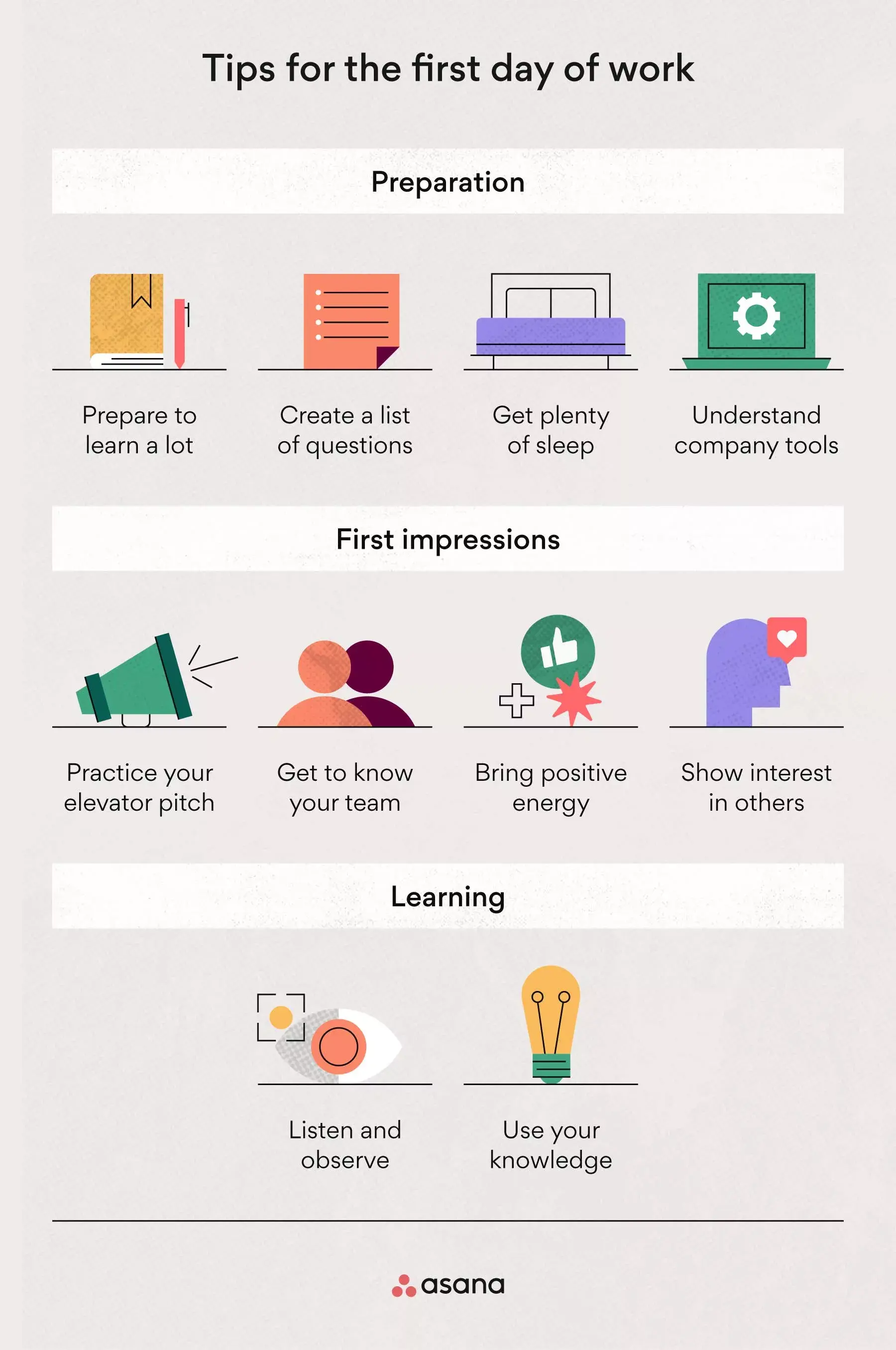
No matter your role, there are universal tips you can use to have a successful first day of work. It's normal to have jitters when trying something new, but if you apply the tips below, you'll start your new position feeling confident and comfortable.
1. Get plenty of sleep
Aim for seven to eight hours of sleep the night before your first day of work. Without adequate rest, you'll struggle to focus, absorb new information, and present the best version of yourself to your new team.
A study from the American Academy of Sleep Medicine found that sleep deprivation directly impacts work performance:
5-6 hours of sleep: 19% more productivity loss
Less than 5 hours: 29% more productivity loss
Tip: To increase your sleep quality, try adjusting your sleep schedule one week in advance. Exercise the day before and limit tech before bed to improve rest.
2. Study company tools
Your new team will appreciate it when you arrive prepared. Familiarize yourself with common workplace tools beforehand, many offer free trials you can explore. Consider studying up on tools for:
Communication: Gmail, Microsoft Teams, Slack, Zoom
Project management: Asana
Search engine optimization: Ahrefs, Google Analytics, SEMrush
Time tracking: TimeDoctor, Everhour, TaskBill.io
Customer relationship management: Salesforce, MuleSoft, Zoho CRM
Cloud backup: DropBox, Jira Cloud, BetterCloud
Scheduling: HourStack, Google Calendar
Data analysis and documentation: Microsoft Excel, Google Sheets, Databox
Working from home offers more flexibility, but it also means team members rely heavily on tech. The more you know about your new company's tools before day one, the less you'll have to learn on the job.
Tip: If you have an effective process or program from a past role, consider introducing it to your team. The right tools can have a positive effect on overall performance.
3. Know what to bring on your first day
Walking into a new workplace without the right materials can leave you scrambling. Prepare a checklist of essentials so you can focus on making connections rather than worrying about logistics.
Items to pack the night before include:
Identification and documents: Bring your ID, work authorization paperwork, tax forms, and banking details for direct deposit setup
Notebook and pen: You'll receive a lot of information on day one, and having a place to jot down notes shows you're engaged and prepared
Lunch and snacks: Until you know the lunch culture at your new workplace, pack something to keep your energy up throughout the day
Personal essentials: Consider a phone charger, water bottle, and any medications you may need
Tip: Check with HR or your hiring manager before your start date to confirm what documents they need. This prevents last-minute stress and ensures a smooth onboarding process.
4. Dress appropriately for your workplace
First impressions form quickly, and your appearance plays a role in how colleagues perceive you. Before your first day, research your company's dress code so you feel confident walking through the door.
If you're unsure about the dress code, consider these approaches:
Ask your hiring manager or HR contact about workplace attire expectations
Check the company's social media or website for photos of employees
When in doubt, dress slightly more formal than you think necessary
Your goal is to look polished and professional while still feeling comfortable. Choose clothing that allows you to move easily throughout the day.
Tip: Lay out your outfit the night before to eliminate morning decision fatigue. This small step helps you start the day feeling calm and prepared.
5. Arrive early and plan your commute
Arriving late on your first day sends the wrong message to your new team. Give yourself a buffer by planning to arrive 15 to 30 minutes early.
To set yourself up for a smooth commute:
Do a test run of your route a few days before your start date
Account for traffic patterns during your actual commute time
Have a backup transportation plan in case of delays
Save the office address and any parking instructions to your phone
If you're starting a remote position, log into your systems early to troubleshoot any technical issues before meetings begin.
Tip: Arriving early also gives you a chance to observe the workplace rhythm. You can see how colleagues greet each other, where people gather, and get a feel for the office culture.
6. Create a list of questions
Writing down questions before your first day helps you stay prepared when things get hectic. After receiving your offer letter, jot down anything you want to clarify so you're ready when you have time to ask.
Some questions you may want to ask the human resources department or fellow team members include:
Who do I report to? Is there an organizational chart I can review?
How will my performance be reviewed? How frequently do we do performance reviews?
What decisions am I in charge of making? What decision making policies, if any, do we have in place? Who are my main stakeholders?
What are the current team dynamics? Which cross-functional teams do we work with most often?
Tip: You may not get to ask everything on day one, and that's OK. Keep a running list and address questions during one-on-ones with your manager as you onboard.
7. Practice your elevator pitch
Before your first day, practice your elevator pitch so you can give a valuable introduction in the workplace. You may have secured a position with your new employer, but it's equally important to give this pitch when you meet your team so you can leave a good first impression.
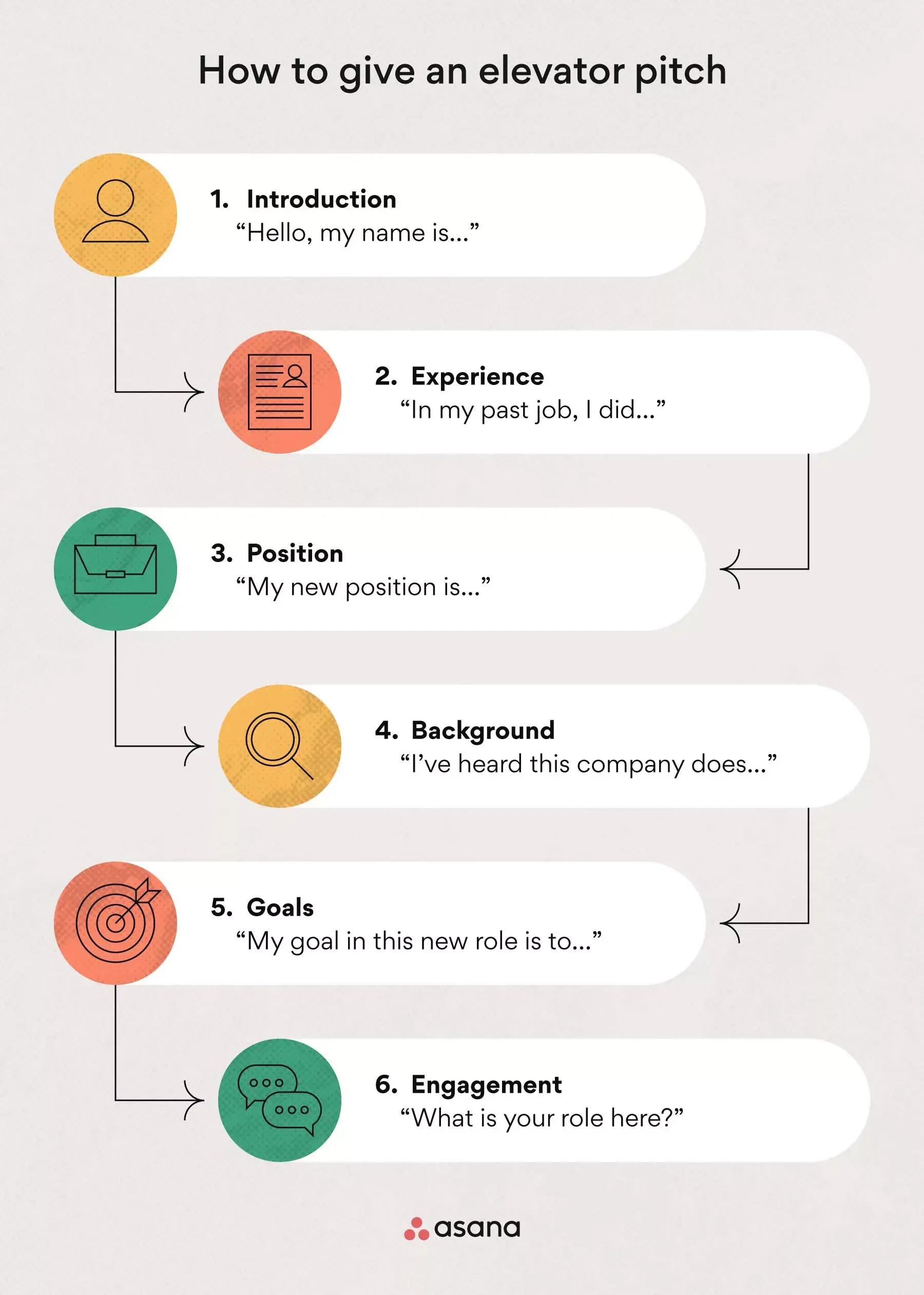
A strong elevator pitch covers three essentials:
Who you are: Your name and role
What you offer: Your background and key skills
What you want to accomplish: Your goals for the team
End by engaging the listener with a question, turning your introduction into a two-way conversation.
Tip: The elevator pitch got its name because you should be able to deliver it in the time it takes to ride an elevator. Practice at home the week before your first day until it feels natural.
8. Prepare to learn a lot
Your company may keep it simple on day one because they don't want to bombard you with too much information all at once. While you may not receive a list of long-term goals right away, you should still prepare to be a sponge and absorb as much knowledge as you can.
Some things you may learn on your first day of work include:
Company mission, values, and policies
Overview of your role and responsibilities
Tools, logins, and passwords
Team member names and roles
If you aren't prepared to take in a lot of information on your first day of work, you may have trouble grasping material as the week progresses. It's easier to retain new concepts once you have the foundation mastered.
Tip: Your first day of work may feel overwhelming, so practice releasing control and letting go of your expectations before you head into the day. Try breathing exercises, meditation, or calm music the night before to prepare yourself.
9. Listen and observe
You may receive training materials during your first week so you know how to do your job, but if you want to excel in your role, simply listen and observe. If you work from home, watch how your coworkers interact through content management systems or other applications like Asana.
Pay attention to how your colleagues work and practice effective workplace communication:
Observe processes: Notice how team members complete tasks and structure their workflows
Listen to language: Pick up on terminology, acronyms, and how topics are framed in meetings
Apply what you learn: The faster you absorb information, the sooner you can contribute
Tip: Don't be afraid to ask lots of questions during your time in training. If you're observing a meeting but don't understand why your team handles things a certain way, find an appropriate time to chime in and clarify.
10. Get to know your new team
Beyond your elevator pitch, take time to get to know your team on a personal level. We spend one-third of our lives working, so building strong relationships early makes collaboration easier and your work life more enjoyable.
Try using icebreaker questions during lunch or break times to get your coworkers talking about themselves and spark conversations. Some ice breaker questions you can ask as a new team member include:
Do you have any pets?
What was your first job?
What's one piece of career advice you would give to a new hire?
What is your current desktop or cell phone wallpaper?
What book are you currently reading?
You can also try playing team building games like two truths and a lie or trivia to encourage your team to work together while learning more about one another.
Tip: Your colleagues will be your best resources for information and support during your time at your new job. Once your title of "new hire" has faded, continue reaching out to others when you need help.
11. Bring positive energy
The energy you bring on day one shapes how colleagues perceive you. Positive energy leads to healthy group dynamics and better opportunities, while negativity can strain relationships before they begin.
When you have negative energy, it bleeds into your daily tasks, your meetings, and your work capabilities. Research shows that a strong onboarding process can improve new hire retention by 82%, productivity, creativity, engagement, improves.
Tip: Having positive energy doesn't require an overly upbeat attitude if that isn't your natural personality. Simply try to relax and smile so your team knows you're grateful for the position. Nonverbal communication can send the message that you're unhappy, tired, or frustrated, so be aware of your body language.
12. Show interest in your team
The best way to leave a good first impression on your team members is to show genuine interest in what they do and what they have to say.

There are many ways to show interest in your coworkers:
Look them in the eye
Listen when they speak
Ask follow-up questions
Remember things they tell you
Tip: You may have trouble listening because you're focused on what you plan to say next. Instead, avoid multitasking and practice active listening. When you take time to digest the other person's words, the interaction will be more valuable.
참고: 직장에서의 팀워크: 11가지 이점(예시 포함)Set yourself up for long-term success
You can't predict what will happen on your first day of work, but with a little preparation and a healthy dose of confidence, you can leave a good first impression on your new team members.
Remember that this day is just eight hours of the career ahead of you. In the coming weeks, you'll have many opportunities to prove yourself and build deeper relationships with your team.
As you settle in, share your expertise with colleagues. Teaching others what you know, and learning from them in return, is how team collaboration flourishes.
When you start your new job with the right foot forward, you can set the tone for what's ahead. Ready to organize your new role and stay on top of projects? Get started with a work management platform that keeps teams aligned.